
9 Salary Sacrifice Electric Car Examples (2026): With Free Calculator
A salary sacrifice electric car scheme lets a UK employee lease a brand-new EV from gross pay, before income tax and National Insurance. Because deductions come out pre-tax, every £1 sacrificed only costs you ~70–55p in take-home pay depending on your tax bracket. Below: 9 worked examples across the 20%, 40% and 45% bands, with the exact net monthly cost for each. Browse salary sacrifice cars here.

Image source: Shutterstock
Last updated: 19/05/2026
Salary sacrifice for electric cars
Estimate your net monthly cost, tax impact and BiK.
Employee details
Vehicle details
Employer settings (optional)
Monthly breakdown
Visual analysis
Jump To:
How Does Electric Car Salary Sacrifice Work?
Your employer leases the EV on your behalf. Each month, the lease cost is deducted from your gross salary — before income tax and National Insurance are calculated. The only taxable element is Benefit-in-Kind (BiK), which sits at just 4% for fully electric vehicles in 2026/27, against up to 37% for petrol or diesel.
Unlike a standard personal lease - where you may need to arrange servicing, breakdown cover, and insurance separately - an electric car salary sacrifice lease through The Electric Car Scheme includes everything in one simple monthly payment:
The electric vehicle itself
Full maintenance and servicing
Breakdown cover
Road tax
Complete Employer Protection (from day one, for all customers)
Optional: home charger installation through our salary sacrifice charging scheme
The result: every £1 you sacrifice costs you 55–72p in take-home pay, depending on your tax bracket. Your monthly payment is all-inclusive — the car, fully comprehensive insurance, servicing, breakdown cover, road tax, MOTs, tyres — and optionally a home charger through The Charge Scheme. No deposit, no upfront cost, no separate bills.
Learn more about how salary sacrifice works.
Salary sacrifice electric car examples for a £30,000 to £50,270 salary (20% tax bracket)
If your gross salary falls between £12,571 and £50,270, you pay 20% income tax and 8% National Insurance on most earnings. That means for every £1 you sacrifice, you save around 28p in tax and NI combined.
Example 1: Omoda 5 Electric (Sarah, £35,000 salary)
Meet Sarah. A 28-year old Marketing Coordinator in Manchester earning £35,000. Sarah leases a Omoda 5 through her employer’s EV salary sacrifice scheme.
The Omoda 5 Electric is the most-leased EV through The Electric Car Scheme in 2026 so far, with hundreds of these cars delivered to UK customers already. It combines compact-SUV practicality with one of the most accessible monthly costs of any new EV on the market. Chinese-brand EVs now account for ~32% of our 2026 deliveries - read the breakdown here.

| Gross monthly salary sacrifice | £385 |
|---|---|
| Income tax saving (20%) | -£77 |
| National Insurance saving (8%) | -£31 |
| BiK tax (4% of P11D, /12) | +£31 |
| Net monthly cost | £308 |
A new electric SUV for a net cost just shy of £300 per month, fully maintained, fully insured (where included), with road tax and breakdown cover bundled in. For a basic-rate taxpayer, this is one of the most affordable ways to get into a brand-new EV in 2026. Over a three-year lease, that's around £2,760 back in your pocket on a car that's cheaper to run than petrol and qualifies for lower road tax.
“I didn’t think I could afford a new electric car on my salary. Then my company introduced The Electric Car Scheme. The Omoda 5 is fab and it’s much bigger than my old car.”
— Sarah, Electric Car Scheme customer since February 2026.
Example 2: Volkswagen ID.3 (Denise, £42,000 salary)
Meet Denise. A 35-year old Project Manager in Birmingham earning £42,000. Denise leases a Volkswagen ID.3 through her employer’s EV salary sacrifice scheme.
The Volkswagen ID.3 has been a consistent top-seller through The Electric Car Scheme, with multiple deliveries in the first few months of the year. It's a practical, well-equipped family hatchback with a real-world range of around 200 miles. The Volkswagen ID.3 remains one of the best everyday electric cars to salary sacrifice.

| Gross monthly salary sacrifice | £425 |
|---|---|
| Income tax saving (20%) | -£85 |
| National Insurance saving (8%) | -£34 |
| BiK tax (4% of P11D, /12) | +£30 |
| Net monthly cost | £336 |
A saving of £89 per month, just under 21% on the lease price. For a basic-rate taxpayer, salary sacrifice consistently delivers savings in the 20 to 25% range.
“The whole process of ordering and getting the car delivered was seamless by The Electric Car Scheme. Now I’m commuting to work and driving around town in an electric car I didn’t think I could get my hands on!”
— Denise, Electric Car Scheme customer since May 2026.
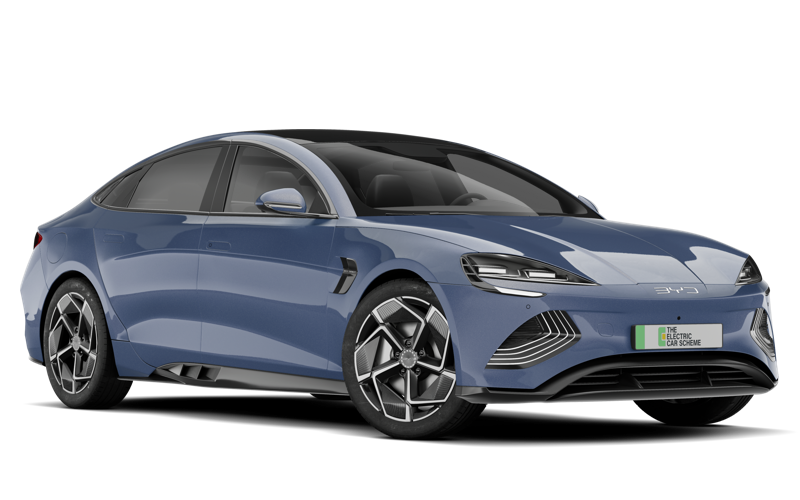
Example 3: BYD Seal (Priya, £48,000 salary)
Meet Priya. A 41-year old Senior Analyst in Leeds earning £48,000. Priya needed space for two children and the odd, long weekend trip to visit her family in London. Priya picked the BYD Seal through The Electric Car Scheme.
The BYD Seal is one of the standout new entrants in the UK EV market, with popular demand through The Electric Car Scheme in 2026 so far. It's a mid-size electric saloon with a real-world range of around 280 miles, premium interior fit, and pricing that puts it within reach at the top of the basic-rate bracket.
| Gross monthly salary sacrifice | £534 |
|---|---|
| Income tax saving (20%) | -£107 |
| National Insurance saving (8%) | -£43 |
| BiK tax (4% of P11D, /12) | +£46 |
| Net monthly cost | £430 |
A saving of more than £3,726 over the entire length of the lease. When you factor in lower home charging costs against petrol and reduced servicing expenses, the total saving over three years is considerably larger.
“I had an excellent experience and am now driving a car I wasn’t even considering, the BYD Seal. It’s been great for the family, and the kids enjoy all of the quirky features that come with the car - including the flipping screen! If I have any questions about the car, I can pick up the phone and speak to the ECS team.”
— Priya, Electric Car Scheme customer since April 2026.
Salary sacrifice electric car examples for a £50,271 to £125,140 salary (40% tax bracket)
At the higher-rate tax band, salary sacrifice becomes noticeably more powerful. You're now saving 40% on income tax rather than 20%, and the same BiK rate applies — so the gap between gross cost and net cost widens substantially. Higher earners typically save 35–45% through the scheme.
Example 4: Volkswagen ID.4 (Aisha, £65,000 salary)
Meet Aisha. A 38-year old Software Engineer in London earning £65,000. Aisha was previously driving a diesel BMW X5 on a personal lease and was spending a lot on diesel as well.
The Volkswagen ID.4 remains one of the most-leased electric cars through The Electric Car Scheme. The all-electric SUV step up from the ID.3, more space, more range, and a premium feel that suits someone with a little more headroom in their budget.

| Gross monthly salary sacrifice | £540 |
|---|---|
| Income tax saving (40%) | -£216 |
| National Insurance saving (2%) | -£11 |
| BiK tax (4% of P11D, /12) | £38 |
| Net monthly cost | £351 |
A saving of £189 per month. 35% off the gross lease price. Note that above the 40% threshold, National Insurance drops to 2%, which slightly reduces the NI element of savings compared to lower earners, but the much larger income tax saving more than compensates.
“ I chose the Volkswagen ID.4 with The Electric Car Scheme as they had a special deal on it. I was going to get one from our local dealership, but it just made so much more financial sense to salary sacrifice it.”
— Aisha, Electric Car Scheme customer since January 2026.
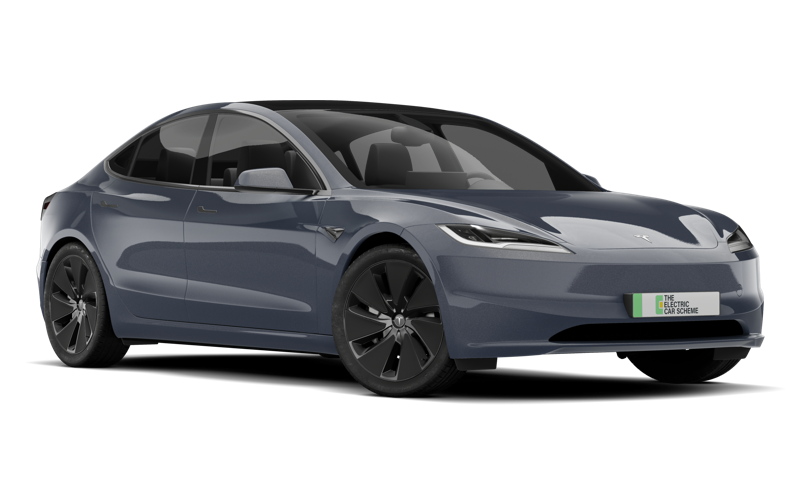
Example 5: Tesla Model 3 (David, £80,000 salary)
Meet David. A 44-year old Finance Director in London earning £80,000. David has two young children, so needed room for a couple of car seats and enough range for a 25-mile round commute from London to Reading.
The Tesla Model 3 is one of the most-leased EVs through salary sacrifice schemes in the UK. Long range, fast charging, and packed full of technology that is best in class.
| Gross monthly salary sacrifice | £630 |
|---|---|
| Income tax saving (40%) | -£252 |
| National Insurance saving (2%) | -£13 |
| BiK tax (4% of P11D, /12) | £43 |
| Net monthly cost | £408 |
A £222 monthly saving which is 35% below the gross monthly lease cost. Over a 36-month lease, that's a total saving of around £8,000 versus leasing outside The Electric Car Scheme. Our Tesla salary sacrifice guide has more on the available models.
Charging note: the Tesla Model 3 RWD has a real-world range of around 280 miles. UK Supercharger coverage exceeds 1,500 locations, making the Tesla driving experience the most hassle free one amongst all EVs.
“It’s safe to say once we got into it the Model 3, we were convinced! Plenty of fun to be had behind the wheel, and my kids can watch Netflix or Youtube in the back. I was driving a banged up Mercedes C-Class for ages, but it was costing my loads in maintenance and repairs. Happy with my decision to get the Model 3.”
— David, Electric Car Scheme customer since April 2026.
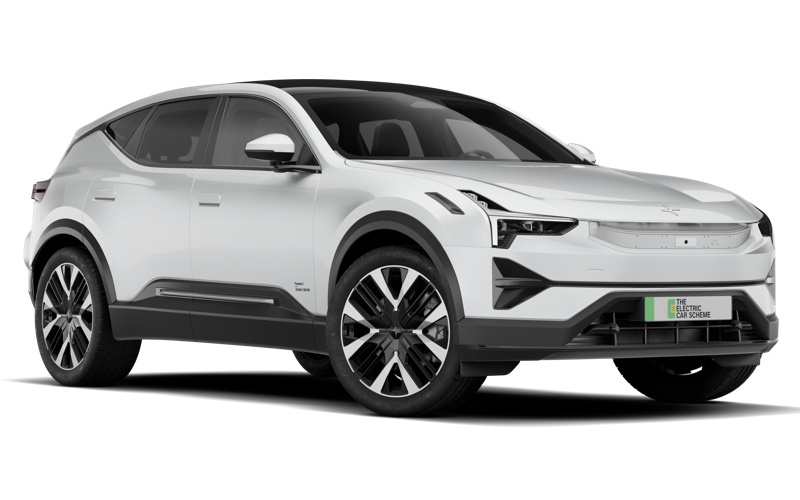
Example 6: Polestar 3 (Marcus, £105,000 salary)
For employees approaching the £100,000 personal allowance taper (where earnings above £100,000 effectively attract a 60% marginal tax rate due to allowance withdrawal), salary sacrifice can be even more powerful, it reduces taxable income, which can help restore some or all of the lost personal allowance.
Meet Marcus. A 47-year old Commercial Director in Edinburgh earning £105,000. Marcus has always enjoyed driving the latest cars, but was yet to try an electric one. He changed that when his company introduced The Electric Car Scheme.
The Polestar 3 is a compelling premium SUV choice at this level. It blends Scandinavian minimalism with advanced technology, serving as a sportier alternative to the Volvo EX90. It offers a 106-111 kWh battery, 350-mile+ range, and dual-motor AWD that can hit 60 mph in under 4 seconds in performance models
| Gross monthly salary sacrifice | £920 |
|---|---|
| Income tax saving (40% / effective higher rate) | -£368 |
| National Insurance saving (2%) | -£18 |
| BiK tax (4% of P11D, /12) | £60 |
| Net monthly cost | £594 |
A saving of £326 per month, which over the course of a three year lease can amount to nearly £12,000 in savings.
“I was on the fence about electric cars, but then work introduced our car scheme. I was toying with the idea of an expensive SUV and landed on the Polestar 3. Having driven lots of Volvos in the past, the Polestar brand has always had a solid reputation. You don’t see many Polestar 3s on the road, so I love that it has that wow factor. ”
— Marcus, Electric Car Scheme customer since February 2026.
For those caught in the personal allowance taper, like Marcus, the effective saving can be even greater. To learn more read our salary sacrifice and tax changes guide for more detail. We are not tax or financial experts, so please do seek financial advise independently of our website.
Salary sacrifice electric car examples for a £125,140 or above salary (45% tax bracket)
At the additional rate, salary sacrifice reaches its most significant impact. You're saving 45p in income tax on every £1 sacrificed, with BiK still fixed at just 4%. The result is that premium electric cars become genuinely affordable - and in some cases, dramatically cheaper than a comparable petrol alternative.
A pattern worth flagging from our 2026 customer data: top-bracket earners are not predominantly leasing the most expensive EVs available. The proportional saving on a £400-a-month car is larger than on a £1,500-a-month car, and the BiK rate is identical. That changes the calculation. The Electric Car Scheme additional-rate customers in 2026 are spread across the full price range, with many choosing the same models popular at lower salary bands.
The BMW i4 is the highest-volume premium electric car on The Electric Car Scheme in 2026, with multiple deliveries year-to-date. The i4 is a premium saloon that combines sporty driving dynamics with genuine long-range EV capability. It's a natural salary sacrifice choice for higher earners who want performance without compromise.
Example 7: BMW i4 (Helena, £140,000 salary)
Meet Helena. A 51-year-old Managing Partner in London earning £140,000. Helena isn't particularly interested in cars, but the savings through her firm's salary sacrifice scheme made the BMW i4 an obvious choice.

| Gross monthly salary sacrifice | £760 |
|---|---|
| Income tax saving (45%) | -£342 |
| National Insurance saving (2%) | -£15 |
| BiK tax (4% of P11D, /12) | £52 |
| Net monthly cost | £455 |
A £305 monthly saving, 40% off the gross lease cost. Over three years, that's over £10,980 in savings on a car that also costs a fraction of a petrol equivalent to run and insure.
“I recently took delivery of my new BM4 i4 via ECS. There website has a great selection of cars and even greater customer service at point of enquiry. Not being that into cars, I had lots of questions to begin with but the team were happy to help and kept me updated regularly between ordering and delivery. They even installed a home charger for me.”
— Helena, Electric Car Scheme customer since April 2026.
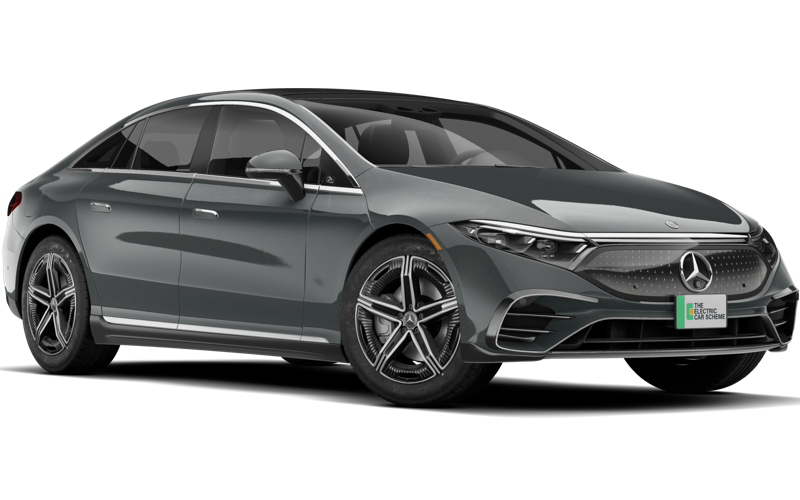
Example 8: Mercedes EQS (Daniel, £175,000 salary)
Meet Daniel. A 45-year-old Chief Executive in Coventry earning £175,000. With a 200-mile round commute to London twice a week, comfort and range are non-negotiable. He's already calculated that home charging will save him over £400 a month against petrol.
For those at the top of the earnings range, the Mercedes EQS is a flagship luxury electric saloon, acting as an EV counterpart to the S-Class, featuring a new 118kWh battery for up to 574 miles of range (WLTP) and a distinctive, aerodynamic "one-bow" design. The EQS is renowned for its immense 610-litre hatchback boot, optional 56-inch MBUX Hyperscreen, and exceptionally quiet, comfortable ride. All at a net cost that would be unthinkable outside of salary sacrifice.
| Gross monthly salary sacrifice | £1,350 |
|---|---|
| Income tax saving (45%) | -£608 |
| National Insurance saving (2%) | -£27 |
| BiK tax (4% of P11D, /12) | £89 |
| Net monthly cost | £804 |
Daniel saves £546 per month on the Mercedes EQS through salary sacrifice. Across his three-year lease, that totals more than £19,600, a 40% reduction on the gross lease cost.
“My first experience with The Electric Car Scheme has been fantastic. From searching deals, selecting and ordering your car and being kept up to date with your own dedicated support agent. It has been great from start to finish. My EQS arrived this morning and I am very pleased. A special thank you to Aaron Figgett, who kept me up to date along the way.”
— Daniel, Electric Car Scheme customer since April 2026.
Our Mercedes salary sacrifice guide covers the full EQS range and other available models.
Example 9: Porsche Taycan (Sophia, £200,000 salary)
Meet Sophia. A 49-year-old Founder in Bristol earning £200,000. With a passion for sports cars and fast cars, she has always been a bit of a petrol head. That was until she spotted the price of a Porsche Taycan with The Electric Car Scheme.
A note on this example: the Taycan is not a top-selling car on The Electric Car Scheme. Across the first four months of 2026, Electric Car Scheme additional-rate customers overwhelmingly chose mid-premium EVs like the BMW i4, the Polestar 2 and the Volvo XC40 Electric, not six-figure sports saloons. Sophia is the exception, not the rule. We've included the Taycan here because it shows the upper edge of what salary sacrifice can deliver: even at the most aspirational end of the market, the tax efficiency on zero-emission vehicles is significant.

| Gross monthly salary sacrifice | £1,580 |
|---|---|
| Income tax saving (45%) | -£711 |
| National Insurance saving (2%) | -£32 |
| BiK tax (4% of P11D, /12) | £100 |
| Net monthly cost | £937 |
A saving of £643 per month, 41% against the gross cost. That's over £23,000 saved across a three-year lease, with Porsche's three-year manufacturer warranty and eight-year battery warranty covering Sophia for the full term.
“I've driven petrol sports cars my whole adult life. Switching to electric wasn't on my radar, and a Porsche Taycan on a private lease was hard to justify against the alternative of keeping what I had. A colleague mentioned they had ordered a car with The Electric Car Scheme in passing and I ran the calculator more out of curiosity than anything else. The headline figure was a saving of over £600 a month.
Once I'd factored in fuel and servicing on what I'd been driving, the gap was wider still. The Taycan arrived three months later and it drives exactly the way you'd hope. The conversation I find myself having now is with other founders who assume the maths can't possibly work.”
— Sophia, Electric Car Scheme customer since March 2026.
For more on the fastest electric cars to salary sacrifice, see our dedicated guide.
What Is the BiK Rate for Electric Cars in 2026?
The current BiK rate for zero-emission electric vehicles is 4% for 2026/27. It is set to increase by 1% per year to 5% in 2027/28, then by 2% per year after that, capping at 9% in 2029/30. [Last verified: July 2026]
Even at 9%, that is well below the maximum 37% applied to high-emission petrol vehicles. For context, most mid-range petrol company cars attract a BiK rate of 25–35%.
The table below shows how BiK rates compare:
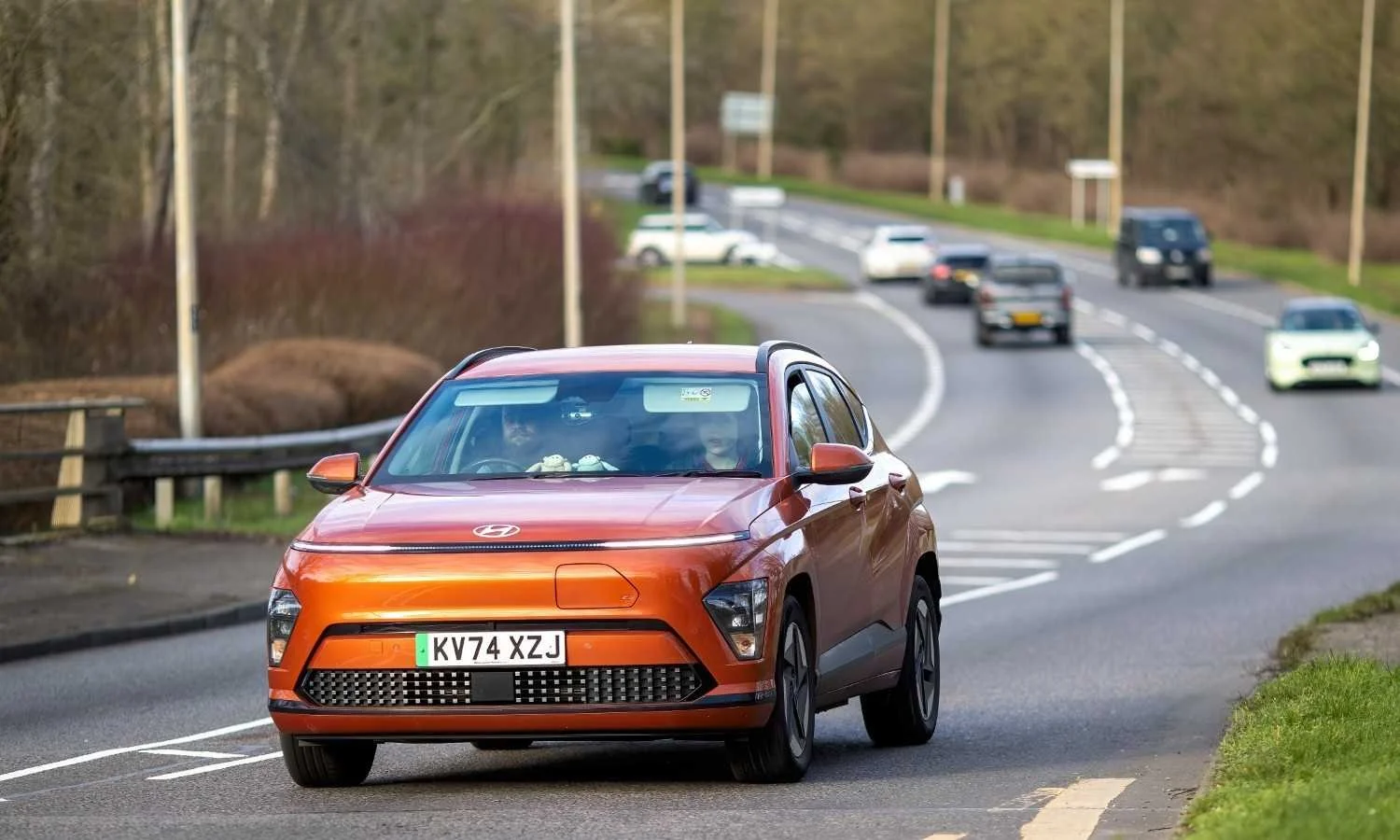
| Vehicle type | BiK rate 2026/27 |
|---|---|
| Fully electric (0g/km CO2) | 4% |
| Mild hybrid (21–50g/km, 70–129mi range) | 7% |
| Petrol (average family car) | 25–30% |
| High-emission petrol/diesel | Up to 37% |
This low rate is what makes salary sacrifice so effective for electric cars specifically. Our 2025 Spring Statement EV tax changes article has more on the trajectory of these rates.
How EV Salary Sacrifice Savings Compare Across Tax Brackets
Same car, three earners. Only tax bracket changes.
One of the clearest ways to see the value of salary sacrifice is to look at the same car across different tax bands. Here's the Hyundai IONIQ 5 (gross monthly sacrifice: £590) for three different earners:
| Tax bracket | Gross cost | Net cost | Monthly saving | % saving |
|---|---|---|---|---|
| 20% (basic rate) | £590 | £465 | £125 | 21% |
| 40% (higher rate) | £590 | £373 | £217 | 37% |
| 45% (additional rate) | £590 | £360 | £230 | 39% |

The car is identical. The only thing that changes is how much tax relief you receive. Higher earners save proportionally more - but every employee benefits meaningfully. Find out whether salary sacrifice is worth it for you - in this guide.
Electric Car Salary Sacrifice vs Personal Lease: A Direct Comparison
The key difference is that with a personal lease, you pay from net (after-tax) income. With salary sacrifice, you pay from gross income - so the government effectively subsidises part of your car. Here's a quick comparison using the Tesla Model 3 at £630/month gross:
| Personal lease | Salary sacrifice (40% taxpayer) | |
|---|---|---|
| Gross monthly cost | £630 | £630 |
| Tax/NI relief | None | -£265 |
| BiK tax payable | None | £43 |
| Actual monthly cost | £630 | £408 |
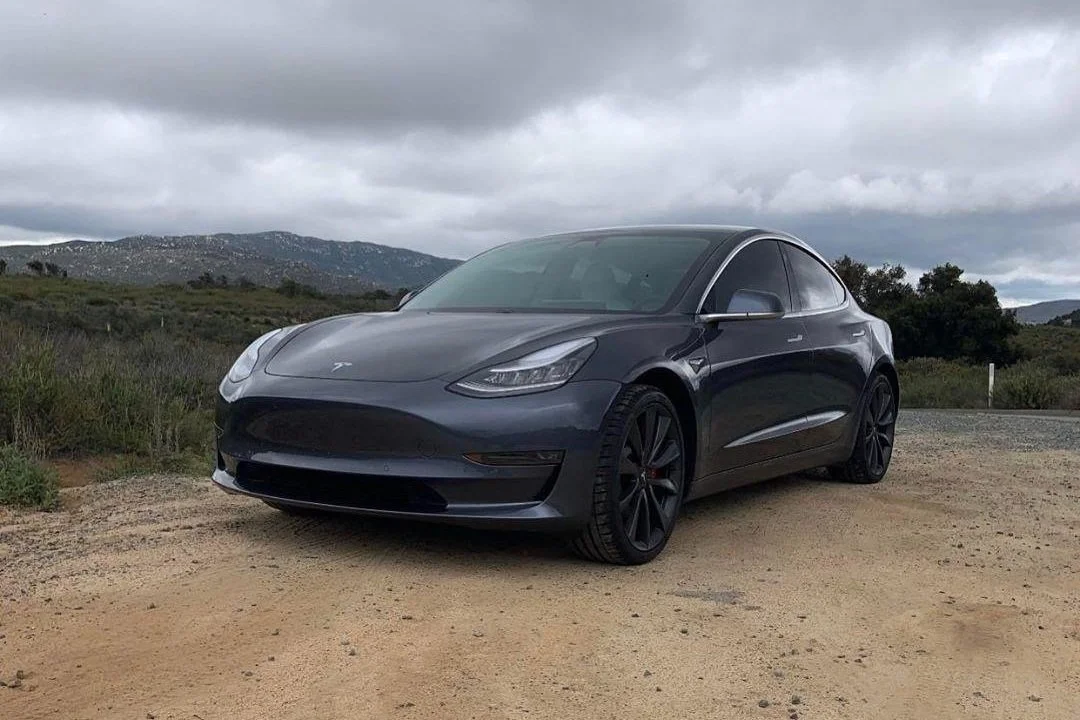
That's a £222 monthly difference on the same car. Over three years, the salary sacrifice route saves over £8,000 - enough to cover all home charging costs for the term with money to spare. Use our EV savings calculator to run a direct comparison for your own salary and chosen vehicle.
You can also read more in our guide to the difference between leasing and buying an EV outright.
Electric Car vs Petrol Car: What Does It Actually Cost to Run?
Salary sacrifice changes what you pay to access the car. But once you're driving it, the day-to-day running costs are where electric vehicles pull further ahead. Petrol cars cost significantly more to fuel and maintain - and those costs come out of your net pay, with no tax relief.
Here's a like-for-like monthly running cost comparison for a typical driver covering 10,000 miles per year:
| Cost | Electric car (via salary sacrifice) | Equivalent petrol car |
|---|---|---|
| Monthly lease / net cost | From £267 (20% taxpayer) | From £380 (personal lease) |
| Monthly fuel / charging | ~£52 (home charging at 7p/kWh) | ~£102 (petrol at current prices) |
| Monthly servicing & maintenance | Included in lease | ~£17 (estimated average) |
| Road tax (VED) | Included in lease | £195/year (~£16/month) |
| BiK tax | ~£22–£100/month (EV rate) | Up to £300+/month (petrol rate) |
Electric motors have far fewer moving parts than petrol engines - no oil changes, no exhaust system, no cam belt. Servicing an electric car typically costs around 30–40% less than an equivalent petrol model over a three-year period. When you factor that into the all-inclusive salary sacrifice lease (where maintenance is bundled in), the effective saving widens further.
See our electric cars vs petrol cars cost comparison for the full breakdown.
The Charge Scheme: Salary Sacrifice Your EV Charging Too
The Electric Car Scheme is the only UK provider offering a fully end-to-end solution: the car, the home charger installation, and your ongoing charging costs, all through the same pre-tax mechanism. Drivers save 20–50% on charging the same way they save on the car — one app, one card, every charging location.
How to Get an Electric Car Through The Electric Car Scheme: Step by Step
How to get your car
Check if your employer is signed up.
Run the calculator. Two minutes to get your personalised net monthly cost. Calculator.
Choose your car. Browse new, used or subscription via the quote tool. Every price is all-inclusive.
Apply. Digital credit check via our FCA-regulated leasing partner. Your employer approves the salary sacrifice agreement.
Delivery. Used cars: 14 days. New cars: 8–16 weeks. Subscription: ~7 days. Payments only start once your car arrives.
Frequently Asked Questions and Common Objections
Most salary sacrifice electric car leases run for two to four years and are designed to be held to term. If you do need to change vehicle mid-lease, options are limited and may attract early termination charges. Choose your term with care, and use the calculator to test scenarios at different lease lengths.
How much can you save with an electric car salary sacrifice scheme?
Employees typically save 20–50% versus a standard personal lease. A 20% taxpayer saves around 20p per £1 sacrificed; a 45% taxpayer saves up to 47p. The examples above show the exact net monthly figures across all three tax brackets.
What's the BiK rate for electric cars in 2026?
4% of the car's P11D value for 2026/27. It rises to 5% in 2027/28, then by 2% per year, capping at 9% in 2029/30 — still well below the 25–37% applied to most petrol and diesel cars.
What's included in the monthly cost?
The vehicle, full maintenance and servicing, breakdown cover, road tax, MOTs, tyres, and Complete Employer Protection from day one. Insurance and home charger installation can be added optionally.
Can I bundle a home charger into the scheme?
Yes. Home charger installation can be added to your salary sacrifice agreement at a 20–50% saving — the same tax mechanism that funds the car. You own the charger outright at the end of the term.
What if I leave my job during the lease?
Through Complete Employer Protection, employers are covered from day one against early termination costs caused by redundancy, dismissal or long-term illness. For employees who leave voluntarily, the standard route is to return the car or, where eligible, transfer the lease to a personal arrangement.
Will salary sacrifice affect my mortgage or pension?
It can. Salary sacrifice reduces your gross salary, which some mortgage lenders use to assess affordability, and which can lower pension contributions calculated as a percentage of gross pay. If you're applying for a mortgage in the next 12 months, speak to your broker first. Some employers offset the pension impact by basing contributions on pre-sacrifice salary — worth checking with HR. More detail here.
Can I exit the lease early?
Leases typically run 2–4 years and are designed to be held to term. Early termination is possible but may attract charges. Choose your term carefully and use the calculator to test different lease lengths before signing.
What happens if my employer changes provider?
Existing leases are unaffected. The original contract remains in place between your employer and the funder for the duration of the term. Any new vehicles ordered after the switch would go through the new provider.
What about the residual value of EVs?
The residual value risk sits with the leasing company, not you. You're leasing the car, not buying it — at the end of the term, you hand it back. EV residuals have stabilised over the last two years as the secondhand market has matured.
Is there a minimum salary?
You can't sacrifice salary below the National Minimum Wage. In practice, employees on very low incomes may have limited access. Eligibility detail here.
Which EVs are most popular through The Electric Car Scheme?
Based on 2026 deliveries year-to-date, the top five are the Omoda 5 Electric, BYD Sealion 7, BYD Seal, Tesla Model 3 and BMW i4. The full top nine also includes the Tesla Model Y, Volkswagen ID.3, Polestar 2 and Volvo XC40 Electric.
Calculate Your Own Electric Car Salary Sacrifice Saving
The examples above are designed to give you a realistic sense of what a salary sacrifice electric car looks like at your tax bracket. But every situation is different — your salary, your chosen car, your mileage, and your employer's scheme terms all affect the final figure.
The most accurate way to find your number is to use our free EV savings calculator. It shows your estimated monthly net cost, the total saving over the lease term, and how that compares to running an equivalent petrol car.
If you're an employer looking to offer the scheme to your team, book a demo and find out how straightforward it is to get started — there's no cost to set up and no risk from day one.
The UK's transition to electric vehicles is well underway. Salary sacrifice is the most effective way for most employees to be part of it — and The Electric Car Scheme is the UK's highest-rated provider to help you get there.
Expert Opinion from Thom Groot, CEO & Co-Founder at The Electric Car Scheme

"The 2026 picture for EV salary sacrifice looks materially different from 2025. We've delivered EVs to hundreds of UK employers in the first four months of 2026, across 32 different car makes. The Omoda 5 is now the most-leased car on the scheme, ahead of every European and American manufacturer.”
“What this tells HR and finance teams is that the market has changed, and salary sacrifice is now the most efficient way to give employees access to that change. The 4% Benefit-in-Kind rate on electric vehicles is the single most generous tax position any UK employee benefit has held in a decade. “
“The proportional saving is often largest on the more affordable models, which is why we're seeing high earners and lower earners increasingly choose from the same lineup."
Your Employer Doesn’t Offer The Electric Car Scheme Yet?
The most common reason employees miss out on salary sacrifice isn't that their employer said no. It's that no one ever asked.
You don't have to be the person who asks. Leave your employer's contact details and we'll send them a short, professional email: how the scheme works, why it's cost-neutral to the business, what's included as standard, and what setup looks like.
What we send isn't a sales pitch. It's a clear explanation of a cost-neutral employee benefit, written for HR and finance teams. Most employers are operational within three to four weeks. There's no cost to the business and no risk from day one. We currently work with thousands of leading UK employers in 2026, from teams of ten to enterprises of ten thousand.
What to Ask Your HR Team
If your employer doesn't yet offer The Electric Car Scheme, the fastest route is a short, direct conversation with HR or finance. These five questions are designed to get a useful answer quickly.
Does our company currently offer any EV salary sacrifice scheme?
If not, would you be open to reviewing one? The Electric Car Scheme is cost-neutral to the business, includes Complete Employer Protection from day one.
Who would be the right person to evaluate this? (Typically HR, Finance, or Operations.)
What's our process for adding a new employee benefit?
Could I share an explainer doc you can pass to the right decision-makers?
You can download our explainer pack here to share with your HR team.
Join UK’s Leading EV Salary Sacrifice Car Scheme
Book a 15 minute callYou might also like…




Last updated: 15/07/2026
Our pricing is based on data collected from The Electric Car Scheme quote tool. All final pricing is inclusive of VAT. All prices above are based on the following lease terms; 10,000 miles pa, 36 months, and are inclusive of Maintenance and Breakdown Cover. The Electric Car Scheme's terms and conditions apply. All deals are subject to credit approval and availability. All deals are subject to excess mileage and damage charges. Prices are calculated based on the following tax saving assumptions; England & Wales, 40% tax rate. The above prices were calculated using a flat payment profile. The Electric Car Scheme Limited provides services for the administration of your salary sacrifice employee benefits. The Electric Car Scheme Holdings Limited is a member of the BVRLA (10608), is authorised and regulated by the FCA under FRN 968270, is an Appointed Representative of Marshall Management Services Ltd under FRN 667174, and is a credit broker and not a lender or insurance provider. Figures in this guide are drawn from real customer leases on The Electric Car Scheme in May 2026. Customer name and salary data is anonymised to protect their identities, however these are real quotes from our customers.
Copyright and Image Usage: All images used on this website are either licensed for commercial use or used with express permission from the copyright holders, in compliance with UK and EU copyright law. We are committed to respecting intellectual property rights and maintaining full compliance with applicable regulations. If you have any questions or concerns regarding image usage or copyright matters, please contact us at marketing@electriccarscheme.com and we will address them promptly.
