
Ferrari Luce vs Porsche Taycan, MG Cyberster and Maserati GranCabrio: 2026 Luxury EV Comparison
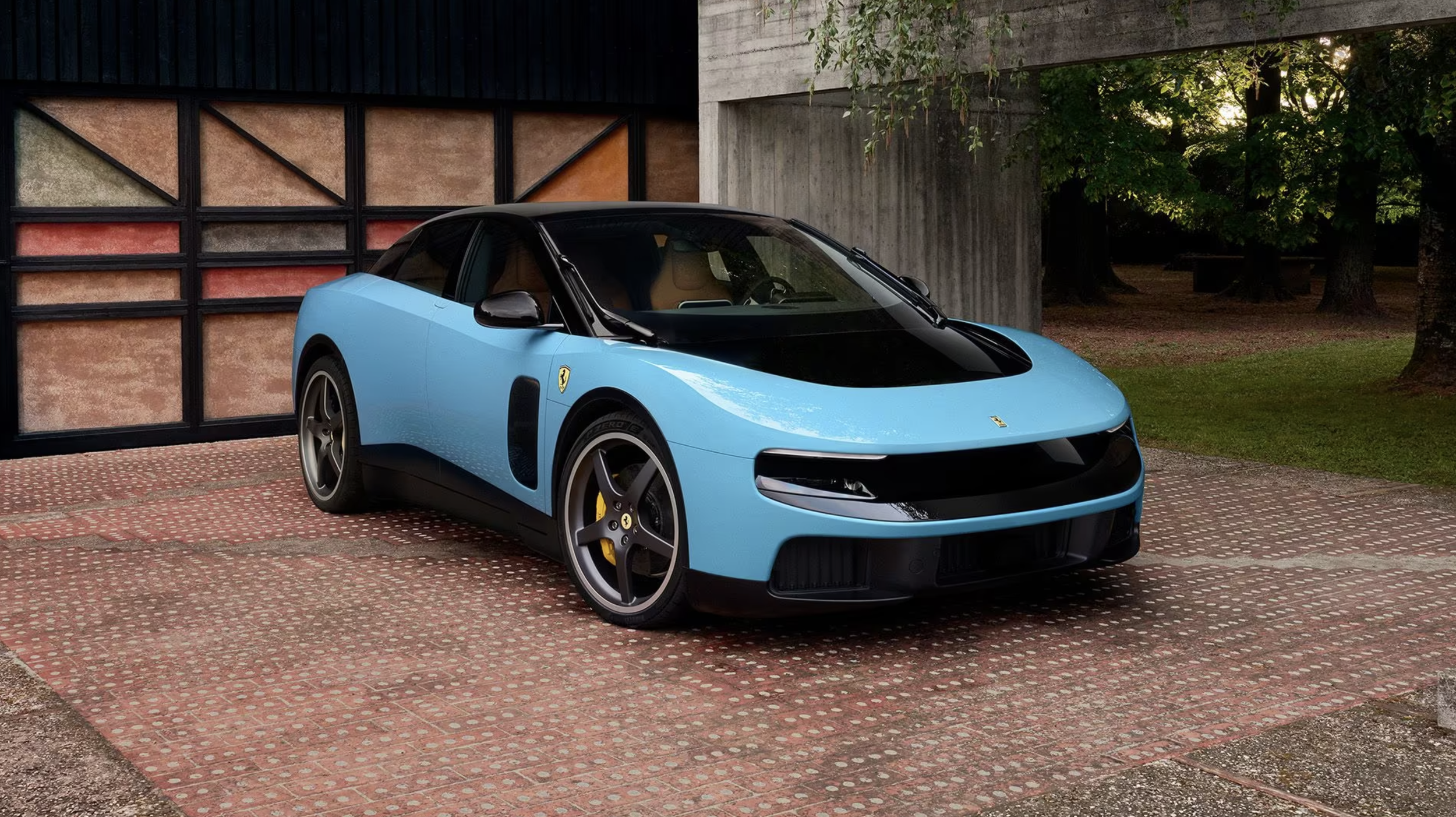
Source: Ferrari
Ferrari's launch of the Luce is the cleanest signal yet that the luxury and performance segment of the EV market has fully arrived. The Italian marque had previously held back, opting for hybrids while it watched the rest of the industry move. The new car, designed in partnership with Jony Ive's LoveFrom studio, lands at $640,000 (around £545,000) with a five-seat, four-door silhouette that breaks decisively with Ferrari's two-door sports car heritage. The market reaction was mixed and the share price slipped, but the strategic message is unambiguous: every premium carmaker now ships an EV.
For anyone watching the segment, the more useful question is how the Luce stacks up against the EVs actually being sold and driven in the UK today. The Porsche Taycan, MG Cyberster and Maserati GranCabrio Folgore each represent a different point on the price and use-case map, from a £55,000 two-seat roadster to a £185,000 four-seat convertible. This piece compares all four on the numbers that matter, then looks at which of them can realistically be funded through a UK salary sacrifice scheme and which sit firmly in the cash-buyer bracket.
What Ferrari has built: the Luce in numbers
The Luce is Ferrari's first ground-up electric platform and the first five-seater the company has ever made. The previous four-door, the Purosangue SUV launched in 2022, was the only car to break the long-running two-door pattern. The Luce extends that experiment into a fully battery-electric saloon-like body.
Under the floor sits a 122 kWh battery, larger than anything else in this comparison and substantial even by 2026 standards. Ferrari quotes a range of 329 miles (530 km), which is more conservative than the headline numbers from Porsche but reasonable given the car's likely kerb weight and the four motors driving each wheel independently. The powertrain delivers 0-100 km/h in 2.5 seconds and a top speed of more than 193 mph (310 km/h). All components, including the motors, are built in-house at Maranello, which Ferrari argues will protect resale value because repairs can be supported by the company well into the future.
The launch also confirmed Ferrari's softer EV roadmap. In 2022, the company had targeted a 2030 mix of 40% electric, 40% hybrid and 20% petrol. That has now shifted to 40% combustion, 40% hybrid and 20% electric, a reflection of weaker premium-EV demand and the pivots already announced by Porsche and Lamborghini. The Luce is therefore a halo product rather than a fleet replacement, designed to anchor Ferrari's presence in the electric segment without forcing a wholesale transition.
John Elkann, President of Ferrari, said this:
"With Ferrari Luce, we are once again redefining the limits of what is possible. Today, we are not simply unveiling a new car, we are inaugurating a chapter that turns our vision into reality, strengthening Ferrari’s tradition of anticipating and shaping the future. Such a leap forward in product innovation could only have been achieved through process innovation; this is why we chose to embark on new collaborations, such as the one with LoveFrom for the design. And, as always, our research and engineering excellence have been placed at the service of driving emotions, without compromise. Rome, the symbolic location of our first victory, becomes the starting point for a Ferrari that lights up the future and opens new horizons".
Head-to-head: Ferrari Luce, Porsche Taycan, MG Cyberster, and Maserati GranCabrio Folgore
The table below sets the four cars side by side on the metrics most often used to compare performance EVs. All figures are 2026 UK or manufacturer-quoted figures.
| Metric | Ferrari Luce | Porsche Taycan (range) | MG Cyberster GT | Maserati GranCabrio Folgore |
|---|---|---|---|---|
| UK starting price | ~£545,000 (US launch $640,000) | £88,265 to £135,635 | £59,995 | £185,610 OTR |
| Battery (usable) | 122 kWh | 79 kWh or 93 kWh | 74.4 kWh | 83 kWh |
| Official range | 329 miles | up to 421 miles | 276 miles (Trophy: 316 miles) | 245 miles |
| 0-62 mph (0-100 km/h) | 2.5 seconds | 4.8s base, 2.4s Turbo S | 3.2 seconds | 2.8 seconds |
| Top speed | 193 mph | up to 162 mph (Turbo S) | 124 mph | 180 mph |
| Body style | 4-door, 5-seat saloon | 4-door, 4-5 seat saloon | 2-seat roadster | 4-seat convertible |
| Drive | All-wheel (4 motors) | RWD or AWD | RWD (Trophy) / AWD (GT) | All-wheel (3 motors) |
| Power output | Ferrari has not published a power figure | up to ~750 kW (Turbo S) | 503 hp (GT) | 751 hp |
| UK salary sacrifice viable | No | Yes (entry trims) | Yes | In principle, rarely in practice |
A few patterns stand out. On range, the Taycan with the Performance Battery Plus is still the segment leader, and the Luce sits roughly in the middle of the pack despite carrying the largest battery, which suggests the four-motor performance set-up takes a meaningful efficiency hit. On price, the gap between the Cyberster and the Luce is more than ten-fold, which is the right reminder that "luxury EV" is now a much wider category than it was three years ago. On 0-62, the Porsche Taycan Turbo S still beats the Luce by a tenth of a second, and the Maserati and Cyberster GT are within striking distance of both.
The Porsche Taycan: the segment benchmark

The Taycan is the obvious comparison point because it has had longer in market than any of the others and continues to define what a high-performance battery saloon looks like in Europe. The current line-up runs from the rear-wheel-drive Taycan at £88,265 through the Taycan 4S, GTS, Turbo and Turbo S, topping out at around £165,000 to £170,000 once options are added.
Battery options are the 79 kWh Performance Battery on the base car and the 93 kWh Performance Battery Plus on most other trims. The official Porsche UK figures put combined range across the line-up between 372 and 421 miles, with the base rear-wheel-drive car achieving up to 313 miles in real-world testing. Acceleration is the Porsche calling card: 4.8 seconds to 62 mph on the base car with Launch Control, 3.7 seconds on the 4S, and 2.4 seconds on the Turbo S, which is faster than the Luce.
For UK drivers, the Taycan is also the only car on this list whose entry trim sits within reach of a salary sacrifice scheme for higher and additional-rate earners. The base Taycan can be funded through a pure-EV salary sacrifice scheme, with the 4% Benefit-in-Kind rate for 2026/27 making the gross-salary deduction far more tax-efficient than a personal contract hire. The Turbo and Turbo S sit above the practical threshold for most schemes.
The MG Cyberster: the salary-sacrifice roadster
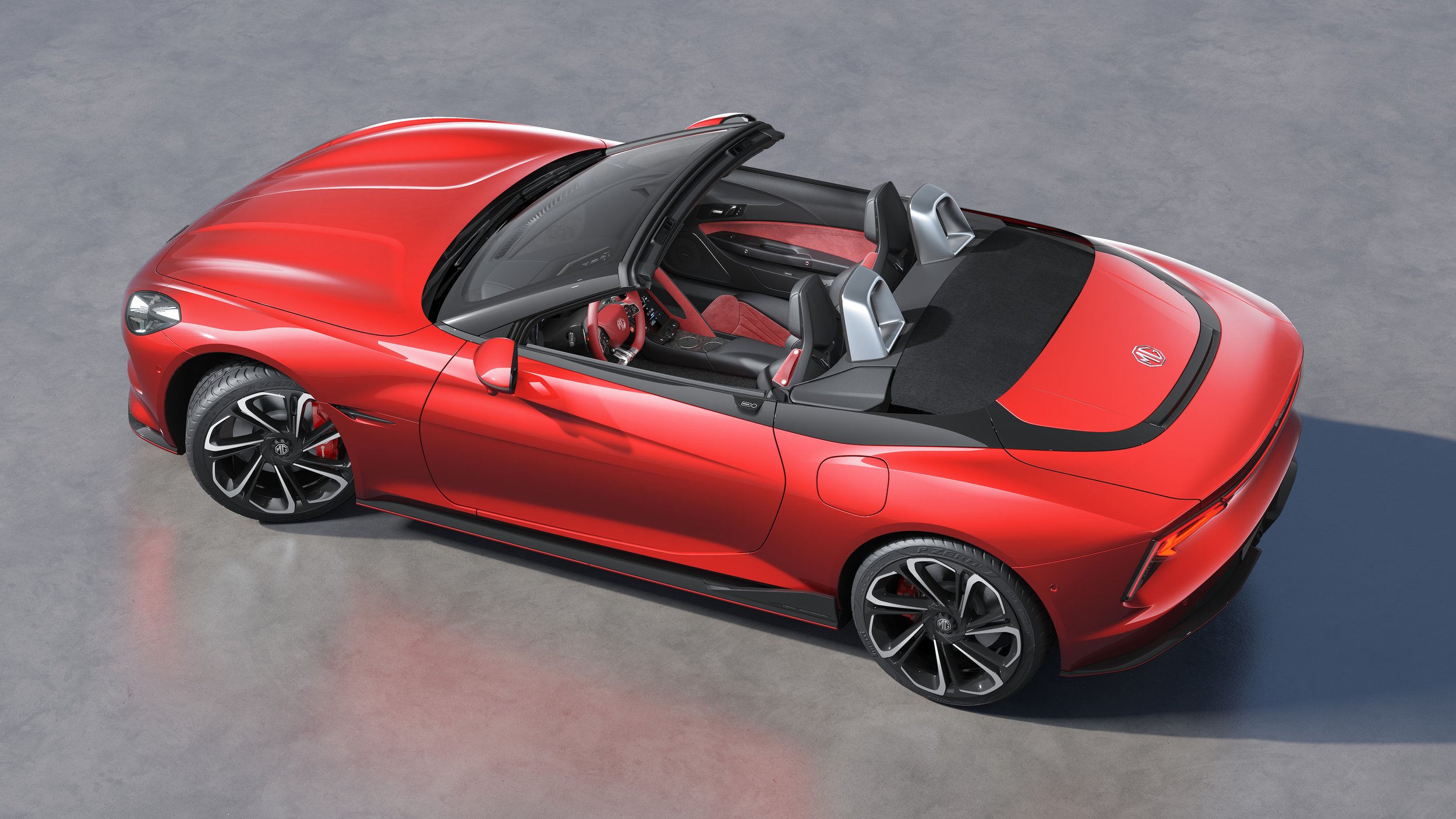
The Cyberster is the outlier in this group and the only one priced for a mainstream UK salary sacrifice scheme. The Trophy single-motor opens at £54,995 OTR with 250 kW (335 hp), a 316-mile WLTP range and a 5.0-second 0-62 time. The GT dual-motor at £59,995 OTR steps up to 375 kW (503 hp) and 3.2 seconds to 62, with a slightly reduced 276-mile range because of the additional motor and weight.
Both versions share a 74.4 kWh usable battery and 150 kW DC rapid charging that takes the pack from 10% to 80% in 38 minutes. Top speed is electronically limited to 124 mph, which is well below the rest of the comparison, but the relevant context is that the Cyberster is the only two-seat roadster of the four cars, and the only one a UK basic-rate or higher-rate employee could realistically order through their employer on a salary sacrifice basis. Running a quote on the GT typically lands well below personal-contract-hire pricing once Income Tax and National Insurance are deducted, and that is what makes the car a genuine alternative to a small premium saloon for a driver who wants the open-air experience.
The Electric Car Scheme lists the Cyberster as part of its best EV deals for performance buyers who want a salary sacrifice route into a two-seat EV without moving into six-figure territory.
The Maserati GranCabrio Folgore: the open-top alternative
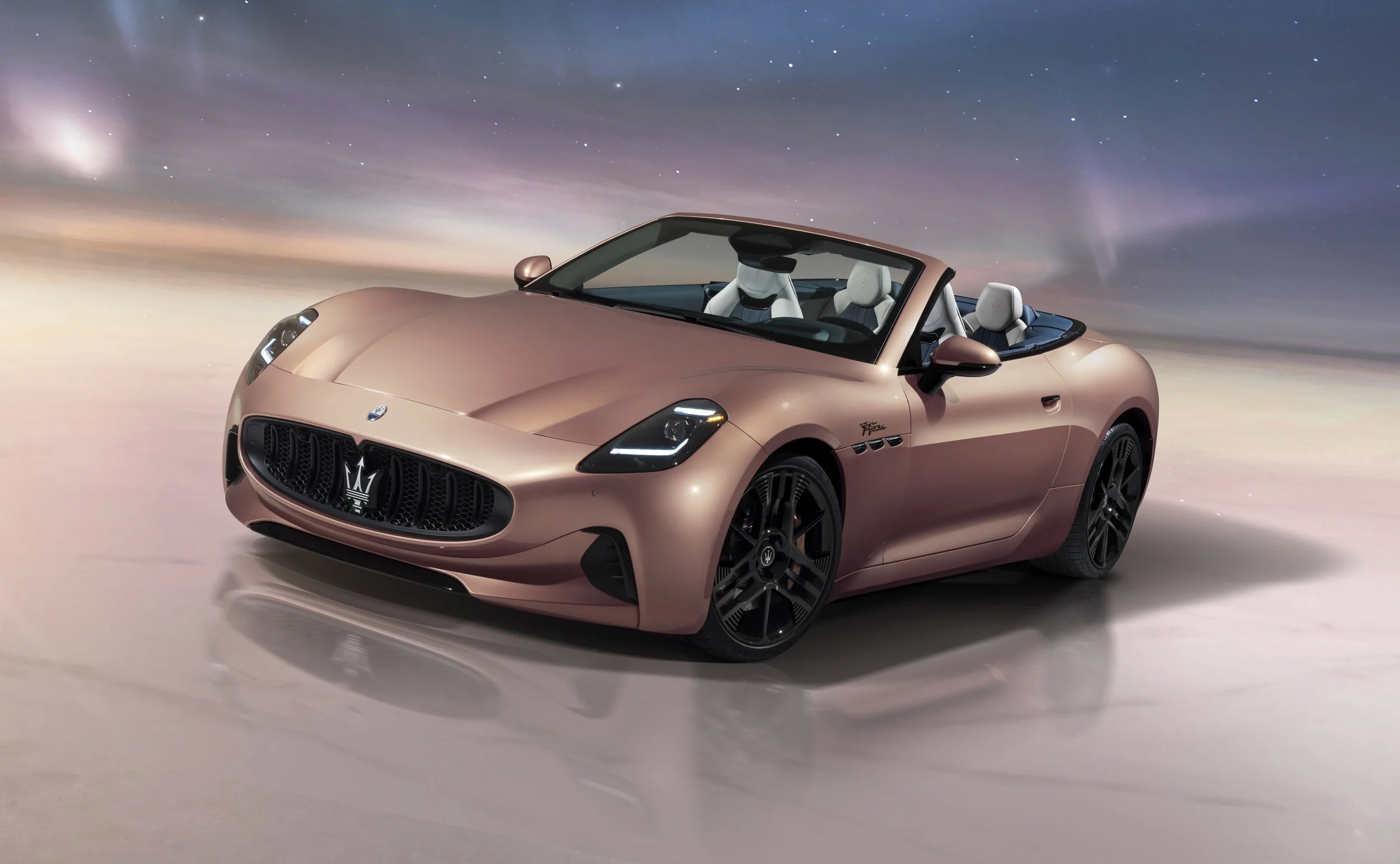
The GranCabrio Folgore is the only four-seat electric convertible currently on sale and Maserati's flagship electric model in the UK. The 2026 OTR price is £185,610 with the RRP at £183,990. Power comes from a tri-motor layout delivering 751 hp, with 0-62 mph in 2.8 seconds and a top speed of 180 mph, both of which sit just behind the Ferrari Luce on the headline numbers.
The battery is 92.5 kWh in total with 83 kWh usable, and the official range is around 245 miles, which is the lowest of the four cars compared here. Rapid charging at up to 270 kW means the battery moves from 10% to 80% in around 20 minutes, faster than the Porsche, but the trade-off is the soft-top body, the extra weight of the open-air architecture, and a slightly compromised range as a result.
In principle, the GranCabrio Folgore can be funded through a salary sacrifice scheme, but in practice the headline price puts it outside the reach of all but the highest-earning additional-rate employees. For employers running an executive car programme, it is one of the few open-top EVs that can sit credibly on the order list alongside German premium saloons.
Where the Luce fits and what it tells us about the segment
The Luce is not a salary sacrifice car. At around £545,000, it sits in the same buyer bracket as a Rolls-Royce Spectre or a McLaren Speedtail. Its commercial role is to anchor the top of the Ferrari range and to signal that the EV transition is no longer optional for a brand whose pricing power depends on technical leadership. For UK drivers, the practical lesson is what the Luce reveals about the rest of the market beneath it.
Three patterns are now clear. The first is that range and battery capacity are no longer the constraint they were two years ago. Even the smallest battery in this group, in the MG Cyberster, comfortably covers a typical UK weekly commute on a single charge. The second is that acceleration figures have compressed, with all four cars sitting between 2.4 and 5.0 seconds to 62 mph, a band that would have been the preserve of supercars a decade ago. The third is that the gap between halo cars and salary sacrifice cars is no longer one of capability, it is one of price and brand. The Cyberster delivers 3.2-second performance for around 10% of the cost of the Luce.
That is also the structural argument for running EVs through a salary sacrifice scheme in the first place. With pure-EV Benefit-in-Kind set at 4% for 2026/27, rising to 5% in 2027/28 and capping at 9% in 2029/30, salary sacrifice remains the most tax-efficient route into a new electric car for a UK employee. The Electric Car Scheme is the only UK provider that pairs the scheme on the car with The Charge Scheme, a salary sacrifice scheme for the cost of charging itself, delivering a further 20-50% saving on home, workplace and public charging. For drivers running a 503 hp Cyberster GT or a 313-mile Taycan, the combined effect compresses the total cost of ownership in a way the Ferrari Luce simply does not need to optimise for.
Complete Employer Protection from Day 1 is the other layer that matters at this end of the market. Standard salary sacrifice cover from most providers begins only after the first three months of a lease. The Electric Car Scheme covers resignation, redundancy, dismissal, long-term illness, parental leave and vehicle damage from the day the car is on the driveway, which is the protection profile finance directors expect when signing off higher-value EVs.
The bottom line
The Ferrari Luce confirms that the luxury EV market is now layered rather than singular. At one end of the table sits a £545,000 four-door grand tourer with a 530 km range. At the other sits a £55,000 British-engineered, Chinese-built roadster with 316 miles of range and a 3.2-second 0-62 GT variant. In the middle sit the Porsche Taycan, which remains the segment benchmark, and the Maserati GranCabrio Folgore, which carries the only true four-seat convertible on sale.
For UK drivers, the practical question is not which of these cars is fastest, it is which is reachable on a salary sacrifice scheme. The Cyberster fits comfortably. The base Taycan fits for higher and additional-rate earners. The GranCabrio Folgore is technically possible but rare in practice. The Luce, for all its symbolism, is a cash purchase that will be measured in waiting lists rather than monthly deductions.
Run an instant salary sacrifice quote on the MG Cyberster or the Porsche Taycan to see what either car costs net of Income Tax and National Insurance under the 2026/27 rules, or browse the full best EV deals shortlist for cars across every budget. Employers can find an overview of how the scheme works in the companies guide.
Are you an employer?
BOOK A DEMOAre you an employee?
SEE AVAILABLE CARSECS GUIDES AND ADVICE
Ready to Go Electric? Your Guides and Tools to a Smooth Switch
-
 How the Scheme Works
Find out how salary sacrifice can work for you or your business.
-
 The Charge Scheme
Save 20-50% on all charging costs through salary sacrifice - at home, the office, or in public..
-
 Complete Employer Protection
All employers and drivers are protected from day 1.
-
 Used Electric Cars
Discover the most affordable way to drive electric. Cars delivered in 14 days.
You might also like…

Last updated: 27/05/2026
Our pricing is based on data collected from The Electric Car Scheme quote tool. All final pricing is inclusive of VAT. All prices above are based on the following lease terms; 10,000 miles pa, 36 months, and are inclusive of Maintenance and Breakdown Cover. The Electric Car Scheme’s terms and conditions apply. All deals are subject to credit approval and availability. All deals are subject to excess mileage and damage charges. Prices are calculated based on the following tax saving assumptions; England & Wales, 40% tax rate. The above prices were calculated using a flat payment profile. The Electric Car Scheme Limited provides services for the administration of your salary sacrifice employee benefits. The Electric Car Scheme Holdings Limited is a member of the BVRLA (10608), is authorised and regulated by the FCA under FRN 968270, is an Appointed Representative of Marshall Management Services Ltd under FRN 667174, and is a credit broker and not a lender or insurance provider.
Copyright and Image Usage: All images used on this website are either licensed for commercial use or used with express permission from the copyright holders, in compliance with UK and EU copyright law. We are committed to respecting intellectual property rights and maintaining full compliance with applicable regulations. If you have any questions or concerns regarding image usage or copyright matters, please contact us at marketing@electriccarscheme.com and we will address them promptly.
