
Toyota to Launch 3 New Electric Vehicles: Our Review

Toyota has moved from cautious hybrid pioneer to a manufacturer with a real electric car range in the UK. The refreshed Toyota bZ4X reached UK customers in January 2026, the all-new C-HR+ followed in March, and the FT-Me city car concept shows where Toyota wants to go next. Toyota has also confirmed it plans six battery electric models in Europe by the end of 2026, a clear shift in pace for a company that spent two decades championing the hybrid.
This article reviews all three cars, with the deepest coverage on the bZ4X: what changed for 2026, how far it goes, what it costs, how the warranty and reliability record stack up, how it compares with the Tesla Model Y, Nissan Ariya and Skoda Enyaq, and what it costs each month through an electric car salary sacrifice scheme.
Toyota's Strategy
Toyota's goal with the upgraded bZ4X and the C-HR+ is to strengthen its position in the growing EV market with better technology and a wider model range. Battery electric cars continue to gain share across the UK and Europe, and the bZ4X has become a more common sight among drivers choosing electric SUVs.
The strategy is straightforward. Fix the two complaints that held back the original bZ4X (range and charging), launch a cheaper and more stylish sibling in the C-HR+, and use the FT-Me to test demand for a sub-2.5-metre urban EV. All three sit within Toyota's wider plan to expand EV production across Europe and the UK, and our separate guide to Toyota and Lexus electric cars in the UK covers the full line-up.
Toyota bZ4X (Updated Model)
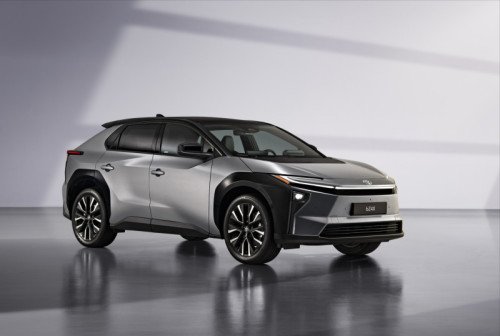
Since its debut in 2022, the Toyota bZ4X has been Toyota's only dedicated electric car in Europe. Its first full mid-life update, on sale in the UK since November 2025 with deliveries from January 2026, is a substantial one: two battery sizes instead of one, more power, standard battery pre-conditioning, a 22kW onboard charger on the top grade and a redesigned cabin.
A note on the name. Toyota is simplifying its electric badging in several markets and has dropped the "4X" suffix in the United States, where the 2026 car is sold simply as the Toyota bZ. In the UK, Toyota still markets the car as the bZ4X, and "bZ" is used as the umbrella name for Toyota's electric range rather than a confirmed UK rebadge. If you see both names, they refer to the same car.
Built as a proper SUV with all-wheel drive available, the bZ4X draws on Toyota's long experience with electric motors and battery management. That experience is backed by an unusually long battery guarantee, covered in the warranty section below, which is a large part of the car's appeal to families who plan to keep an EV for the long haul.
| Current bZ4X | Updated bZ4X (FWD) | Updated bZ4X (AWD) | |
|---|---|---|---|
| Battery Options | Single capacity | 57.7kWh or 73.1kWh | 73.1kWh |
| Maximum Power | 204hp | Up to 224hp | 343hp |
| Max Range (WLTP) | ~317 miles | Up to 356 miles* | Up to 356 miles* |
| Towing Capacity | 750kg | 750kg | 1,500kg |
| Charging | 6.6kW AC standard | Up to 22kW AC available | Up to 22kW AC available |
*Details Pending
A Review of the Updated Toyota bZ4X - Performance, Features, and Design
The refreshed bZ4X offers a wider spread of options to suit different budgets and driving patterns. It now comes in three drivetrain configurations, each with a different balance of performance and efficiency.
Performance
The 2026 bZ4X uses new eAxles built around silicon-carbide semiconductors, which waste less energy as heat and allow Toyota to extract more power from the same motors. The result is more output across the board: 165bhp (123kW) from the 57.7kWh front-wheel-drive car, 221bhp (165kW) from the 73.1kWh front-wheel-drive car, and 338bhp (252kW) from the 73.1kWh all-wheel-drive version. That top figure makes the bZ4X AWD one of the most powerful Toyotas on sale in the UK, across every fuel type. The all-wheel-drive car also gains doubled towing capacity of 1,500kg, a genuine upgrade for anyone using it as a family SUV with a caravan or trailer.
Range was the outgoing car's weakest point, and it is where Toyota has made the most progress. The headline WLTP figure of up to 352 miles applies to the 73.1kWh front-wheel-drive Design on 18-inch wheels, up from 314 miles on the best of the previous range. A heat pump comes as standard across all grades, which matters in a UK winter. Independent testing of the outgoing car found real-world efficiency of roughly 2.4 to 2.9 miles per kWh depending on the season, so expect a cold-weather range well below the WLTP number. The new eAxles, heat pump and standard pre-conditioning should narrow that gap on the 2026 car, though no EV hits its official range figure in January.
| Battery and drivetrain | Power | WLTP range | Grades |
|---|---|---|---|
| 57.7kWh, front-wheel drive | 165bhp (123kW) | Around 275 miles | Icon |
| 73.1kWh, front-wheel drive | 221bhp (165kW) | Up to 352 miles | Design, Excel |
| 73.1kWh, all-wheel drive | 338bhp (252kW) | Around 290 miles | Excel AWD |
The 352-mile figure is Toyota UK's homologated number. The 57.7kWh and AWD figures are drawn from UK road-test data, since Toyota quotes only the headline range, so treat them as a guide rather than a certificate.
The Interior


Toyota has reworked the cabin around a new centre console designed to integrate phones and other devices more neatly, with twin wireless smartphone chargers standard on every grade. A 14-inch Toyota Smart Connect+ display is standard, replacing the outgoing car's smaller screen and giving the interior a more modern, connected feel.
Changes to the suspension settings and body construction have cut noise and vibration, producing a quieter, more comfortable drive that sits closer to the premium expectations of this segment. The cheap-looking plastic wheel-arch cladding on the original has gone, replaced by gloss black trim, and the front end has been reshaped for a sleeker, more aerodynamic look without losing the SUV profile that made the car popular. Boot space is unchanged at 452 litres.
Features
The most useful new feature is battery pre-conditioning, which is standard on every 2026 bZ4X. It warms the battery to its ideal temperature ahead of a rapid charge, either manually or automatically when you set a rapid charger as a destination in the satnav. On a cold morning this is the difference between a charger delivering its full rate and one crawling along at half speed, and it matters more for UK drivers than the peak kW figure on the spec sheet.
Peak DC charging stays at 150kW, which Toyota quotes as a 10-80% top-up in around 30 minutes (Toyota UK's own figure is approximately 32 minutes) on the 73.1kWh battery. The 57.7kWh car takes a similar time because it has less to fill. On AC, an 11kW onboard charger is standard and Excel grades can be specified with a 22kW unit, which halves the time on a three-phase workplace or destination charger. On a typical 7kW home wallbox, Toyota quotes around 7 hours from 10-80% for the larger battery, comfortably overnight. Our guide to charging an electric car in public covers what those figures mean in practice.
The car also carries a dedicated BEV navigation system that plans routes around charging stops based on your battery state and range, and Toyota has made several of these software features available to earlier bZ4X owners through over-the-air updates.
The combination of Toyota's renowned reliability, comprehensive battery warranty, and these new enhancements positions the bZ4X as a strong contender for families and individuals looking for a versatile, future-proof electric SUV.
Warranty and Reliability
Toyota leans on its reliability reputation harder than any other brand selling an EV in the UK, and the warranty terms back that up. Every new bZ4X comes with an 8-year or 100,000-mile warranty on the traction battery as standard. Keep the car serviced at a Toyota dealer each year and the Battery Care Warranty extends that cover until the car is 10 years old or has covered 1 million miles, whichever comes first. Within that period Toyota guarantees the battery will retain at least 70% of its original capacity.
The rest of the car follows the same pattern. The standard 3-year, 60,000-mile manufacturer warranty extends with each qualifying service under Toyota's Service Activated Warranty, up to 10 years or 100,000 miles. Both extensions depend on keeping up with dealer servicing, and the battery cover protects against capacity falling below the 70% threshold rather than promising zero degradation.
Set against rivals, this is generous. Nissan's UK warranty terms give the Ariya a 3-year, 60,000-mile vehicle warranty, extendable by up to three further years through a Service Activated Warranty introduced for 2026 models, plus a separate 8-year, 100,000-mile battery warranty. Toyota's 10-year battery cover runs two years longer, and its mileage cap is in a different league.
Reliability Problems
The bZ4X's early years were not trouble-free, and it would undermine Toyota's reliability case to pretend otherwise. In June 2022, weeks after launch, Toyota recalled the car worldwide over wheel hub bolts that could loosen and, in extreme cases, allow a wheel to detach. Only one bZ4X had been delivered in the UK at that point, so the practical impact here was minimal, as DrivingElectric's reliability report notes, but the timing dented confidence in the car's first year on sale.
A later software recall affected the multi-information display and warning lights on some 2023 to 2026 cars and was fixed with a dealer software update. Beyond the recalls, owner reports point mostly to software quirks rather than mechanical faults: infotainment reboots, driver-assistance warnings that clear after a restart, and cold-weather range shortfalls on early cars. None of this suggests a systemic mechanical problem, and the 2026 update's heat pump and standard pre-conditioning directly target the cold-weather complaint. Anyone considering a used early bZ4X should ask a Toyota dealer to confirm both recalls have been completed, since neither costs the owner anything.
How the bZ4X Compares to Rivals
The bZ4X's closest competitors span a fairly wide price band. The Tesla Model Y leads on charging speed and Supercharger access, the Nissan Ariya undercuts on entry price, and the Skoda Enyaq offers the biggest boot of the four at 585 litres.
| Model | UK entry price | Max WLTP range | Battery warranty |
|---|---|---|---|
| Toyota bZ4X | From £39,995 | Up to 352 miles | 8yr / 100,000 miles, extendable to 10yr / 1m miles, 70% capacity |
| Tesla Model Y | From £41,990 | Up to 383 miles | 8yr / 100,000-120,000 miles by variant, 70% capacity |
| Nissan Ariya | From £37,500 | Up to 330 miles | 8yr / 100,000 miles |
| Skoda Enyaq | From £39,520 | Up to 359 miles | 8yr / 100,000 miles |
Prices are manufacturer list prices in September 2026 and move with promotions, so check the live figures before comparing. On price, the bZ4X sits alongside the Enyaq and below the Model Y, with the Ariya cheapest to get into. On range, Toyota's 352 miles trails the longest-range Model Y but beats the Ariya and is close to the Enyaq's best. Where the bZ4X pulls clear is warranty length: with dealer servicing, Toyota's battery cover runs two years longer than anything else in this table, with a mileage cap far beyond the rest.
How Much Does the bZ4X Cost in the UK?
Toyota UK announced pricing for the 2026 bZ4X in October 2025, with orders opening on 3 November and deliveries from January 2026. The new 57.7kWh battery gives the range a lower starting point than a single-battery line-up would allow, although like-for-like the 73.1kWh grades cost more than the outgoing car.
| Grade | Battery and drivetrain | Price at launch (OTR, Oct 2025) | Notable equipment |
|---|---|---|---|
| Icon | 57.7kWh, FWD | £39,995 | 14-inch display, twin wireless chargers, heated front seats and steering wheel, 11kW AC charger |
| Design | 73.1kWh, FWD | £45,795 | Adds 360-degree panoramic view monitor, windscreen de-icer, puddle lights |
| Excel | 73.1kWh, FWD | £48,995 | Adds 20-inch alloys, ventilated power front seats, heated rear seats, digital rear-view mirror, 22kW AC charger |
| Excel AWD | 73.1kWh, AWD | £51,545 | As Excel, with all-wheel drive, 338bhp and 1,500kg towing |
An optional Premium Pack for Excel adds a panoramic roof, JBL audio and bi-tone paint for £2,500. At the time of writing Toyota UK is advertising the entry car at £38,495 including a £1,500 Electrified Saving offer, so the launch prices above are a ceiling rather than a floor. A bZ4X Touring estate joined the range in mid-2026 at £45,995 for the Design and £51,695 for the Excel AWD.
The Verdict
The 2026 bZ4X does not transform the car's character. It remains a practical, quiet family SUV rather than a performance statement, and drivers who prize sharp handling will find more fun elsewhere. What it does do is fix the two faults that mattered: 352 miles and a properly pre-conditioned 150kW charge bring it into line with the segment. Add Toyota's reliability record and a battery warranty that no rival matches, and the bZ4X is a strong choice for families who want an electric SUV they can keep for a decade with confidence.
Toyota C-HR+

The second big arrival is the all-new C-HR+, Toyota's entry into the UK's compact electric SUV segment. It builds on the conventional C-HR, which has sold more than a million units across Europe, and pairs coupe-like styling with genuine space and practicality. Despite the shared name it is a different car underneath, built on Toyota's dedicated EV platform rather than the hybrid C-HR's.
| Feature | Toyota C-HR+ Icon | Toyota C-HR+ Design | Toyota C-HR+ Excel |
|---|---|---|---|
| Battery | 57.7kWh | 77kWh | 77kWh |
| Drivetrain | FWD | FWD | FWD |
| Max range (WLTP) | Up to 284 miles | Up to 376 miles | Up to 376 miles |
| AC onboard charger | 11kW | 11kW | 22kW |
| UK price at launch (OTR, Dec 2025) | £34,495 | £36,995 | £40,995 |
Performance and Trims
Toyota confirmed UK pricing and grades for the C-HR+ in December 2025, with the car on sale from 6 January 2026 and first deliveries in March. UK buyers get two batteries: a 57.7kWh pack in the entry Icon and a 77kWh pack in the Design and Excel, all front-wheel drive. The 77kWh car's 376-mile WLTP figure gives it one of the longest ranges of any electric car at its price in the UK, and the Design grade delivers that range for under £37,000.
In Europe Toyota also offers a 343bhp all-wheel-drive C-HR+ that covers 0-62mph in 5.2 seconds, one of the quickest cars in Toyota's mainstream range. That version was not part of the UK launch line-up, so check with Toyota if a UK AWD arrives later. Developed on a dedicated EV platform, the C-HR+ gains a low centre of gravity and an agile feel that suits its sporty coupe-crossover styling.
The Interior and Features


Inside, the C-HR+ offers a roomy, comfortable cabin with a 14-inch display as standard, wireless charging and a panoramic roof on higher grades. The interior balances practicality with a premium feel, and the Excel adds the same 22kW onboard charger found on the top bZ4X. Safety is covered by Toyota's T-Mate package, including the latest Toyota Safety Sense driver-assistance systems.
The Verdict
Designed as the backbone of Toyota's electric line-up, the C-HR+ is arguably the more significant of the two launches. It undercuts the bZ4X by more than £5,000, out-ranges it on the 77kWh battery, and looks more distinctive. For drivers who do not need all-wheel drive or the bZ4X's towing ability, it is the Toyota EV to shortlist first in the compact electric SUV market.
Toyota FT-Me Concept

Toyota is also eyeing the micro-mobility segment with the FT-Me concept. Designed to rival the Citroen Ami and the Microlino, this compact two-seater is under 2.5 metres long, occupying half a parking space, or less when parked nose-in to the kerb. It remains a concept with no UK price or on-sale date, but it shows Toyota's intent to cover every segment of electric mobility, from family SUVs to city runabouts.
What we know so far


The FT-Me is built around safety and accessibility. A 360-degree visibility design keeps drivers aware of other road users, and all driving functions, including acceleration and braking, can be controlled from the steering wheel, so wheelchair users can drive it without aftermarket modifications. Keyless entry and smartphone integration come as standard.
Toyota is targeting a 90% reduction in the FT-Me's carbon footprint compared with similar vehicles on the market today, with a strong focus on recyclability. To make the most of a small battery, the drivetrain is designed to use three times less energy per kilometre than a typical long-range EV, and a solar roof can add 15 to 20 miles of range a day. That covers the average daily mileage for a vehicle of this type and could mean many drivers rarely need to plug in at all.
Leasing a Toyota EV through The Electric Car Scheme
Both the bZ4X and the C-HR+ are available through The Electric Car Scheme now, and the bZ4X's case strengthens considerably once tax is factored in. As a pure electric car, every trim qualifies for the 4% Benefit-in-Kind rate for 2026/27, rising to 5% in 2027/28 and 7% in 2028/29, against up to 37% for an equivalent petrol or diesel SUV. On a £45,795 Design, 4% BiK means a taxable benefit of £1,832 a year, costing a higher-rate taxpayer around £61 a month. The same list price in a petrol car in the top band would produce a taxable benefit of nearly £17,000 and a monthly bill more than nine times higher.
Through an electric car salary sacrifice scheme, the monthly lease cost comes out of gross salary before income tax and National Insurance, which is where the 20-50% saving comes from. The table below shows indicative figures for each UK bZ4X grade, pulled from The Electric Car Scheme quote tool in August 2026.
| Feature | Icon 57.7kWh (123kW) | Design 73.1kWh (165kW) | Excel 73.1kWh (165kW) | Excel AWD 73.1kWh (252kW) |
|---|---|---|---|---|
| Gross monthly salary sacrifice (inc VAT) | £1,084 | £684 | £739 | £684 |
| Employee income tax saving | -£433 | -£274 | -£296 | -£274 |
| Employee NI saving | -£22 | -£14 | -£15 | -£14 |
| Average monthly BiK tax over term | £81 | £93 | £99 | £93 |
| Indicative net monthly cost | £709 | £490 | £528 | £490 |
Assumptions: 40% taxpayer in England or Wales, 36-month term, 10,000 miles a year, flat payment profile, and a fully inclusive package covering insurance, servicing, maintenance, tyres and breakdown cover. Figures are indicative, depend on your tax position and specification, and change with funder pricing (at the time of quoting the entry Icon was pricing higher than the Design, which is why the Design is the value pick). This is not tax advice. Run your own numbers through the quote tool and read our guide to employee tax savings on electric car schemes for the full workings by tax band.
The Electric Car Scheme's pricing engine pulls quotes from multiple UK funders rather than a single leasing company, so the monthly figure for a bZ4X or C-HR+ reflects real market competition. Every employer gets Complete Employer Protection from day one, covering resignation, redundancy, long-term sickness and parental leave with no exclusion period and no excess, at £0 set-up cost. Employees can also add The Charge Scheme to save 20-50% on home, workplace and public charging through the same salary sacrifice mechanism, which matters for a car with a 73.1kWh battery to fill.
The Electric Car Scheme was named EV Salary Sacrifice Provider of the Year 2026 by SME News and Best Salary Sacrifice Provider by Car Sloth in both 2024 and 2025, holds a 4.8 out of 5 rating on Trustpilot, and runs schemes for employers including Holland & Barrett and Leeds Bradford Airport. To see how providers differ on protection, pricing and what is included, use the EV salary sacrifice comparison.
Frequently Asked Questions
Why is the Toyota bZ4X not selling as well as rivals?
Early cars were held back by below-average range, slow real-world charging in cold weather and a wheel-hub recall within weeks of the UK launch. Toyota also arrived late to the EV market, into a segment already crowded with the Model Y, Enyaq and Ariya. The 2026 update, with 352 miles of range and standard pre-conditioning, directly targets the complaints that caused early hesitation.
Is the Toyota bZ4X worth the money?
It is worth it if you value Toyota's warranty and reliability record over the sharpest spec sheet in the class. On salary sacrifice, the 4% BiK rate for 2026/27 and the included maintenance and insurance narrow the running-cost gap against personally leasing or buying the same car. Drivers chasing the fastest charging or longest range should compare it against the Model Y first.
What are the common problems with the bZ4X?
The most notable was the June 2022 wheel-hub-bolt recall, which affected one UK car, followed by a software recall for the multi-information display on some model years. Beyond the recalls, owners mostly report infotainment reboots and occasional driver-assistance glitches rather than mechanical faults. Both recalls are fixed free of charge by a Toyota dealer.
Did the Toyota bZ4X fail?
"Fail" overstates it. The bZ4X sold in lower numbers than Toyota hoped, held back by a modest original range, slower cold-weather charging than rivals and a launch-year recall, but it was never withdrawn from sale. The 2026 update and the arrival of the cheaper C-HR+ are Toyota's direct response.
Is the 2026 bZ4X better than the 2025 model?
Yes, on the measures that mattered most. The 352-mile WLTP range is a meaningful step up from 314 miles, standard pre-conditioning and a heat pump fix the cold-weather charging complaint, power is up across the range, and the new 57.7kWh Icon gives the range a cheaper entry point. The positioning as a practical, reliability-focused family SUV has not changed.
Can I get a Toyota bZ4X or C-HR+ through salary sacrifice?
Yes. Both are available through The Electric Car Scheme. Your employer needs to offer the scheme as a benefit, you choose your grade, term and mileage, and the monthly cost is deducted from gross salary before tax and National Insurance. Insurance, servicing, maintenance and breakdown cover are included, and used bZ4X models are available too.
The Bottom Line
Toyota has fixed the two problems that held the original bZ4X back. A 352-mile range and a properly pre-conditioned 150kW charge bring it into line with the segment, and the battery warranty that stretches to 10 years or 1 million miles remains a genuine point of difference against every rival. The C-HR+ makes the same technology cheaper and longer-legged still, from £34,495 with up to 376 miles, and the FT-Me shows Toyota is thinking about the city as well as the school run. Whether a bZ4X beats a Model Y, Ariya or Enyaq for you comes down to how much Toyota's warranty and track record matter against a longer spec sheet. With 4% BiK for 2026/27 and 20-50% savings through an electric car salary sacrifice scheme, it is a more affordable question to answer than it looks.
Ready to see what a Toyota EV would cost you each month? Get an instant quote on a new or used bZ4X or C-HR+, or if you are an employer, find out how salary sacrifice works for companies and book a demo.
Are you an employer?
BOOK A DEMOAre you an employee?
SEE AVAILABLE CARSYou might also like…


If you’re interested in EV salary sacrifice or are looking to get closer to net-zero targets at your company, check out our website! Employees who utilise their company’s electric car salary sacrifice scheme can save 20-50% on the cost of a car. You can also discover our best EV deals!
Last updated: 18.09.26
