
What Does The Future Hold For EVs?
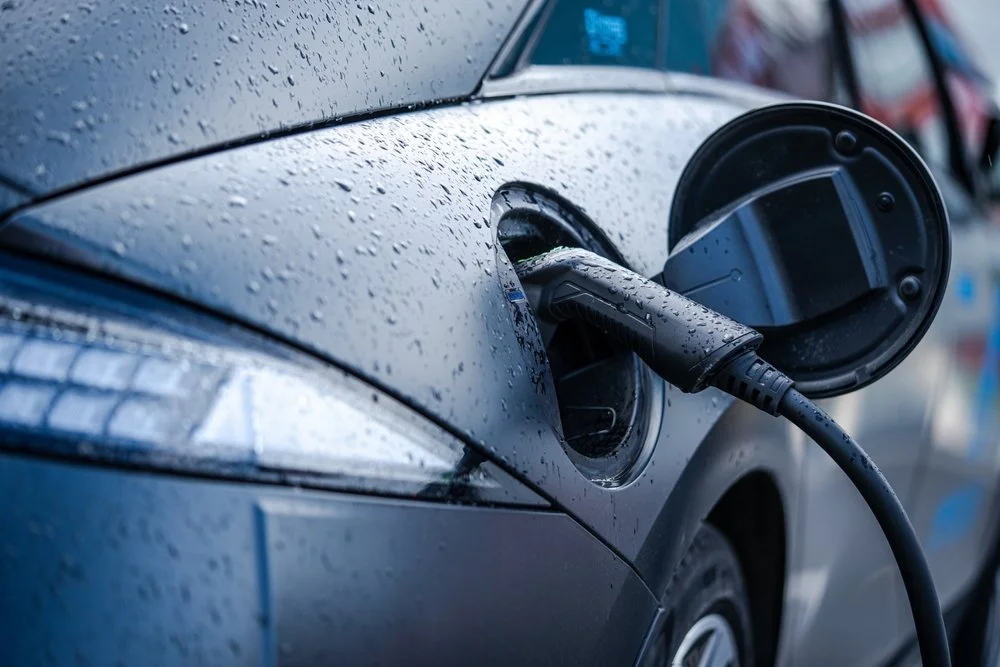
Source: Shutterstock
The electric vehicle revolution is no longer a distant promise—it's reshaping British roads right now. As we approach 2026, the transformation is accelerating beyond even the most optimistic predictions. With breakthrough battery technologies entering production, charging infrastructure expanding rapidly, and electric car salary sacrifice schemes making EVs accessible to millions of UK employees, the next 12 months promise to be pivotal.
In this comprehensive guide, we'll explore the cutting-edge developments arriving in 2026, what they mean for UK businesses and drivers, and why now might be the perfect time to transition to an electric car through a company electric car scheme.
The EV Revolution: Where We Stand in Late 2025
The UK's electric vehicle journey has reached a remarkable inflection point as we close out 2025. The nationwide charging network has surpassed 75,000 points, with ultra-rapid charging stations (150kW+) growing by 84% over the past year alone. This infrastructure expansion, combined with the Labour government's reconfirmation of the 2030 petrol and diesel ban, demonstrates an irreversible shift toward electrification.
But the real transformation goes deeper than statistics. Modern electric vehicles now routinely achieve real-world ranges exceeding 300 miles, with premium models like the Mercedes EQS offering up to 492 miles. Rapid charging technology has advanced to the point where adding 200 miles of range takes just 20 minutes at the latest ultra-rapid chargers.
The Salary Sacrifice Advantage
Perhaps most significantly for UK employees, electric car salary sacrifice schemes have matured into the most cost-effective way to access new EVs. With the current 3% Benefit-in-Kind rate for 2025/26, drivers are saving 20-50% compared to traditional leasing or outright purchase. This makes vehicles that were once considered premium—like the Tesla Model Y or BMW iX—accessible to a much broader audience through The Electric Car Scheme.
Breaking New Ground: 2026 Technology Advances Arriving Soon
The next 12 months will bring transformative innovations that address the remaining barriers to EV adoption. Manufacturers are racing to bring to market technologies that will fundamentally change how we think about electric cars.
Revolutionary Battery Developments
Solid-State Batteries Enter Production
2026 marks the beginning of the solid-state battery era. Toyota has announced its solid-state battery vehicles will enter limited production in 2026-2027, promising:
917-mile range on a single charge—eliminating range anxiety entirely
10-minute charging times from 10-80%—comparable to petrol refuelling
50% weight reduction compared to current lithium-ion batteries
Dramatically improved safety with no risk of thermal runaway
Other manufacturers including Nissan, BMW, and Mercedes are following closely with their own solid-state programmes launching between 2026-2028. The third-generation Nissan LEAF, arriving in 2026, is expected to showcase Nissan's semi-solid-state technology as a bridge to full solid-state batteries.
Battery Costs Plummeting Further
Battery pack prices have fallen below $100/kWh (£79/kWh) in late 2025—a critical threshold that makes EVs cost-competitive with petrol cars. By 2026, we expect prices to drop further to $80-90/kWh, driven by:
Economies of scale as gigafactories reach full production capacity
Material innovations including lower-cost lithium iron phosphate (LFP) batteries becoming standard in mass-market vehicles
Manufacturing efficiency improvements across the supply chain
This cost reduction directly translates to more affordable electric vehicles across all segments, from budget-friendly options like the Dacia Spring to premium models.
Next-Generation Battery Chemistry
Beyond solid-state, researchers are perfecting sodium-ion batteries for 2026 production. These offer:
Complete elimination of cobalt and lithium, using abundant sodium instead
Better performance in cold weather—addressing one of winter EV concerns
Lower environmental impact in production
Potential cost savings of 20-30% over current LFP batteries
Charging Infrastructure Revolution
Bidirectional Charging Becomes Standard
From 2026, most new electric vehicles will feature bidirectional charging capability, also known as Vehicle-to-Grid (V2G) or Vehicle-to-Home (V2H). This technology allows your EV to function as a mobile power station, capable of:
Powering your home during peak electricity prices or power cuts
Selling energy back to the grid during high-demand periods, potentially earning £500-1,000 annually
Balancing grid demand to support renewable energy integration
The Hyundai IONIQ 9, arriving in UK showrooms in early 2026, will be one of the first mainstream models with full bidirectional charging. Combined with The Charge Scheme's salary sacrifice charging solution, this creates new opportunities for EV drivers to offset their charging costs.
Ultra-Fast Charging Networks Expanding
The UK's ultra-rapid charging network (150kW-350kW) is expanding exponentially. By mid-2026, we expect:
Over 5,000 ultra-rapid chargers nationwide (up from 2,800 in late 2025)
Charging speeds up to 500kW at select locations—adding 100 miles of range in under 3 minutes
Better geographic distribution, with rural charging infrastructure receiving significant investment
Companies like IONITY, Shell Recharge, and BP Pulse are rolling out next-generation charging hubs with multiple 350kW+ chargers, solar canopies, and battery storage systems to reduce grid strain.
Heavy-Duty Vehicle Charging Solutions
2026 will see the first megawatt charging (MCS) stations for heavy-duty electric vehicles, capable of delivering up to 3.75MW of power. While primarily for commercial vehicles, this infrastructure development supports the broader EV ecosystem and demonstrates the scalability of electric transport.
Government Policy and Infrastructure Plans Accelerating in 2026
The UK government has reinforced its commitment to electric vehicle adoption with clear policies and substantial investment.
Zero Emission Vehicle (ZEV) Mandate Intensifies
The ZEV mandate, introduced in 2024, requires manufacturers to sell an increasing percentage of zero-emission vehicles:
2026 target: 28% of new car sales must be electric (up from 22% in 2025)
2027 target: 33% electric
2030 target: 80% electric
2035: 100% of new car and van sales must be zero-emission
Manufacturers failing to meet these targets face significant fines (£15,000 per non-compliant vehicle), creating strong incentives to expand EV model ranges and competitive pricing.
LEVI Fund Accelerating Local Infrastructure
The Local Electric Vehicle Infrastructure (LEVI) fund has allocated £381 million to local authorities for 2025-2027, focusing on:
On-street residential charging for homes without driveways—addressing a key barrier to EV adoption
Destination charging hubs at community centers, leisure facilities, and shopping areas
Rural charging infrastructure to ensure equitable access across the UK
This investment complements home charging solutions and workplace charging schemes that many employers are implementing alongside electric car salary sacrifice schemes.
Workplace Charging Scheme Extension
The government's Workplace Charging Scheme has been extended through 2026, providing up to £350 per charging socket (maximum 40 sockets per site) for businesses installing EV infrastructure. This makes it easier for employers to support employees who choose electric vehicles through salary sacrifice car schemes.
The Future of EV Costs: 2026 Brings Affordability Breakthrough
2026 is shaping up to be the year electric vehicles reach true cost parity with petrol and diesel cars—a watershed moment for mass adoption.
Purchase Price Parity Arriving
Industry analysts now predict that the average electric car will match the purchase price of an equivalent petrol model by late 2026 or early 2027, driven by:
Falling battery costs (now the single largest EV component cost)
Manufacturing scale efficiencies as production volumes increase
Intense competition among manufacturers, particularly with affordable Chinese EVs entering the market
Models like the upcoming Volkswagen ID.2 (priced around £22,000) and Renault 5 E-Tech demonstrate how EVs are becoming accessible at every price point.
Total Cost of Ownership Already Favours EVs
Even before purchase price parity, electric cars are already cheaper to own and operate than petrol equivalents when considering:
Fuel costs: Charging an EV costs 3-5 times less per mile than petrol—saving £600-1,500 annually
Maintenance: EVs have 50% lower servicing costs due to fewer moving parts
Tax advantages: Zero Vehicle Excise Duty (VED) for pure EVs continues through 2026, though EVs will pay VED from April 2025 onward (£10 first year, then £195 annually)
Depreciation: Used EV values are stabilizing as demand grows and used electric car markets mature
Salary Sacrifice Schemes Maximize Affordability
For UK employees, electric car salary sacrifice remains the most cost-effective route to EV ownership in 2026:
20-50% savings compared to personal leasing or finance
3% Benefit-in-Kind rate for 2025/26 (rising to 4% in 2026/27, 5% in 2027/28)—still dramatically lower than petrol/diesel company cars (up to 37%)
All-inclusive packages covering insurance, maintenance, breakdown cover, and home charger installation
Additional charging savings through The Charge Scheme's salary sacrifice charging
A Nissan Ariya costing £584/month as a personal lease becomes just £393/month after tax savings through salary sacrifice—making a premium EV more affordable than many mid-range petrol cars.
Smart Integration and Connected Features Arriving in 2026
The next generation of electric vehicles goes far beyond improved batteries and faster charging—they're becoming intelligent, connected platforms that seamlessly integrate with our digital lives.
AI-Powered Energy Management
2026 model EVs will feature sophisticated AI systems that:
Predict your driving patterns and pre-condition the battery for optimal efficiency
Route planning with real-time optimization considering traffic, weather, charging availability, and electricity prices
Automatic charging schedule optimization to use the cheapest electricity rates (potentially saving £400-600 annually vs. unoptimized charging)
Battery health management that extends lifespan by up to 20% through intelligent charge/discharge patterns
Vehicle-to-Everything (V2X) Integration
Beyond Vehicle-to-Grid, EVs in 2026 will communicate with:
Smart homes: Automatically charging when your solar panels are producing excess energy or when EV tariffs offer the cheapest rates
The national grid: Participating in demand response programs to earn revenue
Other vehicles: Sharing real-time information about charging availability and road conditions
Infrastructure: Communicating with traffic systems and charging networks for seamless experiences
Over-the-Air Updates Becoming Standard
Like smartphones, EVs from 2026 will receive regular over-the-air software updates that:
Improve range through battery management optimizations (some manufacturers have already delivered 5-10% range improvements post-purchase)
Add new features without visiting a dealership
Enhance safety systems as technology advances
Fix bugs and improve user experience continuously
Tesla's continuous improvement model is becoming industry standard, with BMW, Mercedes, and Volkswagen all implementing comprehensive OTA update capabilities.
Enhanced Driver Assistance and Autonomy
While fully autonomous vehicles remain years away, 2026 EVs will feature significantly improved:
Highway pilot systems capable of hands-free driving on major roads
Enhanced parking assistance, including remote parking from outside the vehicle
Predictive safety systems that anticipate hazards before human drivers react
Improved night vision and pedestrian detection reducing accident risk
Navigating Future Challenges: What Still Needs Addressing
While the future of electric vehicles looks promising, several challenges require ongoing attention and investment.
Grid Capacity and Smart Charging Solutions
The rapid growth in EV adoption places additional demand on the UK's electricity grid. Current estimates suggest 30-40 GW of additional capacity will be needed by 2030 to support widespread EV charging. Energy companies and the National Grid are responding with:
Smart charging infrastructure that automatically shifts charging to off-peak hours
Vehicle-to-Grid integration using millions of EVs as distributed energy storage
Renewable energy expansion, particularly offshore wind farms
Grid reinforcement in high-demand areas
Battery storage installations at charging hubs to buffer grid demand
Smart charging technology is becoming mandatory for new home charge points, ensuring that mass EV adoption doesn't overwhelm local distribution networks.
Raw Material Supply and Sustainability
The projected growth in EV production creates unprecedented demand for battery materials. The industry is addressing this through:
Recycling programs: Up to 95% of lithium-ion battery materials can be recovered and reused. Battery recycling infrastructure is expanding rapidly.
Alternative chemistries: Sodium-ion batteries eliminate reliance on lithium and cobalt entirely
Ethical sourcing: Increased scrutiny of supply chains to ensure responsible mining practices
Battery life extension: Advances in battery management are extending first-life usage from 10 to 15+ years
Second-life applications: Used EV batteries are being repurposed for home energy storage
Charging Infrastructure Equality
While urban areas enjoy abundant charging options, ensuring equitable access remains crucial:
Rural infrastructure: The LEVI fund is specifically targeting underserved rural areas
On-street residential charging: New technologies like pop-up chargers and wireless charging pads are being trialed for street-parked vehicles
Multi-occupancy buildings: Regulations are evolving to require EV charging capability in new apartment developments
Destination charging: Supermarkets, leisure facilities, and car parks are rapidly installing chargers
For those without home charging access, workplace charging schemes and public charging networks are becoming increasingly viable alternatives, especially when combined with The Charge Scheme's salary sacrifice charging benefits.
Affordability for Lower-Income Households
While prices are falling, ensuring EVs remain accessible to all income levels requires:
Robust used EV market: Used electric car sales are surging, with prices dropping 20-30% year-over-year
Salary sacrifice schemes: Making new EVs accessible to employees at all income levels
Grant programs: Continued government support for low-income households and small businesses
Lower-cost models: Manufacturers launching sub-£20,000 EVs in 2026-2027
Looking Ahead: The Road to 2030 and Beyond
The transformation of the UK's automotive landscape is accelerating beyond even optimistic projections. By 2030, when the sale of new petrol and diesel cars ends, we can expect:
Universal EV Adoption Infrastructure
300,000+ public charging points (up from 75,000 today)
5-minute charging times becoming standard at ultra-rapid chargers
Charging as convenient as refuelling with chargers at every supermarket, car park, and service station
Technology Maturation
Solid-state batteries in mainstream vehicles offering 500+ mile ranges
Vehicle-to-Grid generating revenue for millions of EV owners
Recycling infrastructure recovering 95%+ of battery materials
Second-life battery applications creating a circular economy
Economic Transformation
EVs cheaper than petrol cars at every price point
Total cost of ownership savings of £3,000-5,000 over vehicle lifetime
Job creation in charging infrastructure, battery manufacturing, and vehicle servicing
The Employer Opportunity: Act Now
For UK businesses, 2026 represents a strategic moment to implement or expand electric car salary sacrifice schemes. The benefits are compelling:
Attract and retain talent: Green employee benefits are increasingly valued, especially by younger workers
Support sustainability goals: Demonstrate genuine commitment to net zero targets
Zero cost to business: Company electric car schemes require no upfront investment from employers
Future-proof benefits: Get ahead of the 2030 transition while current tax advantages remain strong
Complete Employer Protection: The Electric Car Scheme offers industry-leading protection from day one, eliminating financial risk if employees leave
For employees, the combination of falling vehicle costs, expanding infrastructure, and generous tax benefits through salary sacrifice electric car schemes makes 2026 an ideal time to make the switch. With 3% Benefit-in-Kind rates and 20-50% savings, premium electric vehicles are now more affordable than mid-range petrol cars.
Frequently Asked Questions About the Future of EVs
When will electric cars be cheaper than petrol cars?
Industry experts predict electric vehicles will reach purchase price parity with equivalent petrol models by late 2026 or early 2027. However, EVs are already cheaper to own when considering total cost of ownership, including fuel, maintenance, and tax savings. Through electric car salary sacrifice schemes, employees can save 20-50% on EVs right now, making them significantly more affordable than petrol alternatives.
What EV battery technology is coming in 2026?
2026 will see the first production solid-state battery vehicles from Toyota and other manufacturers, offering 500+ mile ranges and 10-minute charging times. Sodium-ion batteries will also enter mass production, providing a lower-cost, more sustainable alternative to lithium-ion technology. These advances will dramatically improve electric car range and reduce charging times.
Will there be enough charging points for all electric cars?
Yes, the UK's charging infrastructure is expanding rapidly. By 2030, the government targets 300,000 public charging points (compared to 75,000+ currently). The charging network is growing faster than EV adoption, with ultra-rapid chargers (150kW+) increasing by 84% in the past year. Additionally, 80% of EV charging occurs at home or work, reducing pressure on public infrastructure.
How does Vehicle-to-Grid technology work?
Vehicle-to-Grid (V2G) or bidirectional charging allows your electric car to feed electricity back to your home or the national grid. When electricity prices are high (typically 4-7pm), your EV can power your home or sell energy back to the grid, potentially earning £500-1,000 annually. Most new EVs from 2026 will include this technology as standard. Combined with The Charge Scheme's salary sacrifice charging, this can significantly offset your EV running costs.
What happens to EV batteries when they're no longer suitable for cars?
Electric vehicle batteries typically retain 70-80% capacity after 10-15 years, at which point they're unsuitable for vehicles but perfect for stationary energy storage. Used EV batteries are repurposed for home energy systems, grid storage, and commercial applications—often lasting another 10+ years. After their second life, up to 95% of battery materials can be recycled and used in new batteries, creating a truly circular economy.
Is now a good time to get an electric car through salary sacrifice?
Yes, 2025-2026 is an excellent time to switch to an electric car through salary sacrifice. The current 3% Benefit-in-Kind rate for 2025/26 means employees save 20-50% compared to personal leasing, making premium EVs affordable. While BiK rates will gradually increase (4% in 2026/27, 5% in 2027/28), they remain dramatically lower than petrol/diesel vehicles (up to 37%). Additionally, EV technology and infrastructure continue improving, making the ownership experience better than ever. Calculate your savings with our EV calculator tool.
What is the UK government's ZEV mandate?
The Zero Emission Vehicle (ZEV) mandate requires manufacturers to sell an increasing percentage of electric vehicles each year: 28% in 2026, 33% in 2027, reaching 80% by 2030, and 100% by 2035. Manufacturers face fines of £15,000 per non-compliant vehicle, creating strong incentives to expand EV ranges and offer competitive pricing. This policy accelerates the UK's green vehicle adoption and ensures continued improvement in EV technology and affordability.
Will the electricity grid cope with millions of electric cars?
Yes, but it requires smart management. The National Grid has confirmed the infrastructure can support mass EV adoption through smart charging (automatically shifting demand to off-peak hours), Vehicle-to-Grid technology (using EVs as distributed storage), and continued renewable energy expansion. Most EV charging occurs overnight when overall electricity demand is lowest. Smart charging technology is now mandatory for new home charge points, ensuring efficient grid utilization.
What are the best electric cars to salary sacrifice in 2026?
The best electric car depends on your needs, but popular choices include: the Tesla Model 3 and Model Y for range and technology; Hyundai IONIQ 5 or IONIQ 9 for space and rapid charging; Volkswagen ID.3 or ID.4 for practicality; BMW i4 or iX for premium features; and the Renault 5 E-Tech for affordability. Browse all available electric cars through The Electric Car Scheme.
How much can I save through electric car salary sacrifice?
Employees typically save 20-50% compared to personal leasing or finance, depending on their tax bracket. For example, a £584/month Nissan Ariya becomes £393/month after tax savings through salary sacrifice—a saving of £191/month or £2,292 annually over a typical lease. Higher-rate (40%) taxpayers save even more. Additionally, The Charge Scheme allows you to salary sacrifice your charging costs, saving an additional 20-50% on electricity. Calculate your specific savings using our salary sacrifice calculator.
Ready to Embrace the Future of Electric Vehicles?
The future of electric vehicles is arriving faster than anyone predicted, with 2026 set to be a landmark year for accessibility, technology, and affordability. Whether you're an employer looking to offer green employee benefits or an employee ready to make the switch, there's never been a better time to transition to electric.
For Employers: Book a demo to discover how The Electric Car Scheme can help your business offer electric vehicles with zero upfront cost, Complete Employer Protection, and comprehensive support.
For Employees: Get an instant quote to see how much you could save on your dream electric car through salary sacrifice, with savings of 20-50% and the 3% Benefit-in-Kind rate for 2025/26.
The electric vehicle revolution is here—and it's more accessible, affordable, and exciting than ever before.
Are you an employer?
BOOK A DEMOAre you an employee?
SEE AVAILABLE CARSECS GUIDES AND ADVICE
Ready to Go Electric? Your Guides and Tools to a Smooth Switch
-
 How the Scheme Works
Find out how salary sacrifice can work for you or your business.
-
 The Charge Scheme
Save 20-50% on all charging costs through salary sacrifice - at home, the office, or in public..
-
 Complete Employer Protection
All employers and drivers are protected from day 1.
-
 Used Electric Cars
Discover the most affordable way to drive electric. Cars delivered in 14 days.
You might also like…



Last updated: 17/11/2025
Our pricing is based on data collected from The Electric Car Scheme quote tool. All final pricing is inclusive of VAT. All prices above are based on the following lease terms; 10,000 miles pa, 36 months, and are inclusive of Maintenance and Breakdown Cover. The Electric Car Scheme’s terms and conditions apply. All deals are subject to credit approval and availability. All deals are subject to excess mileage and damage charges. Prices are calculated based on the following tax saving assumptions; England & Wales, 40% tax rate. The above prices were calculated using a flat payment profile. The Electric Car Scheme Limited provides services for the administration of your salary sacrifice employee benefits. The Electric Car Scheme Holdings Limited is a member of the BVRLA (10608), is authorised and regulated by the FCA under FRN 968270, is an Appointed Representative of Marshall Management Services Ltd under FRN 667174, and is a credit broker and not a lender or insurance provider.
Copyright and Image Usage: All images used on this website are either licensed for commercial use or used with express permission from the copyright holders, in compliance with UK and EU copyright law. We are committed to respecting intellectual property rights and maintaining full compliance with applicable regulations. If you have any questions or concerns regarding image usage or copyright matters, please contact us at marketing@electriccarscheme.com and we will address them promptly.
