
EV Charging Cards Explained: Complete Guide for Electric Car Salary Sacrifice Users 2026
Source: Shutterstock
As electric vehicle adoption accelerates across the UK, understanding how to pay for charging—especially if you've accessed an electric car through a salary sacrifice scheme—is crucial for maximising your savings. While traditional RFID charging cards remain popular, The Charge Scheme has revolutionised EV charging by introducing the UK's first salary sacrifice solution specifically for charging costs.
For drivers using The Electric Car Scheme to save 20-50% on their vehicle, The Charge Scheme extends these savings to all charging costs—whether at home, work, or public charging stations. With the 2025/26 Benefit-in-Kind rate at just 3%, electric car salary sacrifice has never been more cost-effective.
This comprehensive guide explains everything you need to know about EV charging cards, from traditional RFID options to The Charge Scheme's innovative approach that consolidates payments while delivering significant tax savings.
In this guide:
Understanding traditional RFID charging cards
How The Charge Scheme transforms charging payments
Choosing between subscription and pay-as-you-go options
Fleet management solutions for businesses
Future authentication technologies
What Are EV Charging Cards and How Do They Work?
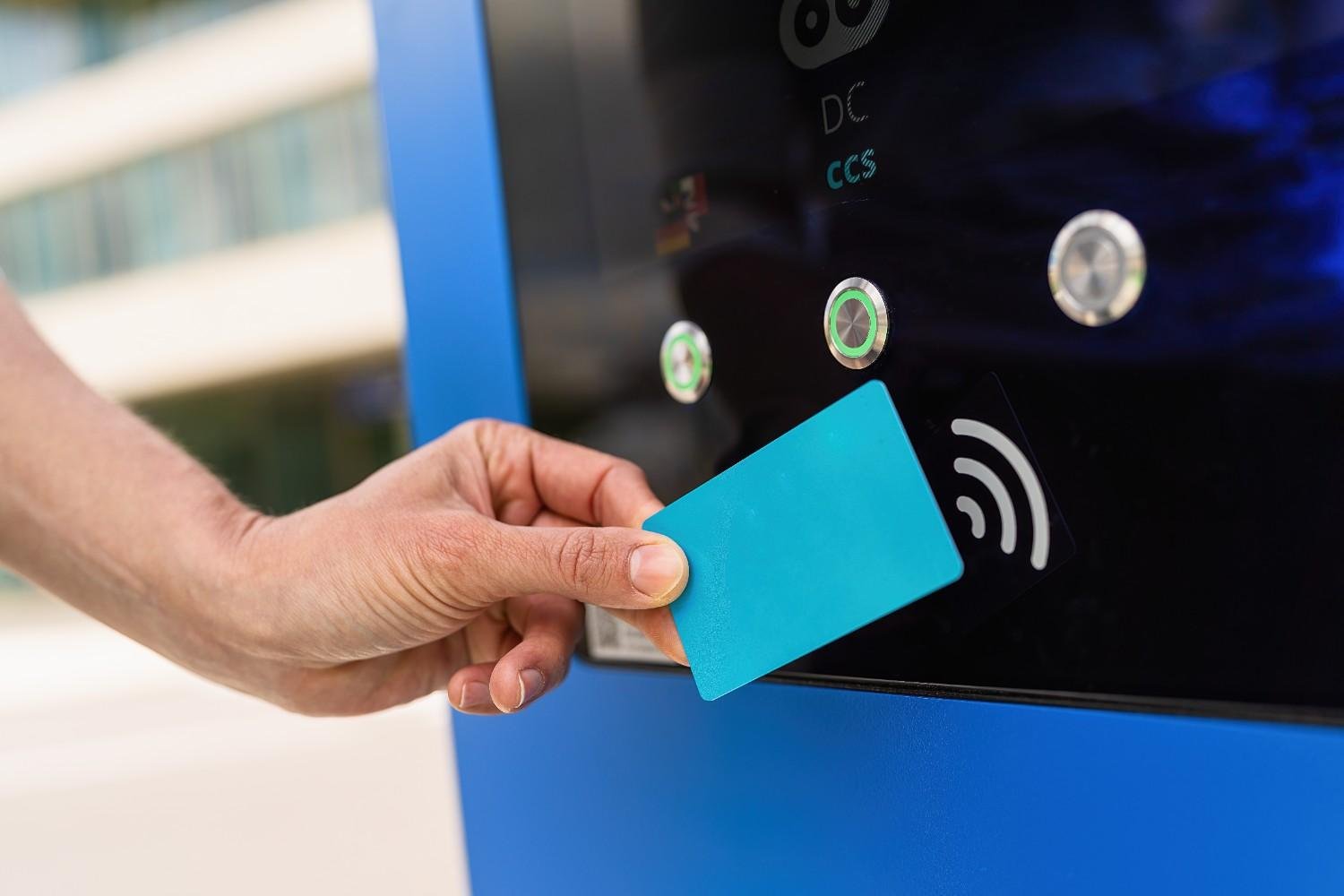
An EV charging card is a plastic card equipped with Radio-Frequency Identification (RFID) technology that allows you to authenticate and activate public charging stations. Similar to contactless payment cards or hotel key cards, these specialised cards let you start and stop charging sessions by tapping them against the charging point's reader.
Each card is linked to your user account with a specific charging provider, enabling the system to identify you, authorise the charging session, and handle billing accordingly. The card essentially serves as your digital key to accessing a network's charging infrastructure.
Many major UK charging networks issue their own RFID cards, including BP Pulse, InstaVolt, IONITY, and Shell Recharge. Some networks also offer multi-network or "roaming" cards that work across various charging providers, helping reduce the number of cards you need to carry.
However, for drivers using electric car salary sacrifice schemes, The Charge Scheme offers a superior solution that combines multi-network access with pre-tax savings of 20-50%.
How Does The Charge Scheme Revolutionise EV Charging Payments?
The Charge Scheme represents a game-changing innovation for drivers using electric car salary sacrifice schemes. Unlike traditional charging cards that require post-tax payment, The Charge Scheme allows employees to salary sacrifice their entire charging costs—delivering savings of 20-50% on every charge.
Why The Charge Scheme is Different from Traditional EV Charging Cards
Traditional charging cards require you to pay from your take-home salary, but The Charge Scheme works through pre-tax salary deductions. With the current 4% BiK rate for electric vehicles in 2026/27, this approach maximises tax efficiency for both vehicle and charging costs.
Key benefits include:
Single card for multiple networks – No need for separate RFID cards from BP Pulse, Shell Recharge, IONITY, or other providers
20-50% savings on all charging – Through salary sacrifice and tax benefits
Works everywhere – Home charging, workplace charging, and public charging stations
Automatic billing – Charges deducted from gross salary before tax
Comprehensive tracking – Full visibility of charging costs through The Charge Scheme app
Employer-friendly – Simple administration with centralised reporting
How The Charge Scheme Works
Enrol through your employer's Electric Car Scheme benefit
Receive your Charge Scheme card and app access
Charge at any compatible station using your card
Save automatically through pre-tax salary deductions
For employees already using The Electric Car Scheme for their vehicle, adding The Charge Scheme creates a complete, tax-efficient electric mobility solution. Drivers typically save £500-£1,000 annually on charging costs alone.
Learn more about The Charge Scheme →
Why Do Electric Car Scheme Drivers Need Charging Cards?
While smartphone apps are becoming increasingly popular for charging authentication, RFID cards like those offered by The Charge Scheme offer several distinct advantages that make them worth considering as part of your EV charging toolkit, especially for salary sacrifice electric car drivers.
What Are the Benefits of Using RFID Charging Cards?
Reliability When Technology Fails
While apps are convenient, they rely on a mobile signal and functioning smartphones. RFID cards are a good backup in situations such as:
You're in areas with poor mobile reception
Your phone battery is low
The charging station's app integration is experiencing technical issues
You need to charge in a hurry without logging into accounts
For Electric Car Scheme members, The Charge Scheme card provides this reliability while automatically maintaining salary sacrifice benefits.
Simplified Fleet Management for Businesses
For businesses with multiple electric vehicles, charging cards offer valuable benefits:
Centralised billing for all company vehicles
Detailed reports of charging activity across your fleet
Ability to assign cards to specific drivers or vehicles
Easier expense management and cost tracking
Companies offering electric car salary sacrifice can integrate The Charge Scheme for complete end-to-end employee benefits management.
Consistent User Experience
Once you're familiar with using an RFID card, the experience is similar across different charging stations, even when the hardware varies. This consistency can be reassuring, especially for new EV drivers still getting comfortable with public charging.
Transaction Tracking and Management
Most charging cards link to online accounts where you can:
View your charging history
Monitor spending
Access and download invoices
Track energy usage
Manage multiple cards (for families or businesses)
The Charge Scheme takes this further by integrating all charging activity into your salary sacrifice arrangement, providing automatic tax benefits and simplified payroll reporting.
Do You Need an EV Charging Card If You Have an Electric Car Through Salary Sacrifice?
The short answer is: not always, but having one—especially The Charge Scheme card—can provide significant value.
The UK's charging infrastructure has been evolving rapidly, with many newer chargers offering contactless payment options. As of January 2026, the UK has 15,109 rapid or ultra-rapid charging devices across 5,850 charging locations. The majority of these accept contactless payments. However, the situation varies significantly across different networks and charger types.
When Is an EV Charging Card Essential for Salary Sacrifice Users?
Using older charging stations without contactless options
Accessing membership-only networks with discounted rates
Charging at workplace or community chargers with restricted access
Maximising tax savings through The Charge Scheme's salary sacrifice
Managing a business fleet with centralised billing needs
Using certain networks that still require their proprietary cards
When You Might Skip Traditional Charging Cards
If you primarily use newer rapid chargers with contactless payment
When charging networks you regularly use have reliable smartphone apps
If you charge mainly at home or at free public chargers
Important: Even if you primarily use apps or contactless, many experienced electric car salary sacrifice drivers recommend keeping at least one charging card as a backup. For maximum savings and convenience, The Charge Scheme combines multi-network access with automatic tax benefits.
How Do You Get an EV Charging Card for Your Electric Vehicle?
Obtaining a charging card is straightforward, but the process varies depending on whether you're getting a traditional network card or enrolling in The Charge Scheme.
Getting a Traditional Charging Network Card
Choose a charging network that aligns with your typical driving routes and locations
Visit the provider's website to register for an account
Request a card during registration (some providers charge a small fee, usually £5-10)
Activate your card when it arrives (typically within 3-7 working days)
Link a payment method to your account for billing
Getting The Charge Scheme Card (Recommended for Salary Sacrifice Users)
For employees using The Electric Car Scheme:
Check eligibility with your employer's HR department
Enrol in The Charge Scheme through your company's salary sacrifice programme
Receive your Charge Scheme card and app credentials
Activate via the app
Start charging and saving 20-50% automatically through pre-tax deductions
For businesses implementing The Electric Car Scheme, we can provide guidance on choosing the most appropriate charging solutions for your employees, including The Charge Scheme, which offers salary sacrifice benefits for charging costs.
What's the Difference Between Subscription and Pay-As-You-Go Charging Cards?
Some traditional charging networks offer two different primary payment options. Here are the main differences:
Subscription-Based Cards
Includes a small monthly fee
Lower per-kWh rates
Additional benefits like priority customer service
Ideal for frequent users of a specific network
Pay-As-You-Go Cards
No monthly commitment
Slightly higher per-kWh rates
More flexibility for occasional users
Better for drivers who use multiple networks
The Charge Scheme Advantage
Unlike traditional cards that require you to choose between subscription and pay-as-you-go models, The Charge Scheme works differently:
No separate subscription fees – integrated into your salary sacrifice arrangement
Automatic tax savings – 20-50% off all charging through pre-tax deductions
Multi-network access – works across 76,000+ charging points
Simplified billing – all costs consolidated in one monthly payroll deduction
Before committing to a traditional subscription, electric car salary sacrifice users should analyse their typical charging patterns to determine if The Charge Scheme offers better overall value through tax efficiency.
How Do You Use Your EV Charging Card at Public Charging Stations?
Using an RFID card is simple, whether you're using a traditional network card or The Charge Scheme card:
Locate a compatible charging station using the provider's app or website
Park and connect your charging cable to both the vehicle and charger
Tap your card against the reader (usually marked with an RFID symbol)
Wait for authentication (typically indicated by a light or screen message)
Charging begins automatically
To end the session, tap your card again (some networks end automatically when you unplug)
Receive a receipt via email or in the app
Troubleshooting Common Issues with EV Charging Cards
If your card isn't working:
Ensure it's definitely activated and linked to an active account
Check if your account has sufficient funds or a valid payment method (not applicable to The Charge Scheme where billing is automatic)
Try tapping the card in different positions on the reader
Contact customer service if problems persist (keep their number saved in your phone)
For Charge Scheme users, support is available through the app and via The Electric Car Scheme's customer service team.
What Are the Best RFID Card Options for Business Fleet Managers?
Companies with electric vehicle fleets face unique challenges in managing charging across multiple vehicles and drivers. Specialised business charging cards offer solutions designed specifically for these needs.
Fleet Charging Cards for Electric Car Salary Sacrifice Schemes
If your business has multiple electric vehicles through salary sacrifice, dedicated fleet charging cards offer significant advantages:
Centralised billing – All charging expenses appear on a single invoice
Detailed reporting – Access comprehensive data on when, where, and how much each vehicle charges
User management – Assign cards to specific drivers or vehicles
Cost controls – Set spending limits or restrict usage to certain times/locations
VAT-compliant invoicing – Simplify tax and expense management
Workplace Charging Schemes Integration
For businesses with on-site charging, specialised RFID cards can:
Control access to company charging points
Track employee usage for reimbursement or billing
Allocate charging costs to different departments
Provide preferential rates for employees
Integrate with existing building access systems
The UK Government's Workplace Charging Scheme (WCS) offers vouchers to help businesses install charging points, which can then be managed with RFID cards or other access methods.
The Charge Scheme for Business Fleets
For HR professionals looking to implement workplace charging alongside The Electric Car Scheme, The Charge Scheme provides:
Complete employer protection – integrated with The Electric Car Scheme's market-leading protection
Zero setup costs – no additional admin burden
Simplified payroll – automatic integration with existing salary sacrifice processes
Employee attraction and retention – comprehensive green benefits package
ESG credentials – support your sustainability goals
Multi-Network Roaming Cards
To reduce "card clutter," several companies offer roaming services that work across multiple charging networks:
Zap-Pay – A unified payment system that works across a growing number of networks
Allstar One Electric – A fuel card specifically designed for fleets with both ICE and electric vehicles
The Charge Scheme – Works across 76,000+ charging points with automatic salary sacrifice benefits
These services typically charge a small premium, but The Charge Scheme stands out by providing the convenience of multi-network access while delivering 20-50% savings through tax-efficient salary sacrifice.
How Does The Charge Scheme Compare to Traditional Charging Cards?
For employees using electric car salary sacrifice schemes, understanding the differences between traditional charging cards and The Charge Scheme is crucial for maximising savings.
Traditional Charging Cards vs The Charge Scheme
| Feature | Traditional RFID Cards | The Charge Scheme |
|---|---|---|
| Payment Method | Post-tax from take-home pay | Pre-tax through salary sacrifice |
| Tax Savings | None | 20-50% on all charging |
| Network Coverage | Single network (typically) | 76,000+ charging points |
| Setup Cost | £5-10 per card | Free for Electric Car Scheme members |
| Monthly Fees | £0-15 depending on network | Included in salary sacrifice |
| BiK Implications | None | 4% BiK rate (2026/27) |
| Billing | Separate payment required | Automatic payroll deduction |
| Admin Burden | Employee manages | Employer-facilitated |
| Annual Savings | Subscription discounts only | £500-£1,000+ through tax efficiency |
Real Savings Example: Traditional Card vs The Charge Scheme
Scenario: Employee in 40% tax bracket, charging 1,000 kWh annually at average 60p/kWh public charging rate
Traditional RFID Card with Subscription:
Annual charging cost: £600
Subscription saving: ~10% = £60 saved
Total paid from take-home salary: £540
The Charge Scheme:
Annual charging cost: £600
Salary sacrifice saving: 40% Income Tax + 2% NI + 4% BiK = ~39% net saving
Actual cost after tax benefits: £366
Additional annual saving with The Charge Scheme: £174
When combined with electric car salary sacrifice savings, The Charge Scheme creates a comprehensive, tax-efficient electric mobility solution that traditional charging cards simply cannot match.
What Problems Do EV Charging Cards Solve for Salary Sacrifice Drivers?
For employees who have accessed an electric car through The Electric Car Scheme, charging cards—particularly The Charge Scheme—solve several key challenges:
Challenge 1: Multiple Apps and Accounts
Problem: Public charging requires juggling multiple network apps, passwords, and payment methods.
Solution: Traditional RFID cards reduce app dependency. The Charge Scheme goes further by providing a single card that works across 76,000+ charging points nationwide.
Challenge 2: Paying for Charging from Take-Home Salary
Problem: Most electric car salary sacrifice users save 20-50% on their vehicle but pay full price for charging from post-tax salary.
Solution:The Charge Scheme extends salary sacrifice benefits to charging costs, maintaining tax efficiency across all EV running costs.
Challenge 3: Charging Without Home Access
Problem: Employees without driveways face higher public charging costs.
Solution:The Charge Scheme's 20-50% savings make public charging more affordable, particularly benefiting employees who rely primarily on public charging networks.
Challenge 4: Business Mileage Calculations
Problem: Employers struggle to calculate fair EV charging reimbursement for business mileage.
Solution: The Charge Scheme provides detailed reporting that separates personal and business charging, simplifying expense management and HMRC compliance.
Challenge 5: Incomplete EV Cost Savings
Problem: Employees save on the vehicle through salary sacrifice but miss out on charging cost savings.
Solution:The Charge Scheme creates a complete electric mobility solution, maximising savings across both vehicle and fuel costs.
FAQ: EV Charging Cards and Electric Car Salary Sacrifice
What is an EV charging card?
An EV charging card is an RFID-enabled plastic card that allows you to authenticate and pay for charging at public stations. The Charge Scheme offers the UK's only salary sacrifice charging card, enabling 20-50% savings through pre-tax deductions.
Do I need an EV charging card if I use The Electric Car Scheme?
While newer rapid chargers offer contactless payments, having a charging card—especially The Charge Scheme card—ensures reliable access and maximises savings. The Charge Scheme integrates with your electric car salary sacrifice, extending tax benefits to charging costs.
How much can I save with The Charge Scheme compared to regular charging cards?
Employees using The Charge Scheme save 20-50% on all charging costs through salary sacrifice. With the 4% BiK rate in 2026/27, this represents significant savings over traditional post-tax charging payments, typically £500-£1,000 annually.
Can I use The Charge Scheme card at any charging station?
The Charge Scheme card works across multiple charging networks, including BP Pulse, Shell Recharge, and IONITY, providing access to over 76,000 charging points. This eliminates the need for separate RFID cards from each provider while maintaining salary sacrifice benefits.
What's the difference between The Charge Scheme and other EV charging cards?
Unlike traditional charging cards where you pay from take-home salary, The Charge Scheme enables pre-tax salary deductions for charging costs. This provides the same 20-50% savings structure as your electric car salary sacrifice scheme, creating a complete tax-efficient electric mobility solution.
How do businesses implement charging cards for fleet vehicles?
Companies offering The Electric Car Scheme can add The Charge Scheme for centralised billing, detailed reporting, and simplified administration across all fleet vehicles. This provides Complete Employer Protection and integrates seamlessly with existing payroll systems.
Do EV charging cards work without a mobile signal?
Yes, RFID charging cards work independently of mobile signals, making them reliable backups when apps fail. The Charge Scheme card provides this reliability while maintaining automatic salary sacrifice billing, ensuring you never miss out on tax savings.
How long does it take to get an EV charging card?
Traditional charging network cards typically arrive within 3-7 working days. The Charge Scheme card is issued to employees enrolled in The Electric Car Scheme, with activation completed through the app. Setup takes minutes, and savings begin immediately.
Are there monthly fees for EV charging cards?
This varies by network. Some charge £5-10 monthly subscriptions for discounted rates, while others are pay-as-you-go. The Charge Scheme consolidates these costs into your salary sacrifice arrangement, simplifying billing and maximising tax efficiency.
Can I use multiple charging cards simultaneously?
Yes, many EV drivers maintain cards from different networks as backup. However, The Charge Scheme's multi-network capability reduces the need for multiple cards while extending salary sacrifice benefits to all charging activity, regardless of network.
What happens if I lose my EV charging card?
Contact your provider immediately to deactivate the lost card and request a replacement. For Charge Scheme users, support is available through The Electric Car Scheme's customer service team, and you can continue charging using the app while waiting for your replacement card.
Do I need different cards for home and public charging?
Home charging typically doesn't require a card—you plug directly into your home charger. However, The Charge Scheme allows you to salary sacrifice both home and public charging costs, creating a comprehensive solution for all your EV charging needs.
The Future of EV Charging Authentication
While RFID cards remain common today, the industry is gradually moving toward more seamless options:
Plug and Charge technology – Allows the car to authenticate automatically when plugged in
Enhanced app integration – Using smartphone location and Bluetooth to authenticate
Vehicle-integrated payment systems – Charging payment managed through the car's infotainment system
Universal authentication standards – Reducing the need for network-specific cards
Despite these advances, RFID cards are likely to remain a reliable backup option for years to come, particularly for business applications where clear audit trails are essential.
The Charge Scheme is designed to adapt to these technological changes while maintaining the core benefit of tax-efficient salary sacrifice for all charging methods.
Conclusion: Maximising Savings with The Charge Scheme and Smart Charging Solutions
For electric car salary sacrifice users, the choice isn't just between different traditional RFID charging cards—it's about whether to continue paying for charging from post-tax salary or extend your tax savings to cover all EV running costs.
For Individual Drivers Using Electric Car Salary Sacrifice
Consider The Charge Scheme to extend 20-50% savings to all charging costs
Keep a charging card as backup even if you primarily use apps
Take advantage of home charging where possible for additional savings
Use the salary sacrifice calculator to understand total savings potential
For Businesses Offering Electric Car Salary Sacrifice
Implement The Charge Scheme alongside The Electric Car Scheme for maximum employee benefits
Benefit from Complete Employer Protection across all EV costs
Simplify administration with integrated payroll reporting
Enhance your green credentials and employee attraction strategy
Whether you're an individual driver or managing a company fleet, understanding your charging payment options ensures you're never left stranded without a way to charge. As the UK's charging infrastructure continues to expand and evolve, having flexible payment methods—particularly those that maximise tax efficiency through salary sacrifice—will help you adapt to whatever the future holds.
Are you an employer?
BOOK A DEMOAre you an employee?
SEE AVAILABLE CARSECS GUIDES AND ADVICE
Ready to Go Electric? Your Guides and Tools to a Smooth Switch
-
 How the Scheme Works
Find out how salary sacrifice can work for you or your business.
-
 The Charge Scheme
Save 20-50% on all charging costs through salary sacrifice - at home, the office, or in public..
-
 Complete Employer Protection
All employers and drivers are protected from day 1.
-
 Used Electric Cars
Discover the most affordable way to drive electric. Cars delivered in 14 days.
You Might Also Like…



Last updated: 19/01/2026
Our pricing is based on data collected from The Electric Car Scheme quote tool. All final pricing is inclusive of VAT. All prices above are based on the following lease terms; 10,000 miles pa, 36 months, and are inclusive of Maintenance and Breakdown Cover. The Electric Car Scheme’s terms and conditions apply. All deals are subject to credit approval and availability. All deals are subject to excess mileage and damage charges. Prices are calculated based on the following tax saving assumptions; England & Wales, 40% tax rate. The above prices were calculated using a flat payment profile. The Electric Car Scheme Limited provides services for the administration of your salary sacrifice employee benefits. The Electric Car Scheme Holdings Limited is a member of the BVRLA (10608), is authorised and regulated by the FCA under FRN 968270, is an Appointed Representative of Marshall Management Services Ltd under FRN 667174, and is a credit broker and not a lender or insurance provider.
Copyright and Image Usage: All images used on this website are either licensed for commercial use or used with express permission from the copyright holders, in compliance with UK and EU copyright law. We are committed to respecting intellectual property rights and maintaining full compliance with applicable regulations. If you have any questions or concerns regarding image usage or copyright matters, please contact us at marketing@electriccarscheme.com and we will address them promptly.
