How To Charge Your Electric Car Without A Driveway In 2026
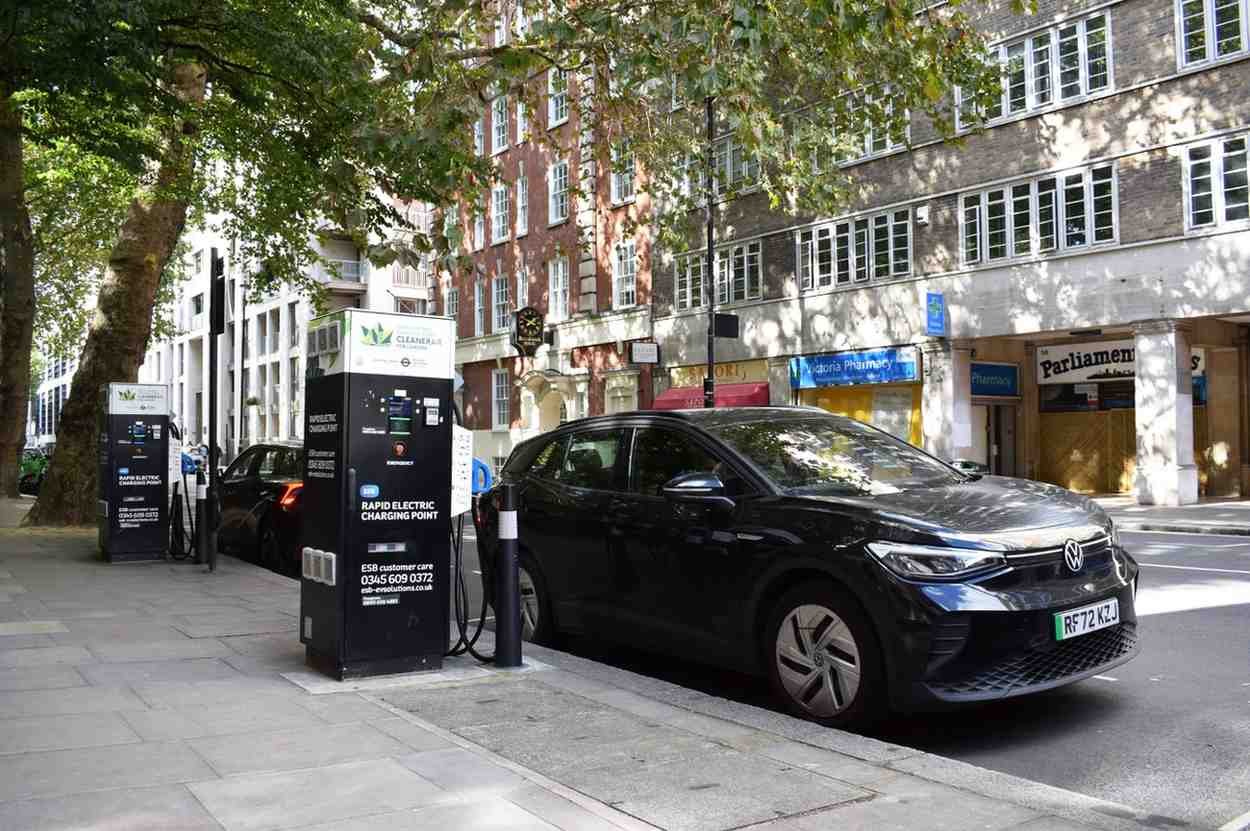
Image source: Shutterstock
47% of UK households don’t have off-street parking, but that shouldn’t stop you getting an electric car! If you live in a flat, a terraced home, or a busy town or city, and have an EV, you’re not alone. In 2026, not having a driveway is no longer a reason to rule out going electric electric, particularly when you’re using an electric car salary sacrifice scheme.
One of the most common questions we hear is simple: Can I charge an electric car without a driveway? It’s a fair concern. Home charging is often positioned as the ideal, but the reality of UK housing means millions of drivers rely on street parking, shared bays, or workplace car parks.
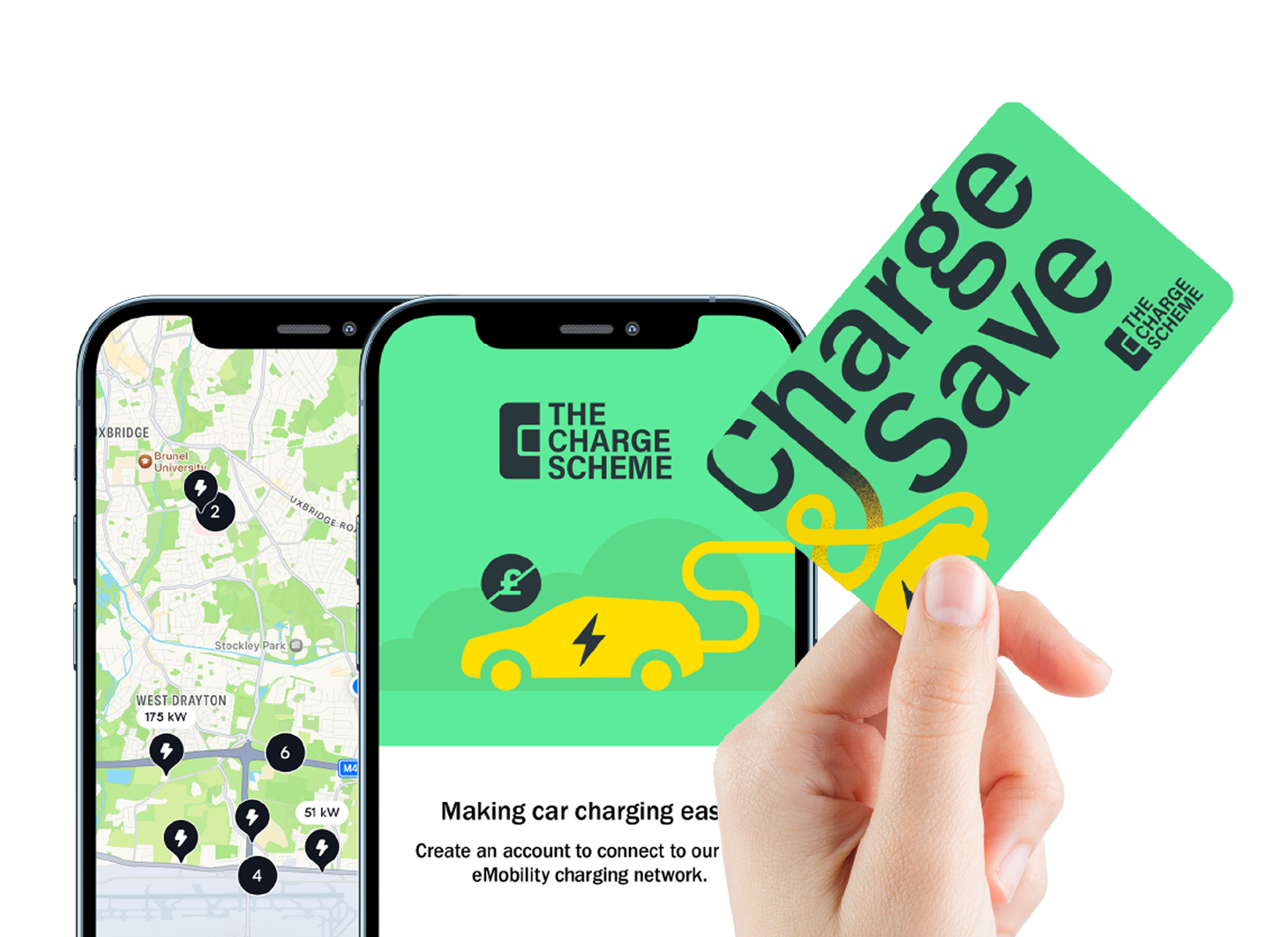
This is where The Charge Scheme (from The Electric Car Scheme) changes everything. Instead of limiting savings to home charging, The Charge Scheme allows you to salary sacrifice your EV charging costs wherever you charge - public networks, workplace chargers, and destination charging. By paying from your gross salary, you can save 20–50% on charging, making EV ownership genuinely practical without home infrastructure.
This guide explains exactly how it works and why not having a driveway no longer needs to hold you back.
How Does The Charge Scheme Solve The No-Driveway Problem?
Most charging advice still assumes you’ll plug in at home. The Charge Scheme doesn’t. It’s built for real-world driving, especially for people who park on the street or rely on workplace charging.
Source: The Charge Scheme
The Charge Scheme allows salary sacrifice for all EV charging, including:
Public charging networks
Workplace chargers
Destination charging at supermarkets, gyms, and hotels
Charging costs are deducted from your gross salary, delivering 20–50% savings depending on your tax band. If you rely on public charging, this difference is more noticeable.
Why This Works So Well Without a Driveway
No requirement to install a home charger
One card or app across multiple networks
Predictable monthly charging costs
Fully integrated with The Electric Car Scheme
You charge where it suits you and The Charge Scheme keeps costs under control.
Charging Costs: Traditional Vs The Charge Scheme
| Charging Scenario | Typical PAYG Cost | With The Charge Scheme |
|---|---|---|
| Public 7kW (34kWh) | ~£8.70 | £4.35–£6.95 |
| Public 60kW (34kWh) | ~£25.03 | £12.52–£20.02 |
| Annual Public Charging | £1,200–£1,800 | £600–£1,200 |
Can You Install Home Charging Without a Driveway? (2026 Update)
In some cases, yes, but it’s no longer essential. Local councils continue to roll out residential solutions using government funding.
Available options include:
Cable gullies installed beneath pavements
Wall-mounted chargers reaching kerbside parking
Lamp-post charging integrated into street lighting
How The Charge Scheme Makes Cable-Free Charging Work
If none of these are available nearby, The Charge Scheme removes the pressure entirely. You can rely on public or workplace charging, without paying premium public rates.
Running A Cable Across The Pavement
Running a cable across a public pavement isn’t usually illegal, but councils strongly discourage it due to safety and liability concerns. Trip hazards, insurance risks, and potential council action make this a last-resort option.
Why The Charge Scheme Eliminates the Need for Pavement Cables
By using workplace and public chargers supported by The Charge Scheme, many drivers avoid pavement cables altogether, opting for a safer, simpler, and often cheaper solution.
How Public Charging Networks Work With The Charge Scheme
Public charging has expanded rapidly. The UK has over 87,000+ public charge points, covering residential streets, retail destinations, workplaces, and motorways. Typical PAYG costs range from 55–85p per kWh, particularly on rapid and ultra-rapid chargers.
The Charge Scheme vs Traditional Public Charging Costs
With The Charge Scheme, those same chargers cost 20–50% less because charging is paid for via salary sacrifice. You still use the same networks, just without the high cost.
How Workplace Charging Integrates With Electric Car Salary Sacrifice Schemes
Workplace charging is one of the most powerful solutions for drivers without driveways and a major advantage of a company electric car scheme.
Many Employers:
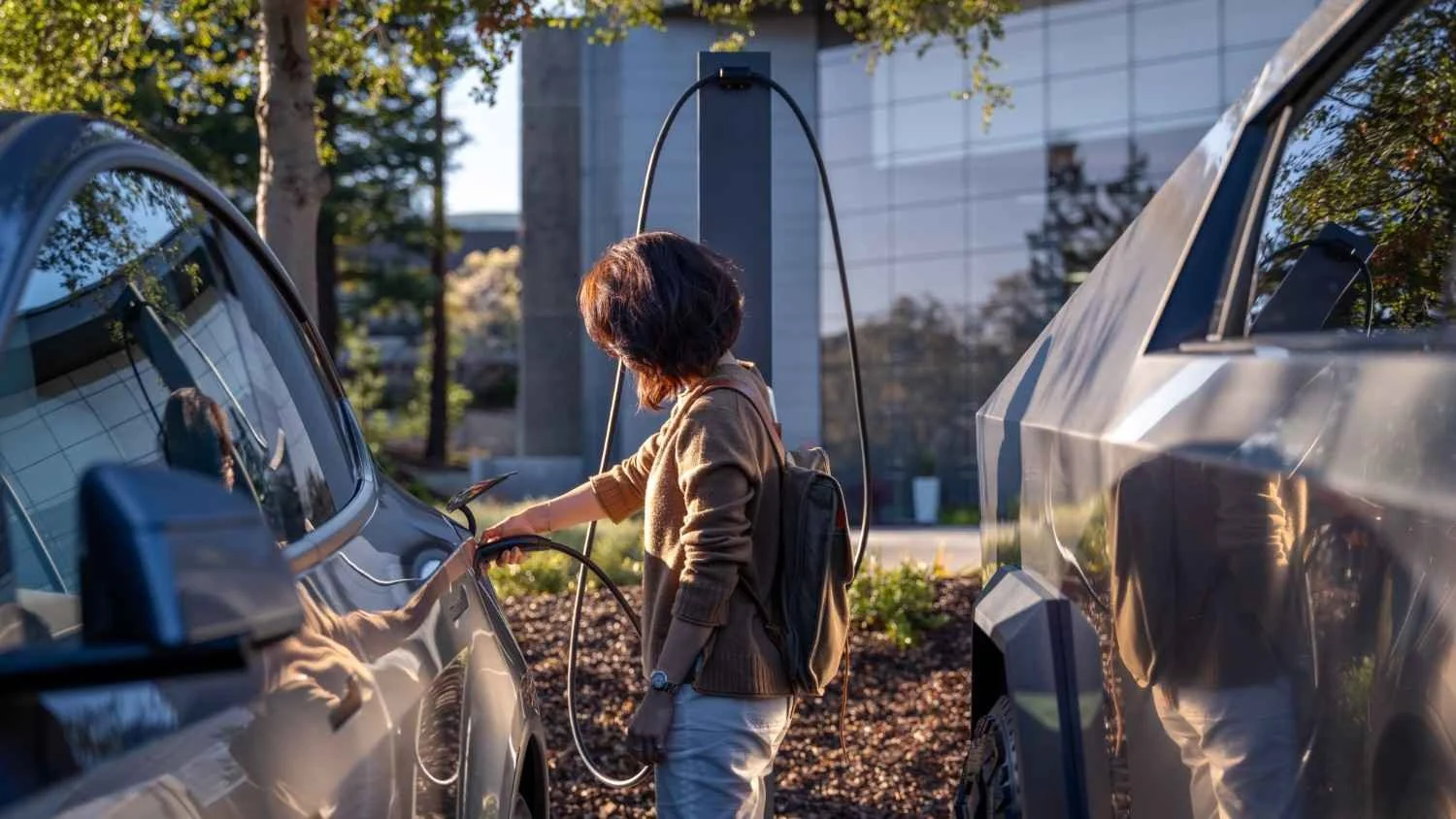
Offer free or subsidised workplace charging
Install chargers using favourable tax treatment
Support charging as part of sustainability strategies
Source: Tesla Media Gallery
Employer Responsibility and Protection
Charging at work fits seamlessly alongside Complete Employer Protection, removing risk if an employee leaves early and ensuring the scheme remains employer-friendly.
For employees, it means dependable charging without needing home access. For employers, it’s a low-cost, high-impact benefit.
How Does Electric Car Salary Sacrifice Work for Drivers Without Off-Street Parking?
An electric car salary sacrifice scheme has no home charging requirement. What matters is that you can keep the car charged, and that can happen at work, on the street, or on public networks.
What’s Included:
The car, insurance, servicing, tyres, and breakdown cover
Charging cost savings via The Charge Scheme
Complete Employer Protection from day one
What Are The Real Costs Of Charging An Electric Car Without A Driveway?
| Scenario | Approx. Annual Cost |
|---|---|
| Public charging only (PAYG) | 1,500 |
| With The Charge Scheme | £750–£1,200 |
| Workplace + Charge Scheme | £400–£800 |
| Petrol equivalent | £1,800–£2,200 |
Even without home charging, EVs remain cheaper to run, especially when charging costs are salary-sacrificed.
Council-By-Council Guide: On-Street Charging Availability 2026
Local councils play a key role in supporting drivers without driveways. Funding through national schemes continues to accelerate on-street charger deployment.
Where Rollouts Are Most Advanced
London boroughs (residential streets and lamp-post charging)
Greater Manchester (community-led and residential bays)
Birmingham, Bristol, and Leeds (mixed residential and retail focus)
How to Request On-Street Charging
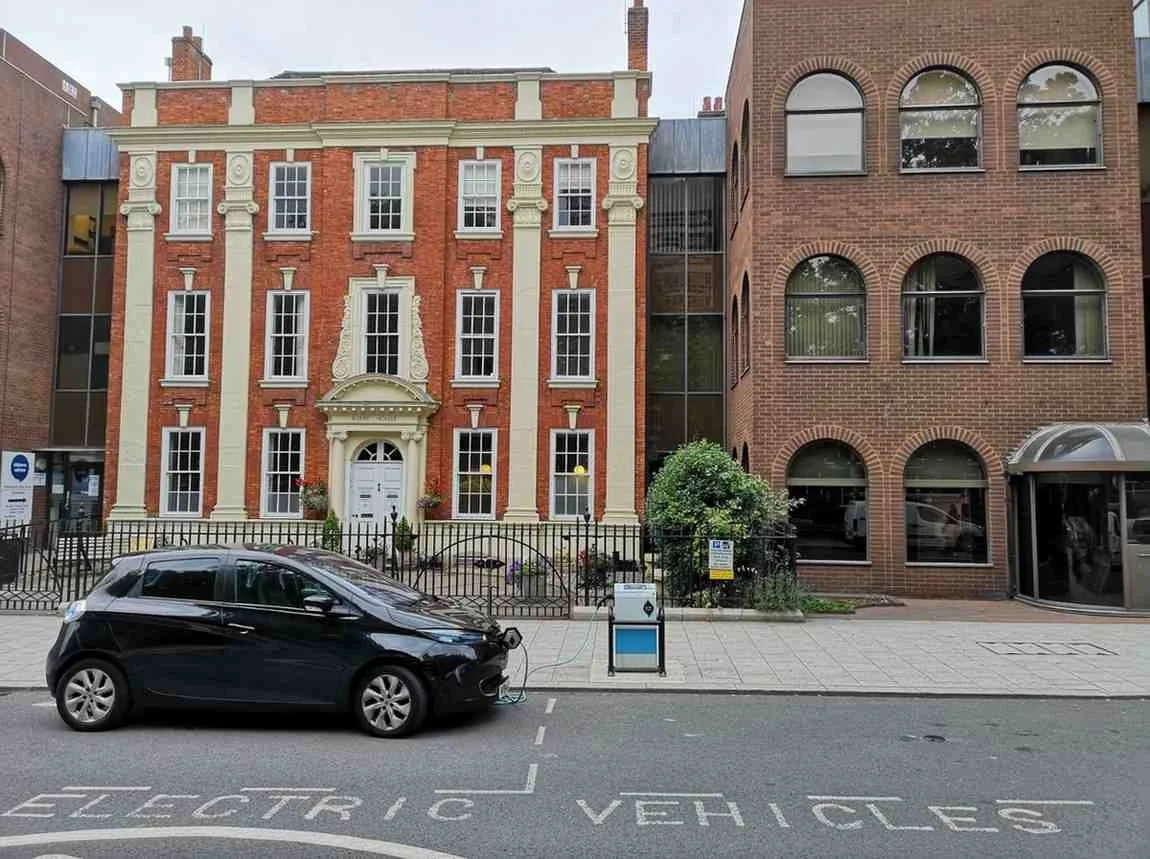
Most councils allow residents to:
Submit a request via the transport or sustainability team
Demonstrate local demand (often multiple households)
Await feasibility checks and funding approval
Source: Shutterstock
Availability varies by council, but provision is expanding year-on-year!
Employer Guide: Supporting Employees Without Driveways
For employers, supporting EV drivers without home charging is both practical and tax-efficient.
Why Employers Should Act
Encourages EV adoption across all housing types
Reduces emissions and supports net-zero goals
Improves employee retention and engagement
The Tax Advantage
The electricity for workplace charging is not treated as a taxable benefit. When combined with The Electric Car Scheme, employers can offer a compelling benefit without increasing payroll costs.
Technology Solutions: Smart Charging for City And Town Drivers
Urban EV charging continues to evolve.
Key innovations include:
Lamp-post charging is expanding across residential streets
Smart load balancing to protect local grids
Wireless charging pilots in dense urban areas
As infrastructure and vehicle efficiency improve, charging without a driveway becomes easier every year.
Frequently Asked Questions
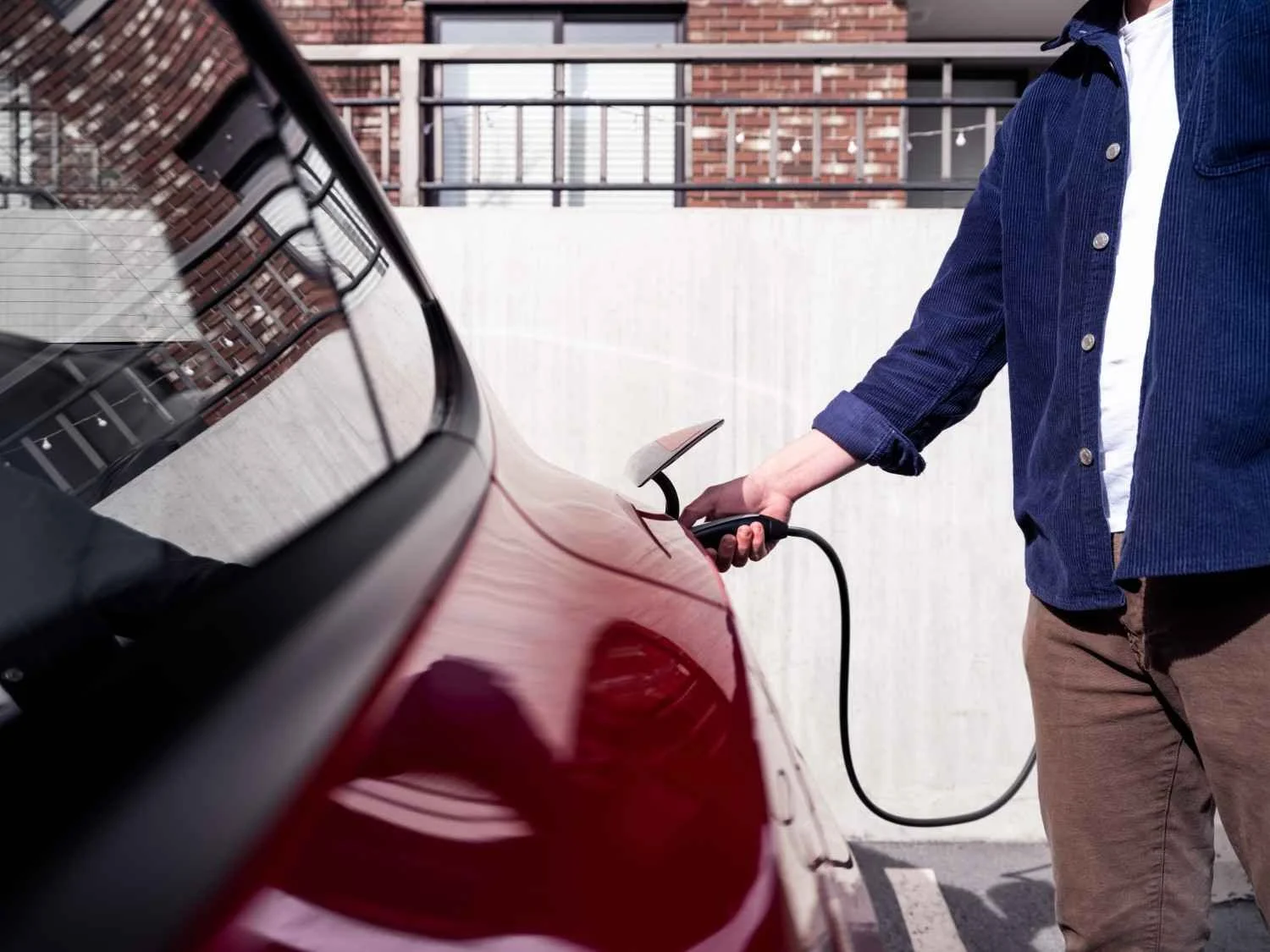
Image source: Tesla Media Gallery
Can I Get an Electric Car Through Salary Sacrifice If I Don’t Have a Driveway?
Absolutely. The Electric Car Scheme does not require you to have a home charger or a driveway to join. The scheme is designed to work for real UK living situations, including flats, terraced houses, and street parking.
With access to workplace charging, expanding on-street infrastructure, and The Charge Scheme, public charging costs are reduced by 20–50%. This means you can confidently run an electric car without charging at home. Many drivers already do.
How Does The Charge Scheme Work for Drivers Without Home Charging?
The Charge Scheme allows you to salary sacrifice your EV charging costs across all charging types, not just at home.
That includes:
Public charging networks
Workplace chargers
Destination charging at supermarkets, hotels, gyms, and car parks
Because charging is paid for from your gross salary, you save on Income Tax and National Insurance, making public charging significantly cheaper and more predictable if you don’t have a driveway.
What’s the Cheapest Way to Charge an Electric Car Without a Driveway in 2026?
For most drivers, the cheapest approach is a combination of workplace charging (often free or subsidised) and The Charge Scheme for occasional public top-ups.
This mix typically costs 60–70% less than running a petrol car, even without home charging. You benefit from low workplace electricity costs while using salary sacrifice to reduce the cost of public charging when needed.
Is It Illegal to Run a Charging Cable Across the Pavement?
Running a charging cable across a public pavement isn’t explicitly illegal in most areas, but it does create liability and safety risks. Local councils generally discourage it due to trip hazards and potential insurance issues.
If someone trips over your cable, you could be held responsible. For that reason, most drivers without driveways prefer safer alternatives such as on-street chargers, workplace charging, or public networks supported by The Charge Scheme.
Can My Employer Install Workplace Charging as Part of a Salary Sacrifice Scheme?
Yes. Employers offering The Electric Car Scheme can install workplace charging infrastructure, and many already do as part of their sustainability and employee benefits strategy.
Electricity provided at work for charging is not treated as a taxable benefit, making workplace charging a tax-efficient solution for employers and an ideal primary charging option for employees without driveways.
How Much Does Public Charging Cost Without The Charge Scheme?
Without salary sacrifice, public rapid charging typically costs between 55p and 85p per kWh in 2026, depending on the network and location. This can make regular public charging expensive if paid from take-home pay. With The Charge Scheme, those same charging sessions cost 20–50% less, because they’re paid from your gross salary instead.
What Happens If I Leave My Employer While Using an Electric Car Salary Sacrifice Scheme?
The Electric Car Scheme includes Complete Employer Protection from day one, protecting both you and your employer if your circumstances change. If you leave your role, options are provided to ensure a smooth transition without unexpected penalties, giving employers confidence to support EV adoption and drivers’ peace of mind.
Can I Use On-Street Charging With The Charge Scheme?
Yes. The Charge Scheme works with all major public charging networks, including on-street residential chargers such as lamp-post and council-installed units. As on-street charging continues to expand across UK towns and cities, it’s becoming an increasingly convenient option for drivers without off-street parking.
How Do I Find Charging Points Near Me Without a Home Charger?
You can use popular UK EV charging apps and maps to locate nearby chargers by speed, availability, and connector type. The Charge Scheme integrates seamlessly with these networks, so you can focus on finding a convenient charger rather than managing multiple payment methods. This makes planning day-to-day charging simple, even without a dedicated home charger.
Is EV Ownership More Expensive Without Home Charging?
Not necessarily. While home charging is usually the cheapest option, salary sacrifice charging through The Charge Scheme closes much of the gap. When combined with workplace charging and lower running costs overall, many drivers without home charging still find electric cars cheaper to run than petrol or diesel alternatives.
Can I Salary Sacrifice My EV Charging Costs as Well as the Car?
Yes. That’s exactly what The Charge Scheme is designed for. Alongside your electric car salary sacrifice scheme, you can also salary sacrifice your charging costs, creating a joined-up solution that covers both the vehicle and the energy that powers it.
What Electric Cars Work Best for Drivers Without Home Charging?
Drivers without home charging often prefer electric cars with:
Fast or ultra-rapid charging capability
Strong efficiency (miles per kWh)
These features reduce the frequency of charging and make public and workplace charging more convenient. Small and mid-size electric cars often strike the best balance between range, cost, and charging speed.
No driveway doesn’t mean no electric car. With The Charge Scheme, modern infrastructure, and a flexible electric car salary sacrifice scheme, charging an EV in 2026 is affordable, practical, and stress-free - wherever you live. Explore how salary sacrifice could work for you, even without home charging!
Are you an employer?
BOOK A DEMOAre you an employee?
SEE AVAILABLE CARSLast updated: 21.01.26
Our pricing is based on data collected from The Electric Car Scheme quote tool. All final pricing is inclusive of VAT. All prices above are based on the following lease terms: 10,000 miles pa, 36 months, and are inclusive of Maintenance and Breakdown Cover. The Electric Car Scheme's terms and conditions apply. All deals are subject to credit approval and availability. All deals are subject to excess mileage and damage charges. Prices are calculated based on the following tax saving assumptions: England & Wales, 40% tax rate. The above prices were calculated using a flat payment profile. The Electric Car Scheme Limited provides services for the administration of your salary sacrifice employee benefits. The Electric Car Scheme Holdings Limited is a member of the BVRLA (10608), is authorised and regulated by the FCA under FRN 968270, is an Appointed Representative of Marshall Management Services Ltd under FRN 667174, and is a credit broker and not a lender or insurance provider.
Copyright and Image Usage: All images used on this website are either licensed for commercial use or used with express permission from the copyright holders, in compliance with UK and EU copyright law. We are committed to respecting intellectual property rights and maintaining full compliance with applicable regulations. If you have any questions or concerns regarding image usage or copyright matters, please contact us at marketing@electriccarscheme.com, and we will address them promptly.