Workplace EV Charging: Installation Costs and Options for Employers (2026)

Image source: Shutterstock
For UK employers planning or scaling an electric car salary sacrifice scheme, workplace EV charging infrastructure is an important aspect of setting your employees up for success. Employees who can charge at work are significantly more likely to participate in a salary sacrifice scheme, particularly those who rent, live in flats, or lack access to off-street parking. Without a reliable charging option during the working day, the financial case for an electric vehicle becomes harder for employees to act on, regardless of how compelling the tax savings are.
The pathway to building a solid charging infrastructure is well-defined, and the costs are more manageable than many employers anticipate. Government grant support is available through the Workplace Charging Scheme, workplace charger installation costs are predictable when planned correctly, and complementary products such as The Charge Scheme allow employees to salary sacrifice the cost of their EV charging alongside their vehicle. This guide covers everything Facilities Managers, HR Directors, and Fleet Managers need to know to plan, fund, and future-proof a workplace charging rollout in 2026.
Why Is Workplace Charging Essential for Salary Sacrifice Scheme Success?
The most common barrier to electric car salary sacrifice scheme uptake (beyond the vehicle offering itself) is charging access. Employees who are confident they can charge conveniently are far more likely to participate. Workplace charging removes one of the most frequent objections HR teams encounter during scheme launches: "But where will I charge it?"
The government's Workplace Charging Scheme exists precisely to help employers address this. It is a voucher-based grant initiative administered by the Office for Zero Emission Vehicles (OZEV) that provides eligible UK businesses with a financial contribution of up to £350 per socket (covering up to 75% of upfront purchase and installation costs) for a maximum of 40 sockets per applicant. For employers considering their first workplace charging installation, this grant significantly reduces the financial barrier to getting infrastructure in place ahead of a salary sacrifice scheme launch.
Approximately 47% of UK households lack access to off-street parking, making home charger installation either impossible or logistically complicated. This matters most for:
Employees in rented accommodation or flats
Those who work in cities or towns without dedicated parking
Those who commute too far to rely solely on home charging
For employers in these situations, workplace EV charging for UK employers will drive participation in your EV car scheme. Even for employees who do have home charging capability, topping up during the working day adds useful range security and reduces dependence on the public network. For an employer investing in an electric car scheme UK salary sacrifice offer, workplace EV charging for UK employers should be part of the launch plan from the beginning - not addressed reactively once the scheme is live.
Key Takeaways
Charging access is the most common barrier to scheme uptake
Around 47% of UK households lack off-street parking
Workplace charging directly increases salary sacrifice participation
Plan infrastructure in parallel with your scheme launch
What Type Of Workplace Charger Should My Company Choose?
Workplace chargers are categorised by output speed. Understanding the options helps employers avoid both under-specifying and overspending.
Slow Chargers (3.6kW)
Rarely appropriate for workplace settings
Takes 16+ hours to fully charge a typical 60kWh EV
Better suited to residential overnight charging
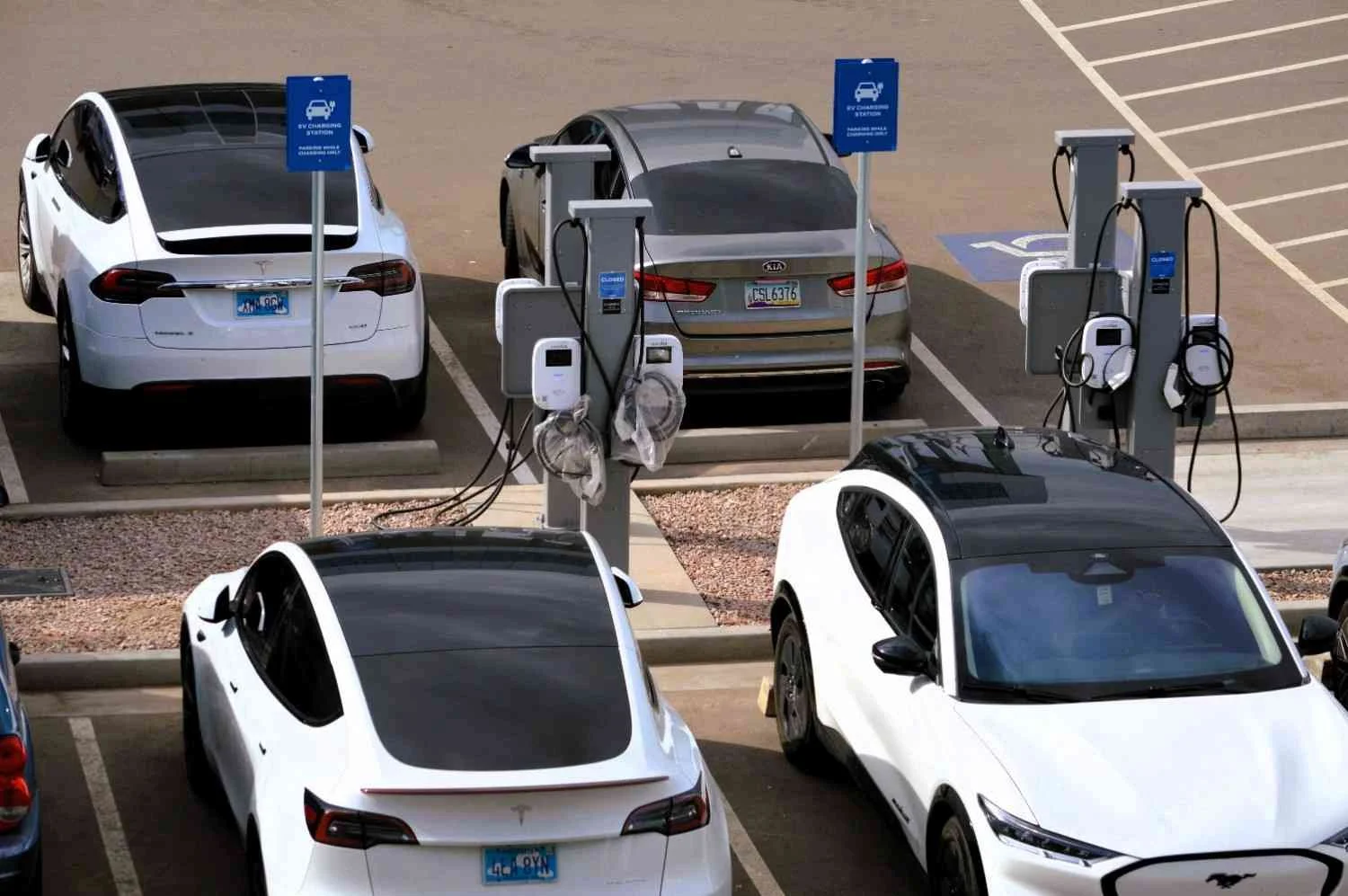
Image source: Shutterstock
Fast chargers (7kW) Recommended for most workplaces
Adds approximately 30–40 miles of range per hour
Sufficient for a full charge during a standard 6–8 hour shift
Optimal balance of cost, infrastructure requirements, and usability
Most commonly eligible for the Workplace Charging Scheme grant!
Rapid chargers (22kW+)
Requires a three-phase power supply
Better suited to fleet depots or high vehicle turnover sites
Generally over-specified for standard office or manufacturing environments
For most employers running (or planning) a company electric car scheme, a network of 7kW fast chargers represents the most cost-effective and practical infrastructure investment available.
Key Takeaways
7kW chargers are the right choice for most workplaces
They add 30–40 miles of range per hour worked
Grant-eligible and straightforward to install
Reserve rapid chargers for fleet depot scenarios
Installation Costs: How Much Should Employers Budget?
Understanding workplace charger installation costs requires looking beyond hardware. The total cost of a workplace EV charging installation for UK employers includes:
The charger unit itself
Cabling and groundworks (particularly for surface car park installations)
Electrical capacity assessment
Distribution board upgrades (where required)
Commissioning, VAT, and ongoing maintenance contracts
Single charger installation
Typical installation cost: £800–£1,500
After the Workplace Charging Scheme grant (up to £350): net cost as low as £450–£1,150
Small Hub (5 bays)
Typical cost: £5,000–£10,000 before grant support
Grant reduces cost by up to £1,750
Shared cabling and infrastructure reduce per-unit cost significantly
Medium Hub (20 bays)
Achievable for well under £30,000 with grant support in many cases
Per-bay cost typically falls to £1,000–£2,000 before grant deductions
Economies of scale in groundworks drive costs down considerably
Key Cost Variables To Assess At The Site Survey Stage:
Distance from electrical supply - longer cable runs increase cost materially
Electrical capacity - older buildings may need a distribution board upgrade or DNO application for increased supply
Surface type - concrete cutting or trenching in car parks carries higher groundworks costs than wall-mounted indoor units
Load management hardware - dynamic load management systems add upfront cost but are strongly advisable for installations beyond five or six bays
Working with an OZEV-authorised installer from the beginning ensures both grant eligibility and a properly specified, compliant installation.
Key Takeaways
Budget for the full installed cost, not hardware alone
A 20-bay hub is achievable for under £30,000 with grant support
Multi-bay installations benefit from shared infrastructure savings
Always use an OZEV-authorised installer to protect grant eligibility
Who Can Apply For The Workplace Charging Grant?
As mentioned earlier, the Workplace Charging Scheme government grant is a voucher-based initiative administered by OZEV that provides eligible UK businesses with a financial contribution toward the cost of purchasing and installing EV charge points.

Image source: Shutterstock
Overview Of The Grant
Up to £350 per socket
Covers up to 75% of upfront purchase and installation costs
Maximum of 40 sockets per applicant
Total maximum grant value: £14,000
Who Is Eligible For The Workplace Grant?
UK businesses of all sizes
Charities and public sector organisations
Small accommodation businesses (hotels, B&Bs)
Commercial landlords providing charging infrastructure for tenants
Businesses must have dedicated off-road parking associated with their premises and the legal right to install charging infrastructure
Residential tenants should instead apply for the EV chargepoint grant, now available for households with on-street parking.
How Can My Business Apply For The Workplace Charging Grant?
Apply online through the government portal before installation begins. It’s important to note that retrospective applications are not accepted!
OZEV reviews the application against the eligibility criteria
Successful applicants receive a voucher code valid for 180 days
Pass the voucher to your OZEV-authorised installer
The installer redeems it on completion and deducts the amount from your final invoice
Using an unaccredited installer disqualifies the claim entirely, so verifying credentials before committing is essential.
There is no restriction on combining the Workplace Charging Scheme grant with an electric car scheme that employers are running concurrently. Many employers apply for the grant and install chargers in tandem with their salary sacrifice scheme launch, ensuring infrastructure is in place from day one.
Key Takeaways
Grant covers up to £350 per socket, max 40 sockets
Apply before installation - retrospective claims not accepted
Only OZEV-authorised installers qualify for the grant
Combine with your company’s salary sacrifice launch for maximum impact!
The Charge Scheme: Salary Sacrifice for EV Charging
The Charge Scheme extends the benefits of salary sacrifice beyond the vehicle itself to cover all EV charging costs. Whether employees charge at
Their workplace
Home
The public network
Because the sacrifice is made from gross salary, employees avoid paying income tax and National Insurance on that portion of their earnings. Depending on their tax bracket, employees can save 20–50% on their total charging costs through salary sacrifice EV charging, making electric car salary sacrifice charging one of the most financially compelling elements of the overall EV benefit package.
For Employers, The Charge Scheme Offers:
No significant additional administration burden
Management alongside the existing salary sacrifice vehicle agreement
Employee access to EV charging cards through a single platform
Removal of a key friction point for employees new to EV ownership
The Charge Scheme is especially powerful when paired with workplace charging infrastructure. Employees who charge at work can salary sacrifice those costs, reducing their net charging spend at both home and the workplace substantially. The combination of a company electric car scheme charging offer and The Charge Scheme creates a comprehensive EV benefit package!
Key Takeaways
Employees save 20–50% on all EV charging costs
Covers home, workplace, and public network charging
Administered alongside the existing vehicle agreement
Removes running cost concerns that suppress scheme participation
Planning Your Workplace Charging Infrastructure
Getting the planning right before a single charger is ordered will save employers time, cost, and disruption. A structured approach to demand forecasting and infrastructure design is always preferable to reactive installation as scheme uptake grows.
Forecasting Demand
Start with expected salary sacrifice scheme participation as your baseline. A practical planning rule is one charger bay per 8–10 employees enrolled in the scheme, assuming most charge primarily at home. Adjust the ratio upward where:
Employees commute long distances
A significant proportion of the workforce lacks home charging access
Fleet vehicles are being turned around at the site
It is also worth modelling growth. Running conduit and ducting to future charger locations at the groundworks stage adds relatively little to initial cost but avoids significant disruption and reinvestment later.

Image source: Shutterstock
Load Management
A site with 20 simultaneously active 7kW chargers theoretically draws 140kW - a demand that most sites cannot support without a supply upgrade or dynamic load management. Smart charging systems help by:
Distributing available power across active chargers
Prioritising vehicles with the lowest state of charge
Managing output around time-of-use tariffs to reduce peak demand costs
For any installation beyond five or six bays, dynamic load management hardware is strongly advisable. Smart scheduling and load management can also meaningfully reduce the ongoing electricity costs of workplace charging.
Smart Charging and Off-Peak Scheduling
Many modern workplace chargers support scheduled charging, enabling site managers to draw power during off-peak grid periods and reduce electricity costs on time-of-use tariffs. Fast charging at home follows similar scheduling principles - employees already familiar with home smart charging will find workplace equivalents intuitive.
Future-Proofing
Workplace EV charging requirements for UK employers will continue to grow as adoption accelerates. Make sure to consider:
The government's ZEV mandate is driving a sustained increase in the proportion of new electric vehicles - note that this applies to manufacturers, not employers directly
As more employees drive EVs, workplace charging demand will increase proportionally
Pairing solar panel capacity with workplace charger installations can reduce electricity costs significantly and support broader sustainability strategies
Key Takeaways
Plan for one charger bay per 8–10 scheme participants
Install conduit for future bays during initial groundworks
Dynamic load management is essential beyond five or six bays
Build for a three-year scheme growth, not the current headcount
Frequently Asked Questions About Workplace EV Charging
-
A single 7kW workplace charger typically costs £800–£1,500 installed. For a 20-bay installation, costs range from £20,000–£50,000 depending on site infrastructure, groundworks, and electrical capacity requirements.
The government's Workplace Charging Scheme grant of up to £350 per socket helps offset these costs for eligible businesses.
-
The Workplace Charging Scheme is a government voucher scheme providing eligible businesses with a contribution of up to £350 per socket, for up to 40 sockets per applicant.
Businesses must use an OZEV-authorised installer to claim the grant, and applications must be submitted before installation begins.
-
The Charge Scheme is a complementary product from The Electric Car Scheme that allows employees to salary sacrifice the cost of all EV charging - at home, at work, and on the public network.
Employees save 20-50% on their total charging costs, and the scheme is administered alongside their salary sacrifice vehicle agreement.
-
A practical planning rule is one charger bay per 8–10 employees enrolled in the salary sacrifice scheme, assuming most employees charge primarily at home.
For sites where employees commute long distances or where a significant proportion of the workforce lacks home charging access, a higher ratio is advisable.
The Electric Car Scheme's team can help model demand based on your specific workforce and site.
Plan Your Workplace Charging Infrastructure with The Electric Car Scheme
For employers planning a salary sacrifice scheme launch in 2026, workplace charging infrastructure and employee charging costs should be addressed from the beginning - not retrospectively once participation is already live. The employers who see the strongest scheme uptake are those who remove charging uncertainty before their scheme goes live, not after.
For employers looking to go further, The Charge Scheme extends the salary sacrifice benefit beyond the vehicle to cover all EV charging costs - at work, at home, and on the public network. It is a natural complement to a workplace charging installation and ensures that employees are saving on every kilowatt-hour they use, not just on the car itself. The infrastructure, the grant support, and the salary sacrifice framework are all in place. For UK employers, make sure to act now!
Are you an employer?
BOOK A DEMOAre you an employee?
SEE AVAILABLE CARSYou might also like…




Last updated: 03.03.26
Our pricing is based on data collected from The Electric Car Scheme quote tool. All final pricing is inclusive of VAT. All prices above are based on the following lease terms; 10,000 miles pa, 36 months, and are inclusive of Maintenance and Breakdown Cover. The Electric Car Scheme's terms and conditions apply. All deals are subject to credit approval and availability. All deals are subject to excess mileage and damage charges. Prices are calculated based on the following tax saving assumptions; England & Wales, 40% tax rate. The above prices were calculated using a flat payment profile. The Electric Car Scheme Limited provides services for the administration of your salary sacrifice employee benefits. The Electric Car Scheme Holdings Limited is a member of the BVRLA (10608), is authorised and regulated by the FCA under FRN 968270, is an Appointed Representative of Marshall Management Services Ltd under FRN 667174, and is a credit broker and not a lender or insurance provider.
Copyright and Image Usage: All images used on this website are either licensed for commercial use or used with express permission from the copyright holders, in compliance with UK and EU copyright law. We are committed to respecting intellectual property rights and maintaining full compliance with applicable regulations. If you have any questions or concerns regarding image usage or copyright matters, please contact us at marketing@electriccarscheme.com and we will address them promptly.