EV Myth Busting: The Grid And Electric Vehicle Charging

All images in this article have been sourced from Shutterstock
The UK electricity grid can handle electric cars, even at scale. This is one of the most common misconceptions about EV charging. The grid already has 20-30GW of spare capacity overnight, when most EV charging happens, and today's one million electric vehicles use only 3-4% of that headroom. Smart charging, phased adoption, and ongoing infrastructure investment mean the system comfortably supports millions more electric cars without risking blackouts or grid failure.
In this article, we’ll break down what the grid can actually handle, why charging patterns matter more than total numbers, and how smart charging quietly keeps everything balanced behind the scenes.
What Is The Capacity Of The Electricity Grid In The UK?
Before tackling myths about overloads and blackouts, it's important to understand how the electricity grid is designed to work. The grid isn't a fixed pipe running at full capacity all day; it flexes, with demand rising and falling depending on time of day and season.
This daily rhythm is exactly why EV charging fits far more comfortably into the system than many people expect.
What Is The UK’s Actual Electricity Grid Capacity?
In 2026, the UK electricity system looks like this:
Total generation capacity: 75–80GW
Peak demand: ~60GW (winter weekday evenings, around 6–7 pm)
Average demand: 35–40GW
Overnight demand: 20–25GW (midnight–6 am)
Spare overnight capacity: 20–30GW
That overnight gap is important because it's when most EVs are charged, typically between 11pm and 6am - long after kettles, ovens, TVs, and heating systems have powered down.
Current EV Charging Demand
Despite rapid adoption, EV electricity use remains modest:
EVs on UK roads: ~1 million
Average daily charge per EV: ~7kWh
Total daily EV electricity use: ~7GWh
Overnight load spread across 8 hours: ~0.9GW
Today, EVs use around 3-4% of the grid’s spare overnight capacity.
How Many EVs Can The Grid Handle?
Even looking ahead, the numbers remain reassuring:
Without smart charging: natural staggering supports 10–15 million EVs overnight
With smart charging: optimised load distribution enables 20–25 million EVs
With Vehicle-to-Grid (V2G): EVs actively support the grid, increasing resilience even further
That comfortably covers the UK’s projected 22 million EVs by 2040.
| Charging Approach | EVs The Grid Can Support | How It Works | Peak-Time Impact |
|---|---|---|---|
| No coordination | 10–15 million | Charging spreads naturally across the day without any active management | Some overlap with peak demand possible |
| Smart charging (e.g. The Charge Scheme) | 20–25 million | Charging is automatically shifted to off-peak hours, typically 11pm–6am | Peak demand stays unaffected |
| Vehicle-to-Grid (V2G) | 20–25 million, with added flexibility | EVs store cheap overnight electricity and return it to the grid during high demand | EVs actively reduce peak pressure rather than adding to it |
The Smart Charging Solution
Concerns about the grid usually assume all EVs charge at the same time, when in reality, smart charging will schedule this automatically.
Rather than asking drivers to change their behaviour, smart charging shifts demand without compromising convenience.
How Does Smart Charging Solve The Grid Problem?
Smart charging works by charging the vehicle when electricity demand is low, rather than high. This tends to be overnight. This makes use of existing spare capacity rather than requiring new infrastructure.
This happens automatically. Drivers plug in as normal, but your charging session will be delayed or adjusted according to grid conditions, electricity prices, and renewable availability. As a result, millions of EVs are able to charge without increasing peak demand or risking grid congestion.
A Typical Smart Charging Pattern
6 pm–11 pm: Peak demand, so charging is avoided
11 pm–3 am: Low demand = charging prioritised
3 am–6 am: Lowest demand, meaning charging continues
6 am–9 am: Demand rises - charging tapers off
This approach fills the overnight demand “valley” instead of adding to the evening peak.
The Real-World Impact
If 1 million EVs are charged between 6 pm and 10 pm, peak demand could rise by around 7GW. With smart charging, that same demand becomes under 1GW overnight, comfortably within existing capacity.
What Does Real-World Data Show About EVs And The Grid?
Several regions already have far higher EV adoption than the UK, offering clear proof that grids can cope when charging is managed properly.
Norway
In 2025, 95.9% of new cars sold were electric in Norway. This is a great example showing that high EV adoption doesn’t destabilise the grid. Smart charging and strong renewable baseload generation keep demand balanced.
California
California surpassed 2.5 million cumulative new zero-emission vehicle (ZEV) sales in 2025. Despite heavy summer air-conditioning demand, time-of-use tariffs and managed charging have kept EV demand manageable.
Netherlands
Even with high population density and widespread EV use, the Dutch grid continues to operate reliably thanks to smart public charging and coordinated planning.
Why Is The UK Well-Placed For The Grid?
The UK benefits from phased adoption, mandatory smart charging regulations, and salary sacrifice schemes that naturally smooth demand growth.
Is The UK Grid Being Upgraded For EVs?
Even though the grid already has capacity, it isn’t standing still. Investment is happening in parallel with EV growth.
National Grid Investment Plans
Between 2025 and 2035, National Grid and regional Distribution Network Operators are investing billions of pounds in:
Local network and substation upgrades
Smart grid technology
Renewable integration
Grid-scale battery storage
Supporting Infrastructure
30+ million smart meters installed
1GW+ grid battery storage
Stronger interconnectors with Europe
These upgrades ensure resilience long before EV adoption peaks.
What About Drivers Without Off-Street Parking?
Grid capacity is only one part of the charging conversation. For the roughly 40% of UK households without a driveway, the more immediate question is where to charge, not whether the grid can support it. Government funding is targeting this directly.
The Local Electric Vehicle Infrastructure (LEVI) fund has allocated £381 million in capital and resource funding to local authorities for on-street and residential charging schemes, and the Workplace Charging Scheme has funded over 72,000 charging sockets since 2016, with the grant rising to £500 per socket from April 2026 and the scheme extended to March 2027.
The Charge Scheme extends the same salary sacrifice savings to public and workplace charging, so drivers without a driveway aren't paying full price either way.
For a full breakdown of options if you don't have a driveway, including how salary sacrifice charging fits alongside public and workplace networks, read our guide to charging without a driveway.
How Future Technology Improves The Situation
Looking ahead, EVs don’t just fit into the grid; they actively improve it!
Vehicle-to-Grid (V2G)
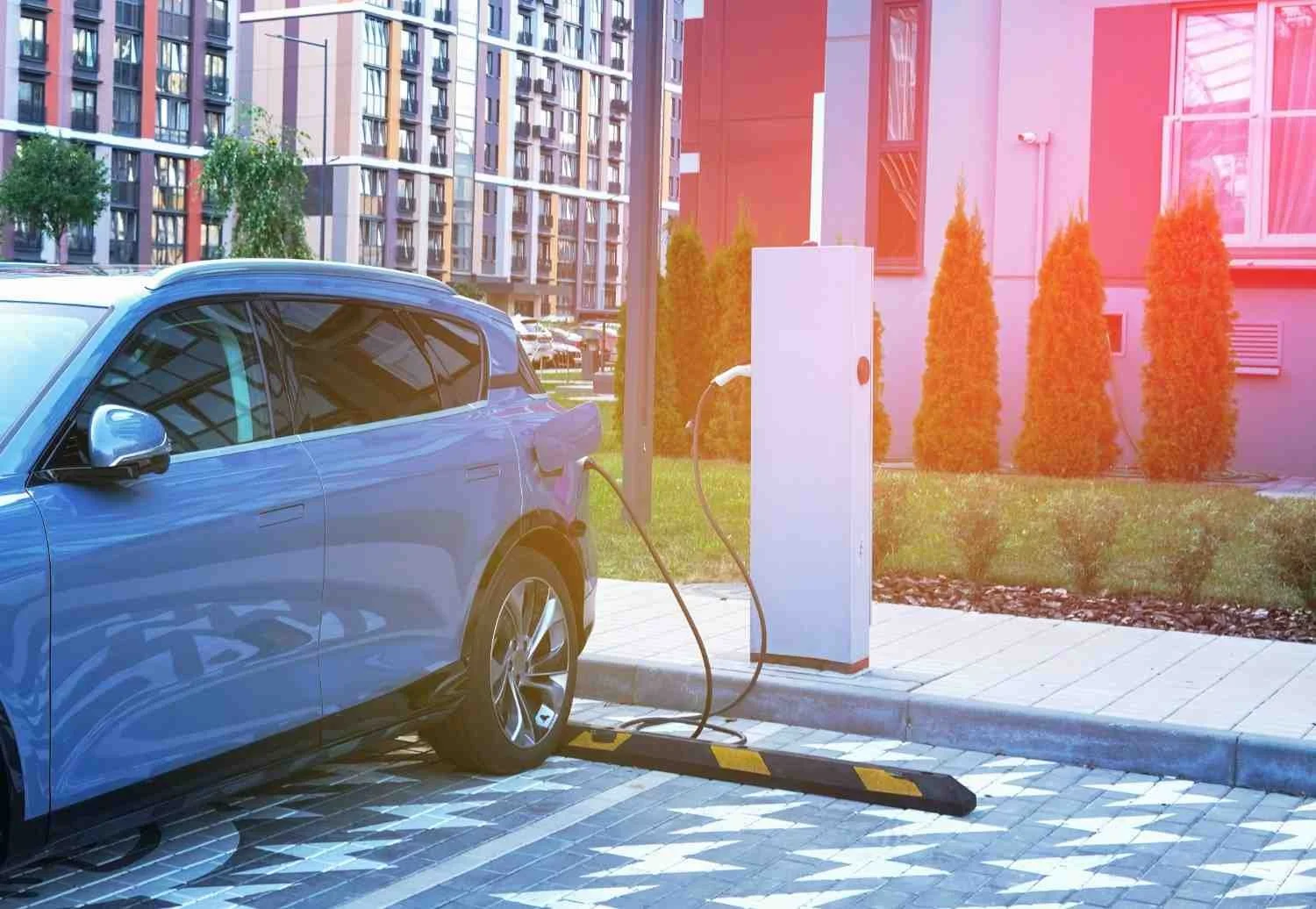
V2G allows EVs to store cheap overnight electricity and return it during peak demand, getting paid in the process. 10 million EVs could provide 500GWh of flexible storage, dwarfing today’s grid batteries.
Better Batteries And Renewables
Improved efficiency reduces charging frequency
Longer ranges lower daily demand
Renewables already provide ~40% of UK electricity and continue to grow
EVs are uniquely positioned to absorb surplus clean energy.
How The Electric Car Scheme Supports Grid Management
Smart charging is most effective when it’s applied consistently and at scale, and this is where The Electric Car Scheme plays a distinctive role. By structuring how and when thousands of electric vehicles are adopted and charged, the scheme helps ensure EV growth happens in a way the grid can comfortably support.
Rather than relying on individual behaviour changes, the scheme embeds grid-friendly charging patterns into everyday EV use.
Automatic Optimisation Built Into The Scheme
Vehicles accessed through The Electric Car Scheme are typically paired with smart charging solutions from the outset. This means charging is automatically scheduled around off-peak hours, responding to grid demand, electricity pricing, and renewable availability without requiring manual intervention from drivers.
The result is predictable: managed demand that fits neatly into the grid’s overnight capacity rather than competing with evening peaks.
Salary Sacrifice Naturally Encourages Off-Peak Charging
Because running costs matter to drivers, the scheme’s salary sacrifice structure reinforces cost-efficient charging behaviour. Off-peak electricity is cheaper, and smart charging makes it easy to take advantage of those lower rates.
In practice, this means thousands of drivers are financially incentivised to charge when the grid is under the least pressure, aligning personal savings of 20–50% with wider system stability.
Scale Creates Stability, Not Strain
With 50,000+ vehicles already on the scheme, charging demand isn’t concentrated or unpredictable. Instead, it’s distributed across households, regions, and time windows.
This aggregation smooths demand rather than amplifying it, helping Distribution Network Operators plan capacity more effectively and reducing the risk of localised congestion.
Workplace Charging Adds Further Flexibility
The Electric Car Scheme also supports workplace charging, which introduces an additional layer of grid flexibility. Daytime charging can make use of surplus wind or solar generation, particularly during periods of high renewable output.
By spreading charging across both overnight and daytime low-demand periods, the scheme helps relieve pressure on the traditional evening peak altogether.
Answering Common Grid Worries
Concerns about the grid usually come from reasonable assumptions, but they just don’t reflect how EV charging works in practice.
“Everyone Will Charge At 6 pm”
Smart charging delays are designed to charge your car automatically when the grid is cheapest, and time-of-use tariffs actively discourage peak-time use.
“Winter Demand Is Already High”
Winter peaks happen in the early evening. EV charging shifts to late-night hours accordingly, meaning the two rarely overlap.
“Rapid Charging Will Overload The Grid”
All UK rapid chargers combined draw under 1GW. Compared with 60GW winter peaks, this is a very small load.
“Rural Areas Can’t Cope”
Lower vehicle density means lower total demand. Rural upgrades are planned gradually, matching adoption rates!
Frequently Asked Questions About EV Charging And The Grid
Can The UK Grid Handle 10 Million Electric Cars?
Yes. The UK grid has 20–30GW of spare capacity overnight, which is when most EV charging already takes place. With smart charging spreading demand across off-peak hours, 10 million EVs can be accommodated without adding pressure to peak demand.
Will EVs Cause Blackouts?
No. Smart charging systems shift EV charging away from peak times and into periods when electricity demand is low. Countries with far higher EV adoption than the UK already operate without grid-related blackouts linked to electric vehicles.
What Time Should I Charge My EV?
The best time to charge is typically between 11 pm and 6 am, when electricity demand is lowest. Charging overnight also makes it easier to use cheaper electricity and a higher proportion of renewable energy.
Do Other Countries Manage With Lots Of EVs?
Yes, Norway and California are two examples of this. With smart charging and proper planning, electricity grids remain stable and reliable.
How Does The Electric Car Scheme Help The Grid?
The Electric Car Scheme supports smart, off-peak charging across thousands of vehicles. By coordinating when cars charge, it helps smooth demand and avoid adding pressure during peak periods.
Concerns about the electricity grid are understandable, but the evidence is clear.
The UK already has capacity to support EVs; demand is kept off-peak with smart charging, and the system will only get stronger over time with ongoing investment.
Electric cars, with the right technology and a managed approach to adoption, play an important role in the grid becoming cleaner, smarter and more resilient for everyone.
Are you an employer?
BOOK A DEMOAre you an employee?
SEE AVAILABLE CARSYou might also like…




ECS GUIDES AND ADVICE
Ready to Go Electric? Your Guides and Tools to a Smooth Switch
-
 How the Scheme Works
Find out how salary sacrifice can work for you or your business.
-
 The Charge Scheme
Save 20-50% on all charging costs through salary sacrifice - at home, the office, or in public..
-
 Complete Employer Protection
All employers and drivers are protected from day 1.
-
 Used Electric Cars
Discover the most affordable way to drive electric. Cars delivered in 14 days.
Last updated: 10.09.2026
Our pricing is based on data collected from The Electric Car Scheme quote tool. All final pricing is inclusive of VAT. All prices above are based on the following lease terms; 10,000 miles pa, 36 months, and are inclusive of Maintenance and Breakdown Cover. The Electric Car Scheme's terms and conditions apply. All deals are subject to credit approval and availability. All deals are subject to excess mileage and damage charges. Prices are calculated based on the following tax saving assumptions; England & Wales, 40% tax rate. The above prices were calculated using a flat payment profile. The Electric Car Scheme Limited provides services for the administration of your salary sacrifice employee benefits. The Electric Car Scheme Holdings Limited is a member of the BVRLA (10608), is authorised and regulated by the FCA under FRN 968270, is an Appointed Representative of Marshall Management Services Ltd under FRN 667174, and is a credit broker and not a lender or insurance provider.
Copyright and Image Usage: All images used on this website are either licensed for commercial use or used with express permission from the copyright holders, in compliance with UK and EU copyright law. We are committed to respecting intellectual property rights and maintaining full compliance with applicable regulations. If you have any questions or concerns regarding image usage or copyright matters, please contact us at marketing@electriccarscheme.com and we will address them promptly.