
EV Salary Sacrifice in the Public Sector & NHS: How It Works and How to Check If You Have a Scheme

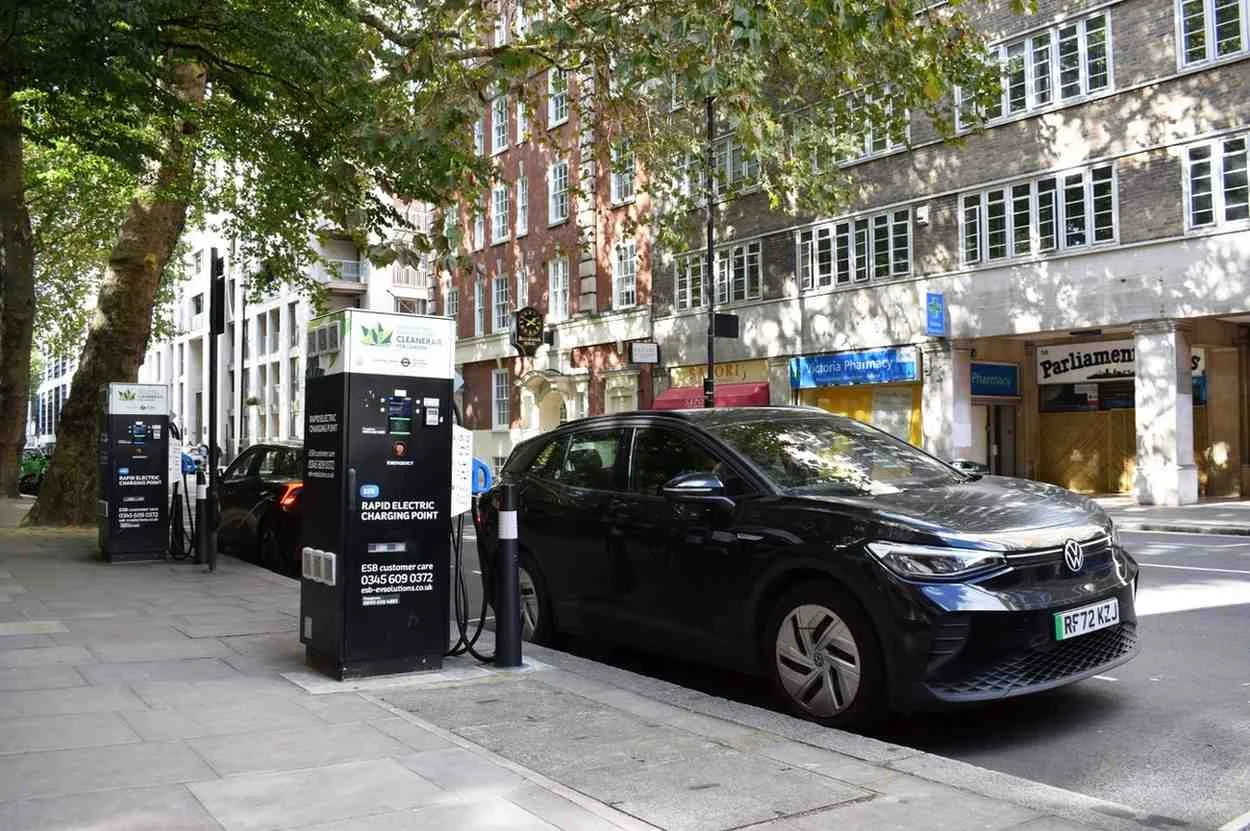
Source: Shutterstock
Upfront: Does The Electric Car Scheme Run NHS or Public Sector Schemes?
Before anything else, a straightforward disclosure. The Electric Car Scheme is a private-sector EV salary sacrifice provider. We work with private-sector employers, typically limited companies, partnerships and similar organisations, to offer electric car salary sacrifice to their staff. We do not currently operate schemes for the NHS, NHS trusts, local authorities, devolved administrations, central government departments, the police, fire and rescue services, universities or housing associations.
If you work in the public sector and you are hoping to get an electric car through salary sacrifice, the right first step is to speak to your employer's HR, Reward, or People team. A scheme may already be available to you through a different route. Many NHS trusts, councils and other public bodies have introduced EV salary sacrifice over the past few years, often via public procurement frameworks. Your HR or Reward contact will be able to tell you whether your employer runs a scheme, which provider operates it, and how to enrol.
The rest of this article is a neutral explainer. It is designed to help public-sector employees understand how an electric car scheme works in principle so that, if your employer already offers one, or is currently consulting on one, you can evaluate it properly. It is not a pitch, and the links in this article go to general technical guides, not to a booking or quote page.
How EV salary sacrifice works in principle
The basic mechanics
An electric car salary sacrifice scheme lets you lease an EV through your employer and pay for it out of your gross salary, that is, before Income Tax and National Insurance are deducted. Rather than paying for a car out of what lands in your bank account each month, you pay for it from what your employer is about to pay you, and your taxable salary drops by the same amount.
Because Income Tax and employee National Insurance are calculated on the reduced salary, you pay less of both. For most drivers on the standard UK tax bands, the combined saving is between 20% and 50% compared with the cost of leasing the same car personally. The exact figure depends on your marginal tax rate, your National Insurance band, the list price of the car, the length of the lease and the insurance and maintenance included in the package.
A small amount of Benefit-in-Kind (BiK) tax is payable on the car because it is a benefit in kind provided by your employer. This is where electric cars have a significant advantage over petrol, diesel and hybrid vehicles.
Benefit-in-Kind on EVs
For the 2026/27 tax year, the BiK rate on a fully electric car is just 4% of its list price. That is dramatically lower than the 25-37% applied to most petrol or diesel cars. The government has already published the trajectory for future years: 4% in 2026/27, 5% in 2027/28, 7% in 2028/29 and 9% in 2029/30. Even at 9%, an EV on salary sacrifice will usually remain considerably cheaper than an equivalent petrol or diesel vehicle driven privately. You can see real numbers worked through in our electric car salary sacrifice examples.
That low BiK rate is the single biggest reason why electric car salary sacrifice is attractive, and why the numbers are similar, in headline terms, whether you work for a private business or a public-sector employer. The tax mechanics sit in HMRC guidance (the EIM44000 series covers salary sacrifice generally), not in the internal rules of any particular employer.
Why the savings matter at public-sector pay bands
Public-sector pay is structured in a way that makes salary sacrifice particularly meaningful for mid-band earners. Most NHS Agenda for Change (AfC) Band 5-7 staff, teachers on main and upper pay ranges, police officers at constable and sergeant rank, firefighters at competent rate and local authority officers in mid-grade posts sit inside the 20% or 40% Income Tax bands. That is precisely the zone where EV salary sacrifice produces its largest proportional savings relative to a personal lease.
At higher bands (AfC 8a and above, senior officers, headteachers, consultants), the savings on the 40% tax element are larger in absolute terms, but interact more withpension contributions and the tapered annual allowance, so the personal maths should always be checked with a financial adviser where relevant. OurEV vs pension salary sacrifice guide looks specifically at how higher earners can balance the two.
Public-sector-specific considerations your HR team will have thought about
If your employer is running, or considering running, an electric car scheme, there are several public-sector-specific issues that will already have been worked through. Understanding them helps you ask better questions when you enrol.
Agenda for Change and NHS pension contributions
For NHS staff, the biggest recurring question is what salary sacrifice does to AfC banding and pension contributions. Salary sacrifice reduces your gross taxable pay, but NHS pension contributions are assessed against your pensionable pay, and scheme rules specify how pensionable pay is defined. In most NHS salary sacrifice implementations, pensionable pay is protected so that employer and employee pension contributions are calculated on the pre-sacrifice salary. This is usually also true for other salary-linked benefits such as sick pay and maternity pay.
The exact treatment is decided by your employer and its scheme administrator, so confirm with your Payroll or Pensions team before signing up. Ask specifically: "Is my pensionable pay and reference pay protected while I'm in the salary sacrifice scheme?" A written answer is worth keeping.
The National Living Wage floor
Salary sacrifice cannot, by law, take your contractual pay below the National Living Wage (£12.21 per hour for workers aged 21 and over from April 2025, with a further uplift expected). This matters most at the lower AfC bands, at Band 2 and Band 3 in particular, and for apprentices and trainees whose hourly rate is closer to the NLW floor. Scheme providers apply an "affordability" check before approving your order, which is why some employees at lower bands may find that only shorter leases or cheaper cars fit within the headroom above NLW.
Impact on other salary-linked benefits
Beyond pensions, your salary is used to calculate a range of other things: statutory maternity and paternity pay, statutory sick pay, occupational sick pay, redundancy pay, mortgage affordability assessments, and sometimes childcare eligibility. Most well-designed public-sector schemes use reference-pay mechanisms to protect these, but not all do so uniformly. Again, the detail belongs to your employer's policy document, not to any marketing page.
If you are planning to take maternity or paternity leave, go on long-term sick leave, or apply for a mortgage within the lease term, it is worth having a short conversation with HR before committing.
How public-sector schemes are typically arranged
Most public bodies do not sign direct contracts with EV salary sacrifice providers the way a private business might. Instead, they procure through a public-sector framework. Examples include Crown Commercial Service (CCS), YPO, ESPO and NHS Shared Business Services (NHS SBS) frameworks. The framework determines which providers can be used, the terms on which cars are leased, and how risk is allocated between the employer, the provider and the employee. If you want to see how private-sector providers compare, our best EV salary sacrifice providers guide sets out the main players.
This is mostly invisible to the end user. You enrol through an employee portal, pick a car and sign an agreement. But it is the reason schemes can look quite different between, say, an NHS trust and a district council. The mechanics in this article apply across all of them; the specifics of your scheme's terms sit with your employer's procurement route.
If your employer offers a scheme: what to check before you sign up
Every scheme, public-sector or otherwise, has a contract behind it. Before you commit, it is worth reading (or asking HR to summarise) how the following points are handled.
Early termination and life events
What happens if you leave your employer mid-lease? What if you are made redundant, go on long-term sick leave, take extended parental leave, or move between trusts or authorities? Good schemes include some form of protection, either an insurance-backed "early termination" product that caps the employee's exposure, or an employer-funded backstop. Ask specifically whether there is an early-termination fee, how it is calculated, and whether there is a cap.
Charging
Does the package include a home charger and installation? Does it include a workplace charging allowance, or access to a public charging network? How is each element taxed? A home charger provided to the employee by the employer is generally not a taxable benefit, but reimbursed public charging can be, depending on how it is structured. This detail should be set out in your scheme documentation.
New vs used EVs
Some schemes allow only brand-new cars. Others include approved used EVs, which can be substantially cheaper and widen the range of cars that fit within NLW and affordability limits. A used electric car salary sacrifice option is worth asking about, as it is increasingly common across the UK.
Pension and AfC contribution treatment
As above: ask for confirmation in writing that pensionable pay, reference pay and salary-linked benefits are protected while you are in the scheme. Terminology varies ("notional pay", "reference salary", "pre-sacrifice pay"), but the principle should be clear.
Insurance and maintenance
Most EV salary sacrifice packages are all-inclusive: insurance, servicing, tyres, breakdown cover and road tax are bundled into the monthly deduction. Confirm this is the case, and note any excesses on the insurance policy, particularly if other drivers in your household will use the car.
Credit checks
Some schemes involve a soft credit check at the point of application, particularly where a lease is being transferred between employees. Your HR team should be able to tell you whether this applies and what it looks like on your record.
If your employer doesn't currently offer a scheme
Plenty of public-sector employers are actively reviewing EV salary sacrifice as part of broader Net Zero strategies. Transport accounts for around 27% of UK emissions, and the public sector is committed to Net Zero by 2050, with many individual bodies having set earlier interim targets. Offering staff a route into an EV is often on the roadmap, even if it is not yet live.
If you want to raise it internally, the most effective first step is usually a conversation with HR or your Reward team, rather than a formal proposal. They will know whether a scheme is already in procurement, whether it has been paused, or whether the business case has simply not been made yet. In many organisations, trade-union representatives are involved in scheme consultations and can tell you what stage any review has reached.
If HR ask what information would help them evaluate a scheme, the linked guides in this article onBenefit-in-Kind, National Insurance savings, pension interaction and the broader lease mechanics cover what their Reward and Procurement teams will need to work through. They are written for a general audience, but the technical content is the same regardless of sector. The Autumn Budget 2025 summary also confirms that EV salary sacrifice is protected in the long term.
FAQs for public-sector employees
Will EV salary sacrifice reduce my pension?
In most well-designed schemes, no. The standard approach is to protect pensionable pay so that your pension contributions, and your employer's, are calculated on your pre-sacrifice salary. This is a scheme-level decision, though, so always confirm in writing with your Pensions team before enrolling. Our guide on why EV salary sacrifice is safe from the 2025 pension changes covers the general mechanics.
What happens to my scheme if I move between trusts or employers?
EV salary sacrifice contracts are between you and your current employer, not portable in the way a personal lease is. If you move between NHS trusts, local authorities or public bodies, the scheme will usually end. The new employer may or may not offer its own scheme, and may or may not use the same provider. Early-termination provisions therefore matter: check what they look like before you sign.
Is there a minimum-wage risk at my pay band?
If you are paid close to the National Living Wage, typically AfC Band 2, some Band 3 roles, apprentices and trainees, your salary sacrifice deduction cannot take your contractual pay below the NLW floor. Providers run an affordability check at the point of order. You may still be eligible, but with a narrower range of cars or shorter lease lengths.
Can I have a used EV on salary sacrifice?
It depends on your employer's scheme. Many schemes now include approved used electric cars alongside new ones. A used EV on salary sacrifice generally costs less per month than an equivalent new car, which can help if NLW or affordability is a constraint. Ask your HR team whether used is an option in your scheme.
Does The Electric Car Scheme run a public sector scheme?
No. The Electric Car Scheme is a private-sector EV salary sacrifice provider. We do not currently offer schemes to the NHS, councils, police, fire, central or devolved government, universities, or housing associations. If you work in the public sector, speak to your HR or Reward team about what is available to you.
A note on evaluating any scheme
Salary sacrifice is a contractual commitment that typically lasts two to four years. It is usually a very good deal: the tax advantages on electric cars are real and substantial, and many drivers save between 20% and 50% compared with a personal lease, but it is still a commitment. Read the scheme documentation your employer provides. Ask the specific questions above. If any of the numbers depend on your pension, your mortgage or your eligibility for statutory payments, double-check them with the relevant team before you sign.
For public-sector employees, the mechanics of how an electric car scheme works are the same as they are anywhere else in the UK. The tax rules are set by HMRC, and the BiK rates are set by the government. Where public-sector schemes differ is mainly in how they are procured and how they interact with pay frameworks like Agenda for Change. Your HR, Payroll and Pensions teams are the right people to walk you through that detail. If you want to get a rough sense of the numbers before you talk to them, our EV salary sacrifice calculator is free to use with no signup required. Learn more about our salary sacrifice car scheme here.
Are you an employer?
BOOK A DEMOAre you an employee?
SEE AVAILABLE CARSYou might also like…


Last updated: 16/04/2026
Our pricing is based on data collected from The Electric Car Scheme quote tool. All final pricing is inclusive of VAT. All prices above are based on the following lease terms; 10,000 miles pa, 36 months, and are inclusive of Maintenance and Breakdown Cover. The Electric Car Scheme’s terms and conditions apply. All deals are subject to credit approval and availability. All deals are subject to excess mileage and damage charges. Prices are calculated based on the following tax saving assumptions; England & Wales, 40% tax rate. The above prices were calculated using a flat payment profile. The Electric Car Scheme Limited provides services for the administration of your salary sacrifice employee benefits. The Electric Car Scheme Holdings Limited is a member of the BVRLA (10608), is authorised and regulated by the FCA under FRN 968270, is an Appointed Representative of Marshall Management Services Ltd under FRN 667174, and is a credit broker and not a lender or insurance provider.
Copyright and Image Usage: All images used on this website are either licensed for commercial use or used with express permission from the copyright holders, in compliance with UK and EU copyright law. We are committed to respecting intellectual property rights and maintaining full compliance with applicable regulations. If you have any questions or concerns regarding image usage or copyright matters, please contact us at marketing@electriccarscheme.com and we will address them promptly.
