
EV Fleet Management Explained: How Salary Sacrifice Fits Your Fleet Strategy

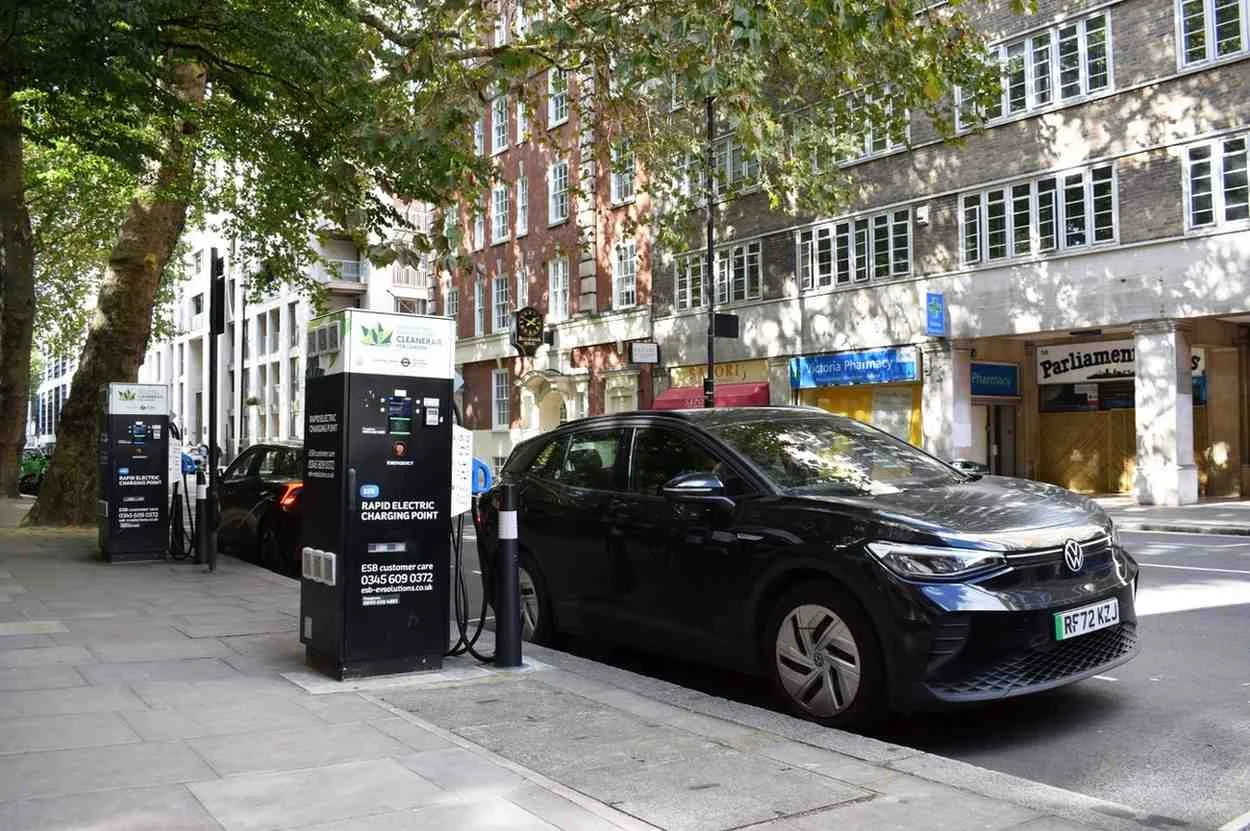
Source: Shutterstock
What is EV fleet management?
Definition
EV fleet management is the coordinated running of a business's electric vehicles across their whole lifecycle, from choosing the right cars and charging infrastructure, to setting driver policy, reporting on mileage, tax, energy use and carbon emissions, and eventually defleeting the vehicles at end of term. It brings together procurement, HR, finance and facilities into a single operational discipline, and it sits alongside the rest of your company electric car scheme rather than replacing it.
Historically, fleet management has focused on petrol and diesel cars and vans: leasing cycles, fuel cards, service-maintenance-repair (SMR) and driver licence checks. EV fleet management keeps all of that, then adds several new domains: charging infrastructure, energy tariffs, telematics for battery health, and funding options like salary sacrifice that barely existed for ICE cars.
Traditional fleet operations vs EV-era fleet operations
In traditional fleet ops, the biggest variable costs were fuel and SMR, and the biggest strategic question was residual value. In the EV era, the cost picture shifts. Fuel is replaced by electricity (much cheaper, but split across workplace, public and home charging), SMR drops a lot, and the strategic questions widen to include charging access, grid capacity, battery warranty, and how to offer the benefit of a company electric car to a much broader slice of employees rather than just senior leaders.
The five pillars of EV fleet management
Any credible electric fleet management programme in the UK rests on five pillars. Good EV fleet managers assess each one every year and adjust as the market moves.
1. Vehicle procurement and funding mix
A modern fleet rarely uses just one funding method. Typical options now include outright purchase, contract hire, finance lease, business contract hire (BCH), employee car ownership schemes (ECOS) and, more often these days, salary sacrifice electric car schemes. The right mix depends on whether a vehicle is essential to the job, whether it is used privately, and how much tax efficiency matters for the employee. Our guide to salary sacrifice vs business leasing compares the two head-to-head.
2. Charging infrastructure
Without charging, EV fleets stall. Employers need a clear strategy for depot and workplace chargers, home charging for perk drivers, and a reimbursement policy for public rapid charging. The Workplace Charging Scheme (WCS) still provides a £350 grant per socket for up to 40 sockets per site, and many salary sacrifice providers now bundle home charger installation into the monthly amount. For a full walk-through of hardware, costs and grants, see our guide to workplace EV charging installation costs.
3. Telematics and mileage reporting
Telematics in an EV fleet does more than track location. It monitors state of charge, energy use per mile, regenerative braking, battery health and driving style, all of which feed into accurate whole-life cost modelling and more precise mileage reimbursement, using HMRC's Advisory Electric Rate (AER) or bespoke pence-per-mile figures.
4. Driver experience and training
EVs drive differently. Good fleet managers run short induction sessions covering range planning, efficient driving, preconditioning, destination charging, and what to do if the battery runs low. A good driver experience keeps utilisation high and residuals strong, and turns the fleet into a talent and retention tool.
5. Whole-life cost and carbon reporting
Finance directors now want one number per vehicle: pence per mile all-in, including depreciation, finance, energy, SMR, insurance and tax. The same data underpins Scope 1 and Scope 3 carbon reporting and is often requested by customers in supplier tenders, particularly for public-sector contracts.
Traditional fleet vs salary sacrifice: when to use which
One of the most common questions from UK employers is whether they still need a traditional fleet if they offer an electric car salary sacrifice scheme. For most companies the answer is yes, but the split is now very different from what it was five years ago.

Job-need vehicles - traditional fleet or contract hire
Vehicles that are essential to perform the role (field engineer vans, sales executives who do 25,000+ business miles a year, pool cars at a depot) normally stay on traditional fleet funding. The employer needs control of specification, mileage, insurance and the ability to reassign the vehicle. Business contract hire (BCH) or outright purchase remain the cleanest routes, and our complete guide to corporate car leasing for UK businesses covers the detail.
Perk vehicles - salary sacrifice
Where a car is a benefit rather than a tool of the trade, salary sacrifice electric car schemes almost always win. The employee gives up a portion of gross salary in exchange for a fully insured, serviced, maintained electric car. Because income tax and National Insurance are calculated on the reduced salary, drivers save 20–50% compared with a personal lease. The 3% Benefit-in-Kind rate for 2025/26 keeps the tax drag on the driver extremely low.
Mixed or hybrid models
Many UK employers now run a hybrid model: traditional fleet for job-need roles, salary sacrifice open to all other employees, and a small pool of shared EVs at head office. This structure captures tax efficiency where it is allowed, preserves operational control where it is needed, and makes the offer of a company electric car available to every employee rather than a lucky few. Our article on large company electric car schemes and mixed fleet solutions shows how this looks in practice.
Building an EV fleet transition plan
A company fleet EV transition rarely fails because of the cars. It fails because the plan is vague. The five-stage framework below is the structure we recommend to UK employers moving from an ICE-heavy fleet to a mixed or fully electric fleet.
Stage 1: Audit your existing fleet
Pull every vehicle onto a single list: funding method, end date, annual mileage, fuel spend, CO2 output, driver grade and whether it is job-need or perk. This single spreadsheet is the foundation of every decision that follows.
Stage 2: Model total cost of ownership
For each vehicle, compare the current whole-life cost with the equivalent EV on contract hire and, for perk users, on salary sacrifice. Include energy costs, SMR savings, 100% first-year capital allowance where applicable, Class 1A NI on BiK, and the value of tax and NI savings to the employee.
Stage 3: Plan the charging rollout
Decide where charging will happen: depot, office, home, public. Apply for the Workplace Charging Scheme grant before installation, confirm grid capacity with your DNO, and agree a reimbursement policy for home and public charging. Stage 3 usually runs in parallel with stage 2, and our workplace EV charging guide for employers can help you scope the site work.
Stage 4: Update your car and travel policy
An out-of-date car policy will sink the project. Refresh your list of eligible vehicles, CO2 caps, mileage rates, insurance rules, early-termination protections, and the rules of the salary sacrifice scheme itself: who is eligible, minimum service, and what happens on maternity, long-term sick and resignation.
Stage 5: Launch salary sacrifice and decommission ICE
Open the scheme to employees, run communications and benefits webinars, and set a glidepath for removing ICE vehicles as contracts naturally end. Most UK employers using this approach reach a majority-electric fleet within 24–36 months without any forced early terminations. For the longer policy picture, see our guide on future-proofing your fleet for the 2030 petrol and diesel ban.
Grants, tax and compliance
The UK policy environment rewards employers who move early. The main levers to understand in 2026 are:
100% first-year capital allowance on new, zero-emission cars bought by a business, subject to HMRC rules and the car being unused and new when acquired.
Benefit-in-Kind at 4% for pure-electric cars in 2026/27, rising gradually in the following years but still far below the ICE equivalent.
Workplace Charging Scheme (WCS) grant: up to £350 per socket, capped at 40 sockets per applicant, administered by OZEV.
ZEV mandate: from 2026, at least 28% of manufacturers' new car sales in the UK must be zero-emission, rising each year to 100% by 2035.
Plug-in Car Grant is closed for cars, but plug-in van and truck grants remain available for qualifying commercial vehicles.
Euro 7 and local Clean Air Zone rules keep pushing up the running cost of older ICE vehicles, which strengthens the business case for future-proofing your fleet ahead of the 2030 ban.
A well-run salary sacrifice electric car scheme is compliant by design. The provider handles VAT recovery, BiK reporting, early-termination insurance and P11D paperwork, so the employer avoids most of the compliance overhead.
Risks and how to mitigate them
Residual value risk
EV residuals have stabilised but remain more volatile than ICE. Mitigate by using contract hire and salary sacrifice (where the lessor carries residual risk) rather than outright purchase, and by standardising on high-volume, strong-residual models.
Charging infrastructure bottlenecks
Grid capacity at depots is the single biggest project risk. Engage your Distribution Network Operator (DNO) early, consider load-balancing chargers, and use home charging for perk drivers to reduce peak demand on site.
Driver change management
The most common complaint in year one is range anxiety, which usually disappears after six weeks of real-world driving. Pair each new EV driver with an experienced colleague, provide a simple one-page charging guide, and be generous with home charger installation. It is the single biggest driver of satisfaction.
Key UK fleet statistics to know
UK fleets account for roughly half of new car registrations each year (SMMT), which makes fleet decisions key to national decarbonisation.
Battery-electric vehicles now represent a growing share of new fleet registrations, and the SMMT publishes monthly updates worth tracking.
The ZEV mandate requires 28% of new car sales to be zero-emission in 2026, rising every year to 100% by 2035.
The Workplace Charging Scheme provides £350 per socket, up to 40 sockets per applicant, which cuts depot electrification costs a long way.
Salary sacrifice drivers save 20–50% on an electric car compared with a personal lease, thanks to income tax and NI relief on the sacrificed salary and the 3% Benefit-in-Kind rate.
Where salary sacrifice fits in your wider fleet strategy
For most UK employers, the right answer is not "fleet or salary sacrifice" but "fleet and salary sacrifice". Traditional fleet keeps your operational vehicles moving. An electric car salary sacrifice scheme extends the benefit of a new, tax-efficient EV to every eligible employee, not just senior leadership, and does so without adding cost to the employer.
The Electric Car Scheme works with hundreds of UK employers to run exactly this kind of mixed fleet, handling everything from driver quotes and order management to early-termination protection and P11D reporting. If you are building or refreshing your EV fleet management strategy, our fleet transition team can model your specific mix and show you where salary sacrifice will have the biggest impact.
Nextstep: Talk to our fleet transition team at electriccarscheme.com to model your company fleet EV transition and the salary sacrifice layer that sits on top. Learn more about our salary sacrifice car scheme here.
Are you an employer?
BOOK A DEMOAre you an employee?
SEE AVAILABLE CARSYou might also like…


Last updated: 16/04/2026
Our pricing is based on data collected from The Electric Car Scheme quote tool. All final pricing is inclusive of VAT. All prices above are based on the following lease terms; 10,000 miles pa, 36 months, and are inclusive of Maintenance and Breakdown Cover. The Electric Car Scheme’s terms and conditions apply. All deals are subject to credit approval and availability. All deals are subject to excess mileage and damage charges. Prices are calculated based on the following tax saving assumptions; England & Wales, 40% tax rate. The above prices were calculated using a flat payment profile. The Electric Car Scheme Limited provides services for the administration of your salary sacrifice employee benefits. The Electric Car Scheme Holdings Limited is a member of the BVRLA (10608), is authorised and regulated by the FCA under FRN 968270, is an Appointed Representative of Marshall Management Services Ltd under FRN 667174, and is a credit broker and not a lender or insurance provider.
Copyright and Image Usage: All images used on this website are either licensed for commercial use or used with express permission from the copyright holders, in compliance with UK and EU copyright law. We are committed to respecting intellectual property rights and maintaining full compliance with applicable regulations. If you have any questions or concerns regarding image usage or copyright matters, please contact us at marketing@electriccarscheme.com and we will address them promptly.
