
Vehicle-to-Load (V2L): The Best EVs You Can Actually Plug a Kettle Into (2026)
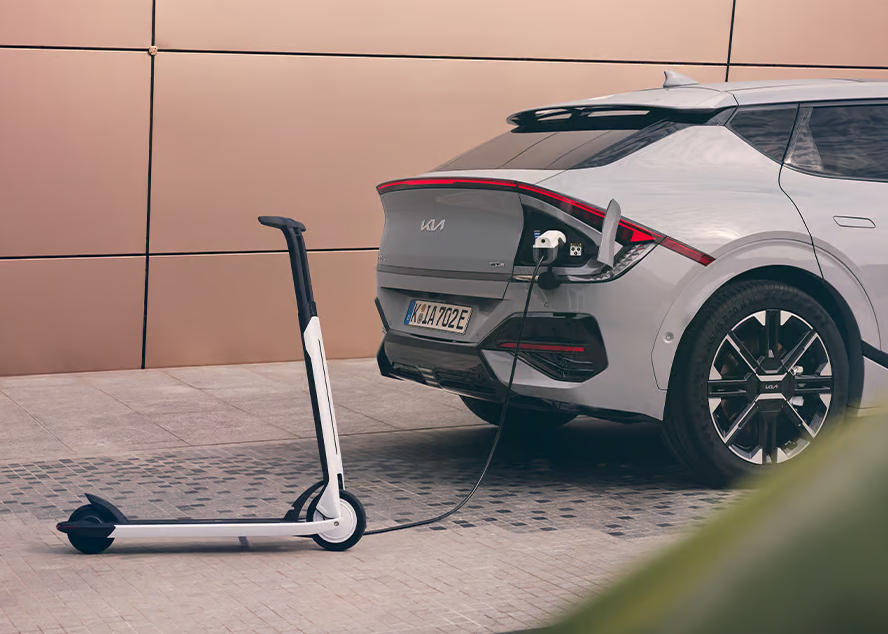
Image source: Kia Press
If you're shopping for an electric car in 2026 and you've come across the term "V2L", you're probably wondering one thing: can I actually plug a kettle into my car?
The short answer is yes, but only if you pick the right EV. V2L is one of the most quietly useful features on a modern electric car, and it's increasingly the deciding factor for drivers picking between two otherwise similar models on The Electric Car Scheme. This guide explains exactly what V2L is, which UK EVs have it in 2026, and what it's realistically good for.
If you're after the bigger story on bidirectional charging, the bit where your electric car salary sacrifice EV pays you back by selling power to the grid, read our Vehicle-to-Grid (V2G) guide instead. This piece is V2L only.
What V2L actually is
V2L stands for Vehicle-to-Load. It's a feature that turns your EV's high-voltage drive battery into a giant portable power bank, capable of running ordinary mains-powered devices through a standard three-pin UK socket.
In practical terms, V2L means your electric car can do the job of a petrol generator, silently, with no fumes, and with far more energy on tap than any leisure battery you could reasonably carry.
It sits alongside two other "bidirectional" modes you might have heard about:
V2L (Vehicle-to-Load): car powers an appliance directly. Available now, no special hardware needed.
V2H (Vehicle-to-Home): car powers your whole house through the consumer unit. Requires a bidirectional home charger.
V2G (Vehicle-to-Grid): car exports power back to the grid for payment. Requires a bidirectional charger and a compatible energy tariff.
V2L is by far the easiest of the three to use, because it's already built into the car.
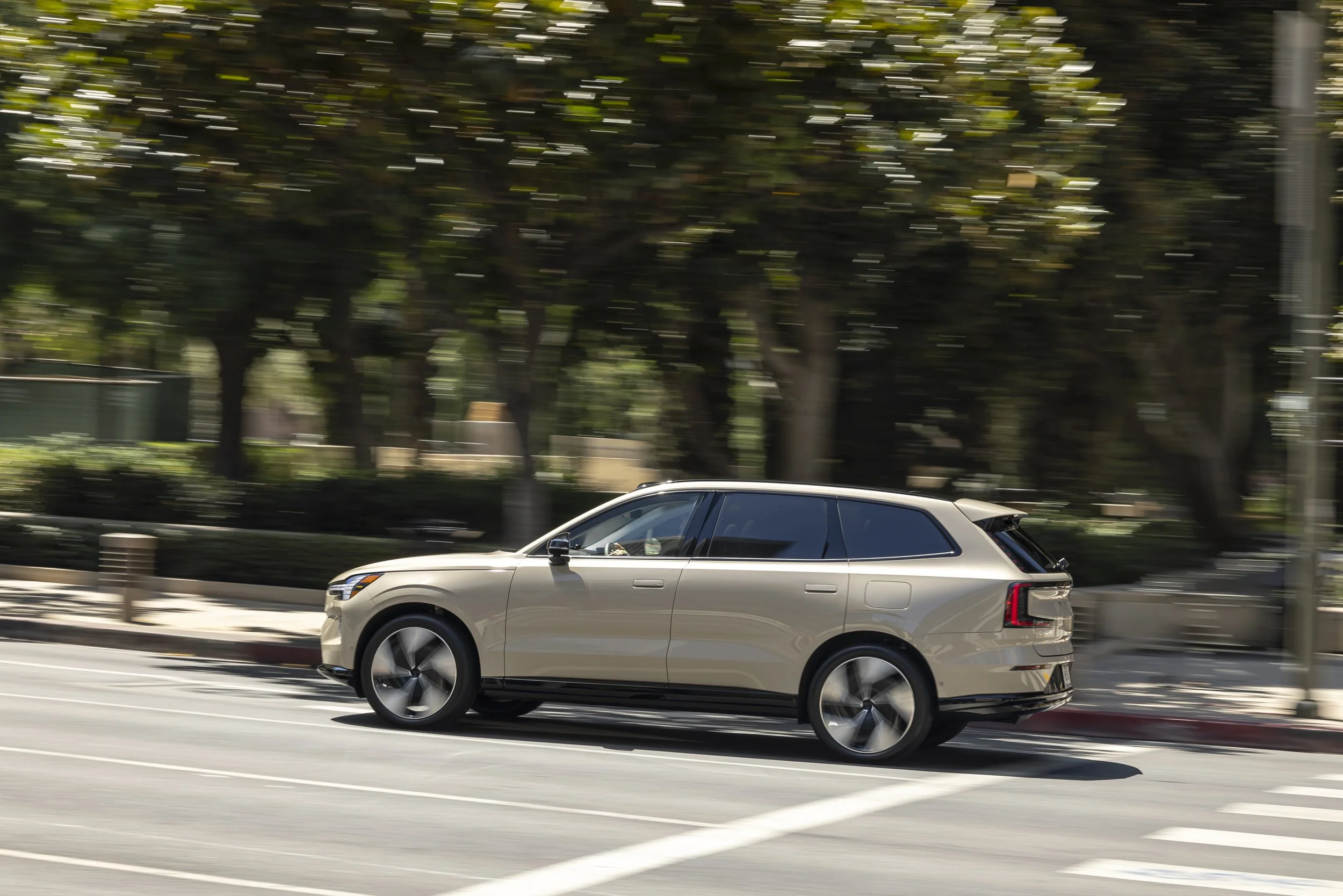
How V2L works (without the engineering jargon)
Most V2L-capable EVs use an on-board AC inverter that converts the car's DC battery output into 230V AC mains power. From there, you access it in one of two ways:
A built-in socket inside the cabin or boot, common on cars like the Kia EV6 and Volvo EX30.
A V2L adapter that plugs into the car's external charging port, used by Hyundai, Kia and MG models. The adapter has a UK three-pin socket on the other end.
Power output varies by manufacturer, but 3.6kW is the typical ceiling for AC V2L. That's enough to run almost any single household appliance, including a 3kW kettle, an oven, a power tool, or a fridge, though usually not several at once.
What you can actually power with V2L
The fun part. Here's where V2L earns its place on the spec sheet:
Camping and weekends away. A small camp fridge, LED lights, a coffee machine, and a portable induction hob will draw maybe 1–1.5kW combined. A mid-sized EV battery can run that setup for 2–3 days easily, without idling an engine and without lugging a leisure battery. For more on this, see ourBest Electric Cars for Camping guide.
On-site power tools. Trades use V2L to run circular saws, mitre saws, compressors and chargers on jobs without mains access. Ideal for self-employed sparkies, joiners and gardeners on the road.
Working from anywhere. A laptop, monitor, 4G router and a kettle is roughly 300–500W. An EV can run a remote office for an entire working week off a single charge.
Powering another EV. If a fellow EV driver runs out of charge in the middle of nowhere, V2L can give them enough range (typically 1–2 miles per hour of charging) to crawl to the nearest rapid.
Power cuts. Average UK household winter draw is around 2.4kW. A 77kWh EV with V2L can keep your fridge, lights, broadband and a few sockets running for roughly 24 hours of continuous use, useful in storm season.
UK EVs with V2L in 2026
Here are the most popular V2L-capable EVs you'll find on acompany electric car scheme right now. All output figures are AC and refer to the maximum continuous load.
| Model | V2L output | Socket type |
|---|---|---|
| Hyundai IONIQ 5 | 3.6kW | External adapter + interior socket |
| Hyundai IONIQ 6 | 3.6kW | External adapter |
| Kia EV6 | 3.6kW | External adapter + interior socket |
| Kia EV9 | 3.6kW | External adapter + interior socket |
| MG4 | 2.2kW | External adapter |
| MG ZS EV | 2.2kW | External adapter |
| BYD Atto 3 | 2.2kW | External adapter |
| BYD Seal | 3.0kW | External adapter |
| BYD Dolphin | 2.2kW | External adapter |
| Volvo EX30 | 1.5kW | Interior socket |
| Polestar 3 (select trims) | 3.6kW | External adapter |
| Renault 5 E-Tech | 3.7kW | External adapter |
The list is changing fast. Expect Ford, Stellantis and Volkswagen models to roll out V2L on more trims through 2026 and 2027. Always check the latest spec sheet before ordering.
The small print
A few caveats every driver should understand before relying on V2L.
Battery health. Manufacturers permit V2L use within the same warranty terms as ordinary driving. Cycling a small amount of energy through the inverter has a negligible effect on long-term battery degradation compared with regular DC rapid charging. Our EV Battery Lifespan Guide goes into this in more detail.
Range. Every kWh you draw out of V2L is a kWh that doesn't go to your wheels. Plan for it. Running a 1kW load for 5 hours costs roughly 20 miles of real-world range on most EVs. Our guide on how to optimise your electric car's range is worth a read if you're planning a long weekend away.
Insurance. Personal use of V2L (camping, occasional power cuts) is universally covered. Commercial use, for example a tradesperson powering tools all day on a job site, may require you to declare it. Check with your broker, especially if your electric car salary sacrifice contract restricts business use.
Safety cut-offs. Most V2L systems will stop discharging at around 20% state of charge so you can always drive home. Don't rely on getting the last drop out.
V2L vs solar panels and leisure batteries: is it worth it?
A typical 100Ah leisure battery stores around 1.2kWh and costs £150–£300. A 77kWh EV stores roughly 60 times that. If you camp, work outdoors, or want backup power even occasionally, V2L is far better value than a dedicated leisure setup, provided you'd be buying the EV anyway.
For full off-grid living, solar plus a battery still wins. For everyone else, V2L is a free upgrade that comes built into the car.
V2L is now a real reason to pick one EV over another
For anyone choosing their next electric car through a salary sacrifice scheme, V2L has quietly become a tiebreaker. With Benefit-in-Kind tax sitting at just 3% for 2025/26, and drivers saving 20–50% on the cost of an EV through The Electric Car Scheme, the marginal cost of stepping up to a V2L-capable model is small, and the lifestyle upside is large.
See which EVs with V2L are available on The Electric Car Scheme.
Are you an employer?
BOOK A DEMOAre you an employee?
SEE AVAILABLE CARSYou might also like…



ECS GUIDES AND ADVICE
Ready to Go Electric? Your Guides and Tools to a Smooth Switch
-
 How the Scheme Works
Find out how salary sacrifice can work for you or your business.
-
 The Charge Scheme
Save 20-50% on all charging costs through salary sacrifice - at home, the office, or in public..
-
 Complete Employer Protection
All employers and drivers are protected from day 1.
-
 Used Electric Cars
Discover the most affordable way to drive electric. Cars delivered in 14 days.
Last updated: 16/04/2026
Our pricing is based on data collected from The Electric Car Scheme quote tool. All final pricing is inclusive of VAT. All prices above are based on the following lease terms; 10,000 miles pa, 36 months, and are inclusive of Maintenance and Breakdown Cover. The Electric Car Scheme's terms and conditions apply. All deals are subject to credit approval and availability. All deals are subject to excess mileage and damage charges. Prices are calculated based on the following tax saving assumptions; England & Wales, 40% tax rate. The above prices were calculated using a flat payment profile. The Electric Car Scheme Limited provides services for the administration of your salary sacrifice employee benefits. The Electric Car Scheme Holdings Limited is a member of the BVRLA (10608), is authorised and regulated by the FCA under FRN 968270, is an Appointed Representative of Marshall Management Services Ltd under FRN 667174, and is a credit broker and not a lender or insurance provider.
Copyright and Image Usage: All images used on this website are either licensed for commercial use or used with express permission from the copyright holders, in compliance with UK and EU copyright law. We are committed to respecting intellectual property rights and maintaining full compliance with applicable regulations. If you have any questions or concerns regarding image usage or copyright matters, please contact us at marketing@electriccarscheme.com and we will address them promptly.
