
New to EVs? A First-Time Driver's Guide to Salary Sacrifice (2026)

Image source: Shutterstock
So you're thinking about making the switch. Maybe your neighbour got a shiny new electric car on salary sacrifice and won't stop talking about it, or maybe your diesel's MOT is looming and you're weighing up what comes next. Either way, going electric for the first time can feel like a big leap: new technology, new terminology, new habits.
The good news: once you've lived with an EV for a fortnight, most of the worries disappear. This guide walks first-time EV drivers through everything you actually need to know before ordering your first electric car salary sacrifice, from charging to choosing the right model to a week-by-week plan for your first month.
What's Different About Driving an EV
The first time you pull away silently from a traffic light with all the torque of a small van, you'll understand why EV owners tend to stay EV owners. Here's what changes behind the wheel.
Instant torque and one-pedal driving. Electric motors deliver maximum twist from 0 rpm, so overtaking and pulling onto roundabouts feels effortless. Most EVs also offer "one-pedal driving": lift off the accelerator and the car slows itself using regenerative braking, recovering energy back into the battery. After a week, you'll barely touch the brake pedal in town.
No clutch, no gears. Every modern EV is a single-speed automatic. That means no gear hunting, no clunky changes, and a much smoother drive in stop-start traffic.
Silence and visibility. Without engine noise, you notice the road, the tyres, the birds. Many drivers say it's less tiring on long journeys. Visibility tends to be better too, as the bonnet typically doesn't need to accommodate a big engine block.
Regen braking. Regenerative braking not only slows the car but claws back miles of range, which is particularly useful on long descents or in urban traffic.
Will it Fit my Life? A Quick Self-Check
Before you commit, run through these four questions honestly.
Daily miles. The average UK commute is 19 miles round trip (DfT). Even a modest 200-mile EV covers a full working week with room to spare. If you're not sure what range you actually need, our guide on how much electric car range you need is a good next read.
Home, work or public charging access. Do you have off-street parking for a home charger? Does your employer offer workplace charging? Is there reliable public charging nearby? Any one of these works, you just need one.
Long-journey frequency. If you do the occasional 300-mile weekend trip, that's easily managed with one rapid-charge coffee stop. If you regularly do 500+ mile days, you'll want a longer-range EV.
Boot and passenger needs. EVs come in every shape: small hatchbacks, family SUVs, estates, seven-seaters. Don't assume you have to compromise.
Charging: the Bit That Worries Everyone
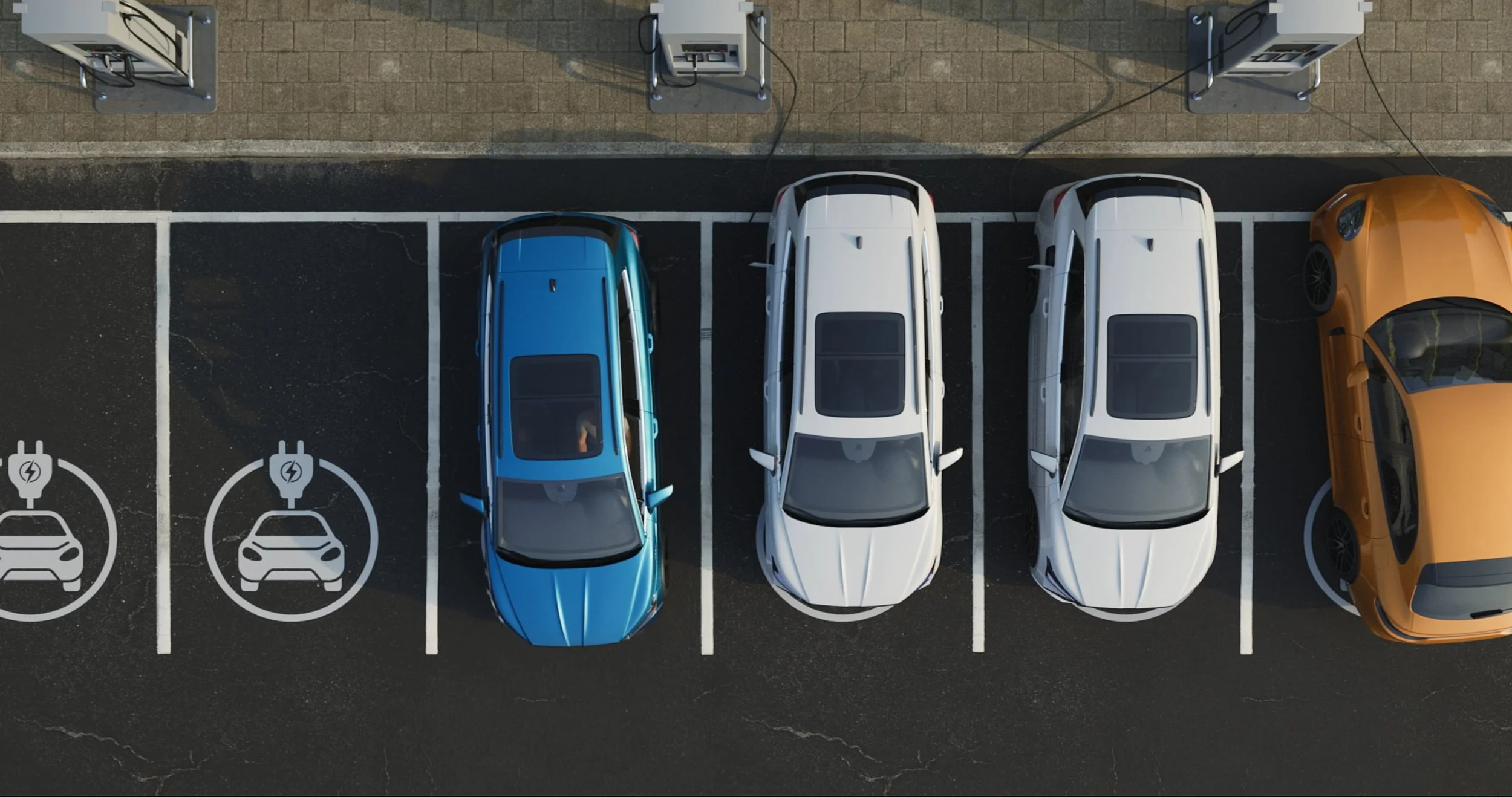
Charging is the single topic that causes most hesitation for first-time EV drivers. In reality, it's simpler than filling up with petrol once you've got your routine. Our beginner's guide to EV charging covers the full detail, but here are the essentials.
Home charging basics
A 7kW home charger adds roughly 25-30 miles of range per hour of charging. Plug in overnight and you wake up full. Most drivers using The Electric Car Scheme install a home charger alongside their order, and it's the single best upgrade you can make.
Public charging: the three speeds
Slow (3-7kW): lamp posts, older workplace units. Useful for top-ups during the working day.
Fast (7-22kW): supermarkets, car parks, destination chargers. Good for a shop or meal.
Rapid and ultra-rapid (50-350kW): motorway services. 20 minutes typically gets you from 10% to 80%.
How much it actually costs
Home charging on an EV-specific off-peak tariff is around 7p/kWh. That works out at roughly £10-12 for a full "tank" on most family EVs, enough for 200-300 miles. Rapid public charging is more expensive at around 70p/kWh, but if 70% of your charging is at home (the UK average, according to Zap-Map), your overall running costs drop sharply compared to petrol. Try plugging your own numbers into our EV savings calculator to see the gap between an EV and your current petrol spend.
Apps to install on day one
Zap-Map for finding chargers, plus the networks you'll use most (BP Pulse, Shell Recharge, Osprey, InstaVolt, Ionity). Many drivers also find RFID charge cards useful as a back-up. The Charge Scheme, our reimbursement product, is worth setting up if your employer offers it, because it lets you claim back public charging costs through your salary.
Picking the Right First EV
You don't need the biggest battery or the flashiest badge. You need the right car for your actual life.
Range: how much do you actually need?
Add up your longest realistic weekly journey, then add 20% for winter. For most UK drivers, 200-250 miles of WLTP range is plenty. If you regularly drive further, aim for 300+ miles. Still worried about getting stranded? Our piece on range anxiety in 2026 goes deeper.
New vs used on salary sacrifice
The Electric Car Scheme offers both. A new EV on salary sacrifice gives you the lowest Benefit-in-Kind rate (3% in 2025/26), a full manufacturer warranty, and everything bundled: insurance, maintenance, tyres and breakdown. A used EV can stretch your budget further if you're on a tighter monthly net spend, and our list of the most affordable electric cars on salary sacrifice is a good place to start.
Top five first-EV picks
Popular choices for first-time EV drivers on our electric car scheme include the MG4, Renault Megane E-Tech, Volkswagen ID.3, Kia Niro EV and Tesla Model 3. All five offer real-world range, reliable charging and boot space suitable for family life.
Salary Sacrifice 101 for First-Timers
If you're new to the concept, here's the short version. For the full explainer, see our electric car salary sacrifice UK guide.
How the saving works
You agree to give up a portion of your gross (pre-tax) salary in exchange for a brand-new electric car. Because you're paying from gross rather than net income, you save Income Tax and National Insurance on that portion. Your employer also saves on Employer NI. Drivers on The Electric Car Scheme typically save 20-50% compared to leasing the same EV personally.
What's included
Our all-inclusive salary sacrifice scheme bundles the car, fully comprehensive insurance, servicing, maintenance, tyres, MOTs, breakdown cover, and a hassle-free return at the end. You just add electricity.
What happens if you leave your employer
The Electric Car Scheme has built-in "Complete Care" protection, meaning if your circumstances change (resignation, redundancy, long-term sick leave, maternity, retirement) you're shielded from the full early-termination cost. This is one of the biggest reasons first-time EV drivers feel comfortable signing up.
Myth-Bust the Common Fears
Range anxiety. Real, but temporary. After a month, you'll learn your car's habits and stop thinking about it. Modern EVs tell you exactly how far you can go and route you through chargers automatically. Our range anxiety in 2026 piece has the data.
Battery longevity. Today's EV batteries are typically warrantied for 8 years or 100,000 miles to 70% capacity. Real-world data from Tesla, Nissan and others shows batteries comfortably outlasting those warranties.
Charging reliability. The UK public charging network has grown a lot. Zap-Map data shows more than 80,000 public charge points across the UK in 2026, with rapid reliability improving year-on-year.
Cold weather. Yes, expect 15-25% less range in a proper cold snap. Pre-heating the car while it's still plugged in ("preconditioning") largely solves this. Use the app, set your departure time, and climb into a warm car with full range.
Your First-Month Checklist
A practical, week-by-week plan to help new EV drivers settle in without stress.
Week 1: home charger install
Book your home charger install (ideally before the car arrives). Download your energy supplier's app and look into switching to an EV-specific tariff such as Octopus Go, Intelligent Octopus, OVO Charge Anytime, or EDF GoElectric.
Week 2: register charging cards and apps
Sign up for Zap-Map, your main public charging networks, and (if available) The Charge Scheme for reimbursed public charging. Take a 30-minute practice trip to a local rapid charger, just to take the mystery out of the first plug-in.
Week 3: first long trip
Plan a 150-200 mile weekend journey using your car's built-in route planner or a route planner app. Book a coffee stop at a rapid charger mid-route. You'll arrive more relaxed than you expect.
Week 4: refine your tariff
Check your first energy bill. Move as much charging as possible into off-peak windows (typically 23:30-05:30). Set a scheduled charge in the car or through your home charger app so it happens automatically while you sleep. Then drop your new numbers into our EV savings calculator and see how you compare with your old petrol costs.
Key Stats for First-Time EV Drivers
Around 70% of UK EV charging happens at home (Zap-Map State of Charging)
Average UK commute: 19 miles round trip (Department for Transport)
Home charging off-peak: ~7p/kWh vs rapid public ~70p/kWh
Typical real-world range loss in winter: 15-25%
Benefit-in-Kind on EV salary sacrifice: just 3% for 2025/26
Typical driver saving: 20-50% through salary sacrifice vs personal lease
Ready to Get Started?
Every first-time EV driver has questions they're slightly embarrassed to ask: will my Granny Annexe WiFi reach my drive? Can I tow a caravan? Does my mechanic still have a job? Honestly, ask us. Book a 15-minute chat with one of our EV specialists before you order. We'll walk you through your shortlist, confirm your numbers, and make sure the car you pick is the right first EV for your life.
Are you an employer?
BOOK A DEMOAre you an employee?
SEE AVAILABLE CARSYou might also like…



ECS GUIDES AND ADVICE
Ready to Go Electric? Your Guides and Tools to a Smooth Switch
-
 How the Scheme Works
Find out how salary sacrifice can work for you or your business.
-
 The Charge Scheme
Save 20-50% on all charging costs through salary sacrifice - at home, the office, or in public..
-
 Complete Employer Protection
All employers and drivers are protected from day 1.
-
 Used Electric Cars
Discover the most affordable way to drive electric. Cars delivered in 14 days.
Last updated: 16/04/2026
Our pricing is based on data collected from The Electric Car Scheme quote tool. All final pricing is inclusive of VAT. All prices above are based on the following lease terms; 10,000 miles pa, 36 months, and are inclusive of Maintenance and Breakdown Cover. The Electric Car Scheme's terms and conditions apply. All deals are subject to credit approval and availability. All deals are subject to excess mileage and damage charges. Prices are calculated based on the following tax saving assumptions; England & Wales, 40% tax rate. The above prices were calculated using a flat payment profile. The Electric Car Scheme Limited provides services for the administration of your salary sacrifice employee benefits. The Electric Car Scheme Holdings Limited is a member of the BVRLA (10608), is authorised and regulated by the FCA under FRN 968270, is an Appointed Representative of Marshall Management Services Ltd under FRN 667174, and is a credit broker and not a lender or insurance provider.
Copyright and Image Usage: All images used on this website are either licensed for commercial use or used with express permission from the copyright holders, in compliance with UK and EU copyright law. We are committed to respecting intellectual property rights and maintaining full compliance with applicable regulations. If you have any questions or concerns regarding image usage or copyright matters, please contact us at marketing@electriccarscheme.com and we will address them promptly.
