
Driving Your EV in Europe: Charging, Tolls, Insurance & What to Pack (2026)
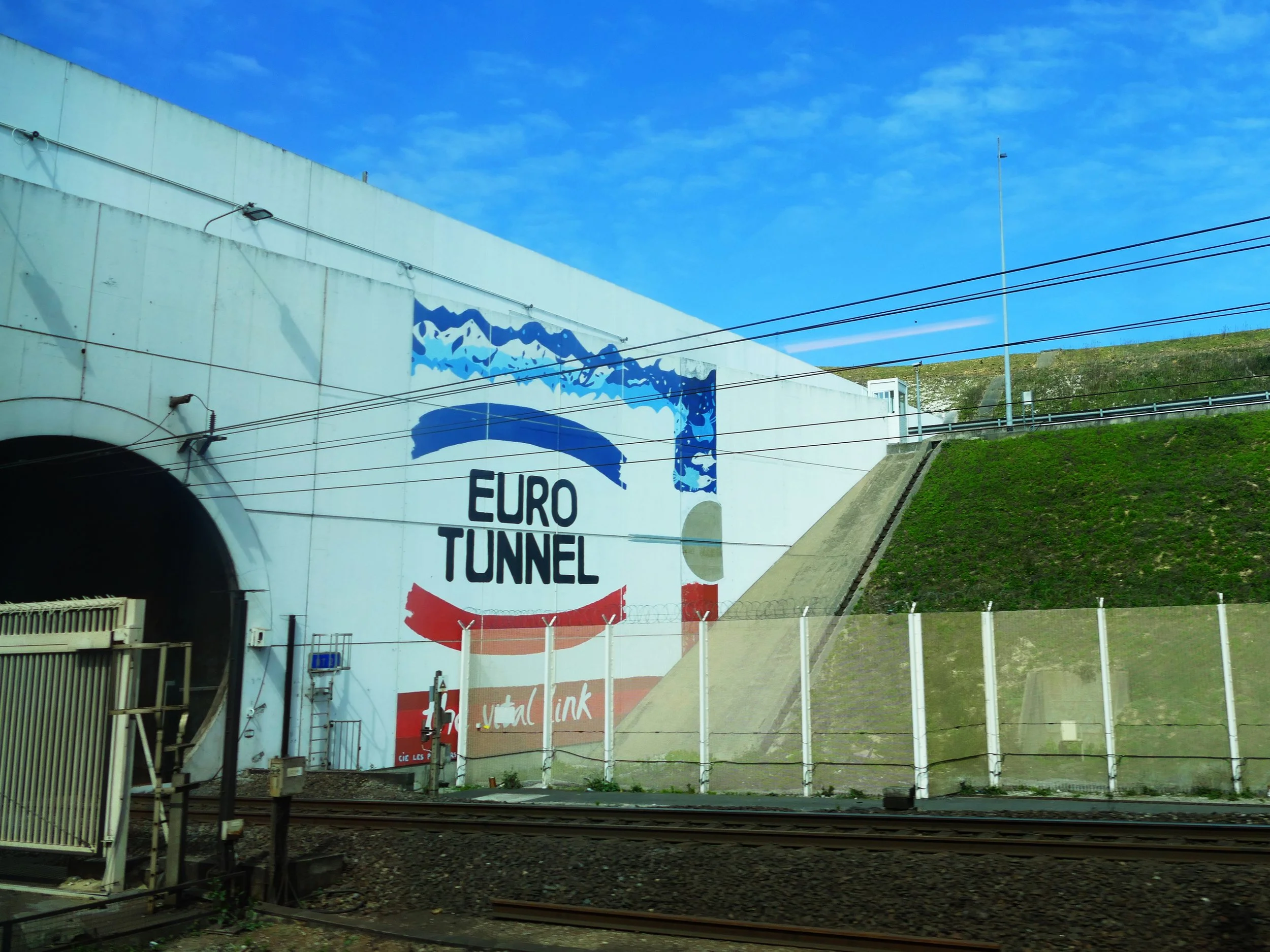
Image source: Shutterstock
Driving your EV in Europe in 2026 is easier than it has ever been. The continent's charging network has matured quickly, payment is mostly app-based, and almost every major motorway corridor now has high-power chargers every 60–80 km. For UK drivers, especially those on an electric car salary sacrifice scheme, a cross-channel road trip is a brilliant way to make the most of a long-range EV.
This guide walks through everything you need before, during and after your journey: the paperwork, the charging networks, route planning, country-specific quirks, tolls, low-emission zones and the kit worth packing. If you're new to public charging, our beginner's guide to EV charging is a good place to start before you read on.
Before you go - the paperwork
A little admin before you leave saves a lot of stress at the border. UK drivers can drive in the EU on a standard UK licence, but there are a few documents you should not travel without.
V5C log book (or VE103 if your EV is leased): this is the single most important document. Without it, you cannot prove ownership or permission to use the car abroad.
Salary sacrifice scheme permission letter: if your EV is on salary sacrifice, your provider must issue written consent (often called a VE103B) confirming you are authorised to take the car outside the UK. The Electric Car Scheme arranges this quickly. Just give your account manager two weeks' notice.
UK sticker on the rear of the car (the old GB sticker is no longer valid).
Green card or proof of insurance extension: most UK insurers automatically provide third-party cover in the EU, but comprehensive cover often needs to be extended. Call them before you book the ferry.
International Driving Permit (IDP): not required for short visits to most EU countries, but useful if you're heading further afield (Albania, Moldova, parts of the Western Balkans).
Breakdown cover with EV-specific assistance: standard European breakdown policies sometimes exclude battery-related recoveries, so check the small print.
Charging across Europe
Europe's public charging network has passed 600,000 charge points according to the European Alternative Fuels Observatory, and the pace of new openings is accelerating. The practical question for a UK driver isn't whether you'll find a charger, it's which one to use. If you've only ever plugged in at home, our guide on how to charge your electric car in public covers the basics of connectors, payment and charging speeds.
The main rapid-charging networks
Ionity: 600+ high-power stations across 24 countries, typically 150–350 kW, located on major motorways. Reliable and fast, but not the cheapest at pay-as-you-go rates.
Tesla Supercharger: now open to most non-Teslas across Europe via the Tesla app. Often the cheapest rapid option, especially off-peak, and the reliability is excellent.
Fastned: bright yellow canopies, 300 kW CCS, strong presence in the Netherlands, Germany, Belgium, France, Switzerland and the UK.
Allego, TotalEnergies, Electra and Atlante: smaller but growing networks filling in the gaps, particularly in France, Italy and Spain.
Roaming apps and payment
The easiest way to charge across borders is with a roaming account that works on multiple networks. A single RFID card or app gives you access to thousands of chargers without having to create a new account at every stop. Our 10 best EV charging apps UK 2026 roundup goes deeper on which app suits which kind of driver, and our EV charging cards explained guide covers the physical RFID side.
Bonnet: good app UX and competitive per-kWh rates.
Chargemap: strong in France and southern Europe.
Plugshare: not a payment provider, but the best community-verified map for finding (and avoiding) broken chargers.
Bring a backup card. Contactless payment on chargers is still not universal across the EU, and one dead app on a hot afternoon can ruin your day.
Route planning
ABRP (A Better Route Planner) is the gold standard for EV route planning in Europe. Link it to your car (most modern EVs support live state-of-charge data) and it will factor in elevation, weather, your driving style and real-world efficiency. If you're still worried about whether long trips are practical in an EV, our piece on range anxiety in 2026 looks at the real numbers behind the concern.
Plan for 300–400 miles per day, not your car's theoretical range. Charging stops, meals and scenery make longer days miserable.
Aim to arrive at rapid chargers with 10–20% state of charge. Charging from 10% to 80% is much faster than charging from 50% to 100%.
On ferries and the Eurotunnel, park your EV with at least 20% charge so you can drive off confidently and reach your first charger without stress.
Check charger status the night before and have a backup within 30 km of each planned stop.
Country-by-country quick-hits
France
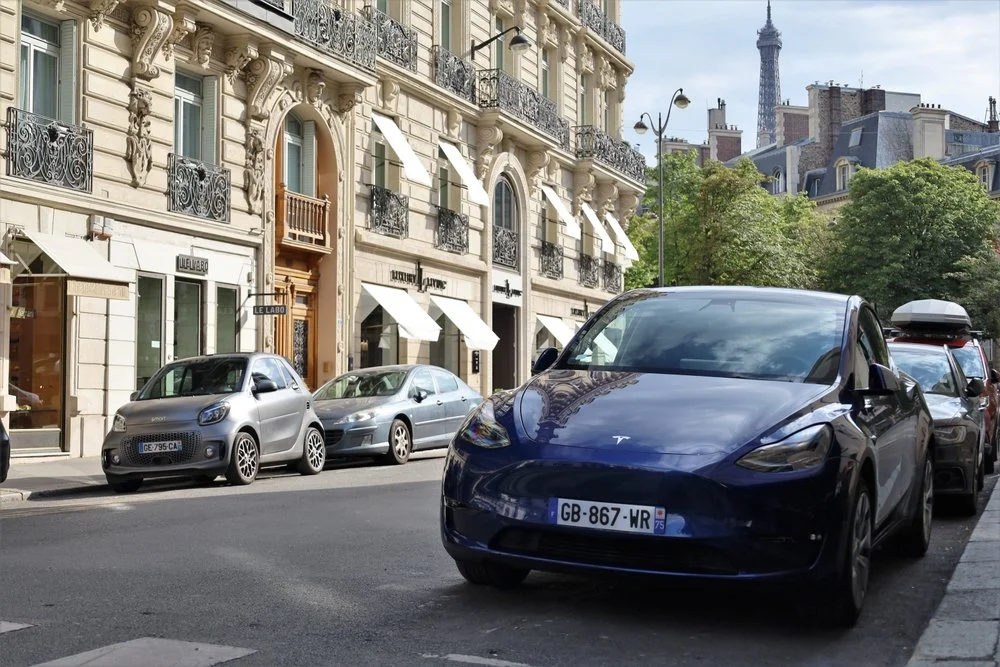
France is the most popular EU destination for UK EV drivers, and the charging network along autoroutes is now excellent, with chargers typically every 60–80 km on major routes. You will need a Crit'Air sticker (Vignette) to enter low-emission zones in Paris, Lyon, Grenoble and many other cities. EVs qualify for the green Crit'Air E sticker; order one online from the official French government site for around €4.80, several weeks before travel.
Tolls are expensive on the autoroutes. A Liber-t or Emovis tag clipped to your windscreen lets you glide through dedicated lanes without fumbling for a card.
Spain
Spain has caught up quickly. The east coast (Barcelona to Valencia to Malaga) and the Madrid–Seville corridor are well served. Rural Extremadura and parts of Galicia still have gaps, so plan carefully. Madrid Central and Barcelona's ZBE are low-emission zones where EVs are welcome but registration may be required.
Netherlands, Belgium and Germany
The Netherlands has the highest density of public chargers in Europe; you're never more than a few kilometres from one. Belgium is similar. Germany's autobahn network has rapid chargers at nearly every service area, but efficiency takes a hit if you're cruising at 150 km/h. Expect real-world range to drop by 25–30%. Several German cities (Berlin, Munich, Stuttgart) have Umweltzone rules; EVs with the correct sticker (Plakette) enter freely.
Italy
Italy's rapid-charging network is the weakest of the major destinations, but it's improving fast thanks to Atlante, Ionity and Enel X Way. The bigger issue is the ZTL (Zona a Traffico Limitato) in most historic city centres: Florence, Rome, Milan, Bologna. These are camera-enforced and fines arrive in the UK months later. EVs are often exempt, but you must register your number plate with the local council before entering.
Tolls and low-emission zones
Tolls vary widely. France, Spain, Italy and Portugal operate traditional toll roads. Germany has no passenger-car tolls. Austria, Switzerland, Slovenia, Hungary and the Czech Republic use a vignette (motorway sticker) that you buy in advance; Switzerland's is annual only and costs CHF 40. Forgetting one is an instant fine.
Low-emission zones are multiplying. Most UK EV drivers won't have a problem because electric cars are the most welcomed vehicles, but each city has its own registration rules. Apps like Green-Zones, Bliq and the Crit'Air official site handle most of the admin in one place.
What to pack
Type 2 to Type 2 charging cable: essential for slower AC chargers at hotels, campsites and supermarkets.
Portable granny charger: a three-pin cable is useful for emergencies, though speeds are slow (around 2.3 kW).
A CCS2 adapter: not usually needed, but helpful if you visit older sites.
An RFID charging card (e.g. Chargemap) as backup.
Toll transponder (Liber-t for France, Telepass for Italy) if you're doing big mileage.
Physical copies of your V5C, insurance certificate and salary sacrifice permission letter, kept in the glovebox.
Crit'Air sticker on the windscreen if you're going anywhere near a French city.
Travel insurance that explicitly covers EV battery breakdowns and recovery.
Final thoughts
Taking an EV on a European road trip in 2026 is no longer an experiment. Charging is fast, payment is simple, and the kit is light. The biggest risks are admin: a missing Crit'Air sticker, a forgotten permission letter, an expired vignette. Not the driving itself.
If you're on an electric car salary sacrifice scheme, the savings on running an EV (20–50% off your monthly costs thanks to the 4% Benefit-in-Kind rate) already make it the most cost-effective way to run a new car. Using that car for a genuine European holiday, paying a few pence per kWh at supermarket chargers instead of £1.40+ per litre for petrol, just makes the numbers better.
Ready to plan the trip? Browse the best long-range EVs available on The Electric Car Scheme, including our 400+ mile EV round-up of Europe-ready road-trip cars. New to salary sacrifice? See how the scheme works.
Are you an employer?
BOOK A DEMOAre you an employee?
SEE AVAILABLE CARSYou might also like…




ECS GUIDES AND ADVICE
Ready to Go Electric? Your Guides and Tools to a Smooth Switch
-
 How the Scheme Works
Find out how salary sacrifice can work for you or your business.
-
 The Charge Scheme
Save 20-50% on all charging costs through salary sacrifice - at home, the office, or in public..
-
 Complete Employer Protection
All employers and drivers are protected from day 1.
-
 Used Electric Cars
Discover the most affordable way to drive electric. Cars delivered in 14 days.
Last updated: 16/04/2026
Our pricing is based on data collected from The Electric Car Scheme quote tool. All final pricing is inclusive of VAT. All prices above are based on the following lease terms; 10,000 miles pa, 36 months, and are inclusive of Maintenance and Breakdown Cover. The Electric Car Scheme's terms and conditions apply. All deals are subject to credit approval and availability. All deals are subject to excess mileage and damage charges. Prices are calculated based on the following tax saving assumptions; England & Wales, 40% tax rate. The above prices were calculated using a flat payment profile. The Electric Car Scheme Limited provides services for the administration of your salary sacrifice employee benefits. The Electric Car Scheme Holdings Limited is a member of the BVRLA (10608), is authorised and regulated by the FCA under FRN 968270, is an Appointed Representative of Marshall Management Services Ltd under FRN 667174, and is a credit broker and not a lender or insurance provider.
Copyright and Image Usage: All images used on this website are either licensed for commercial use or used with express permission from the copyright holders, in compliance with UK and EU copyright law. We are committed to respecting intellectual property rights and maintaining full compliance with applicable regulations. If you have any questions or concerns regarding image usage or copyright matters, please contact us at marketing@electriccarscheme.com and we will address them promptly.
