
LFP vs NMC vs Solid-State: EV Battery Types Explained (2026)
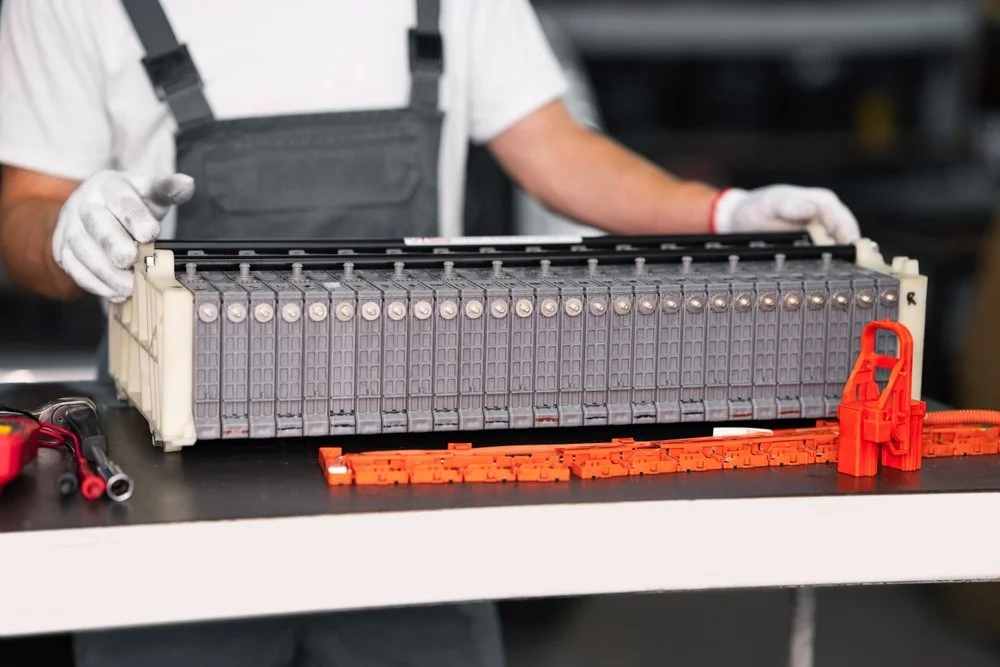
Image source: Shutterstock
Confused by the alphabet soup on EV spec sheets? You're not alone. The chemistry inside an electric car's battery quietly sets its range, charging speed, lifespan, cost and even how it copes with a frosty British winter. Here's what the main EV battery types mean in plain English, and how to pick the right one on a salary sacrifice scheme.
Quick comparison: EV battery types at a glance
| Chemistry | Typical range | Cost (cell) | Lifespan | Best for |
|---|---|---|---|---|
| LFP | Shorter (250–320 mi) | ~$80–90/kWh | 3,000–5,000 cycles | City driving, short commutes |
| NMC / NCA | Longer (300–400+ mi) | ~$100–120/kWh | 1,500–2,500 cycles | Long-distance, high-mileage |
| Solid-state | Projected 400+ mi | High (early) | Expected 5,000+ cycles | Early adopters (from ~2027+) |
| Sodium-ion | Shorter (150–250 mi) | Lowest (projected) | Long (early data) | Budget city EVs |
Why EV battery chemistry matters (in plain English)
Every electric car battery is essentially a box of rechargeable lithium-ion cells. The difference between an LFP, NMC and future solid-state EV battery comes down to what the cell's cathode is made of, and that one design choice cascades into everything a driver actually cares about.
Different EV battery chemistries deliver different outcomes across five key areas: how far you can drive on a charge (energy density and range), how many years or cycles the pack will last (see our EV battery lifespan guide), how quickly it accepts a rapid charge, how much it costs to build (and therefore the price of the car), and how safely it behaves if damaged. Understanding EV battery types helps you match the car to your real-world use on an electric car scheme, rather than chasing headline range figures you'll rarely use.
LFP: Lithium Iron Phosphate
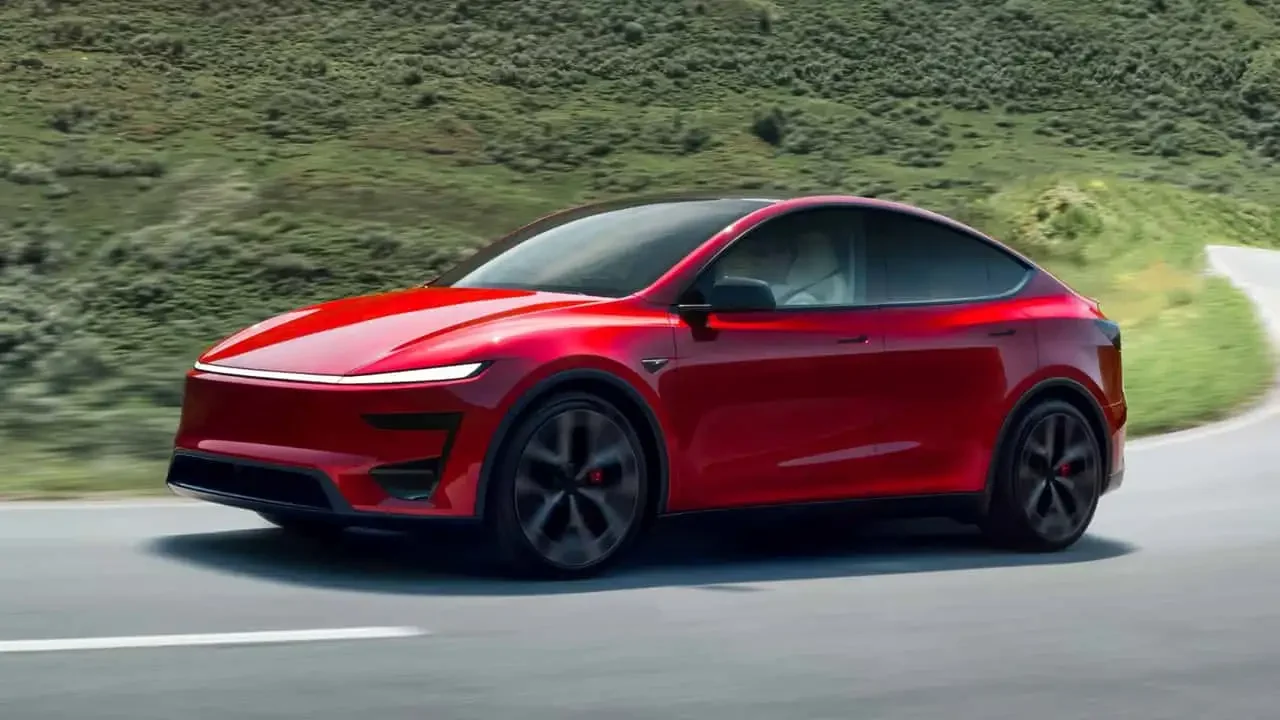
LFP (sometimes written as LiFePO4) is the workhorse chemistry behind the cheaper versions of the Tesla Model 3, Tesla Model Y RWD, BYD's entire Dolphin and Seal range, the MG4 Standard Range and the Dacia Spring. It has quietly become the dominant EV battery type for affordable electric cars globally.
LFP pros
Cheapest mainstream EV battery chemistry at roughly $80–90 per kWh at the cell level in 2025 (BloombergNEF).
Longest cycle life of any mass-market lithium-ion chemistry, typically 3,000 to 5,000 full charge cycles before significant degradation.
Safest thermal profile, with a much lower risk of thermal runaway than nickel-based chemistries.
No cobalt or nickel, which sidesteps the biggest ethical and supply-chain concerns around EV batteries.
Happy to be charged to 100% regularly, unlike NMC which prefers an 80% daily ceiling.
LFP cons
Lower energy density, so you get less range per kilogram. LFP cars are typically heavier or shorter-legged than their NMC siblings.
Significantly worse cold-weather performance: LFP cars can lose 30% or more of their usable range below 0°C if the battery isn't pre-conditioned (seeelectric cars in winter 2026).
State-of-charge is harder to read accurately, which is why some LFP models recommend a weekly 100% charge to recalibrate the battery management system.
Cars using LFP
Tesla Model 3 RWD and Model Y RWD, most of the BYD range (Dolphin, Seal, Atto 3), MG4 Standard Range, Dacia Spring, Renault 5 Urban Range and the entry-level Ford Mustang Mach-E. Many new budget EVs launching in 2026 are LFP by default, and most are available throughThe Electric Car Scheme.
NMC / NCA: Nickel-based chemistries

NMC (nickel-manganese-cobalt) and NCA (nickel-cobalt-aluminium) are the long-range EV batteries of choice for most premium electric cars. They pack more energy into less weight, which is why 300–400+ mile EVs almost always run NMC or NCA under the boot floor.
NMC/NCA pros
Higher energy density means more range from the same size pack, which is key for long-distance EVs and salary sacrifice drivers covering serious motorway miles.
Better cold-weather behaviour than LFP, with typical winter range loss of 15–25% rather than 30%+.
Generally accept rapid charging at higher sustained rates, particularly on 800V platforms.
NMC/NCA cons
More expensive: roughly $100–120 per kWh at the cell level in 2025 (BloombergNEF), and that premium flows through to sticker prices.
More sensitive to fast-charging degradation if abused repeatedly at 100% state of charge.
Shorter cycle life: typically 1,500 to 2,500 full cycles, though modern packs with good thermal management routinely outlast the cars they're fitted to (how to check EV battery health).
Heavier reliance on cobalt and nickel supply chains, both of which carry environmental and ethical scrutiny (what happens to old electric car batteries).
Cars using NMC / NCA
Long-range Tesla Model 3 and Model Y, Tesla Model S and Model X (NCA), Kia EV6 and EV9, Hyundai Ioniq 5 and 6, BMW i4 and iX, Porsche Taycan, Audi e-tron GT, Polestar 2 and 4, Mercedes EQE and EQS. If an EV advertises 300+ real-world miles in 2026, it's almost certainly running some flavour of NMC or NCA.
Solid-state: the battery everyone is waiting for
Solid-state batteries replace the liquid electrolyte found in today's lithium-ion cells with a solid material, typically a ceramic, polymer or sulphide. The promise is big: higher energy density (and therefore more range in the same space), faster charging, longer lifespan, and much better safety because there's no flammable liquid inside.
Where we are in 2026
As of 2026, solid-state EV batteries are still pre-production at scale. Small samples exist. Pilot lines are running. But you cannot walk into a dealership today and buy an EV with a fully solid-state battery pack.
Who's closest to production
Toyota has publicly targeted solid-state EVs from around 2027–2028, with a 10-minute charging and 700+ mile range pitch for its first models.
Samsung SDI is building a pilot line aimed at automaker samples from 2027 onward.
QuantumScape, backed by Volkswagen, has been shipping multi-layer prototype cells to OEMs for validation.
Nio, CATL and BYD are all working on semi-solid-state chemistries as a stepping stone, already fitted to limited-volume Chinese market models.
Expected availability
Realistic mainstream availability on UK salary sacrifice fleets is unlikely before 2028–2030. Early solid-state cars will almost certainly be expensive halo models before the technology filters down. If you're deciding now, don't wait for solid-state. Lease an LFP or NMC car today throughThe Electric Car Scheme and revisit the market when your next scheme order opens.
Sodium-ion and other contenders
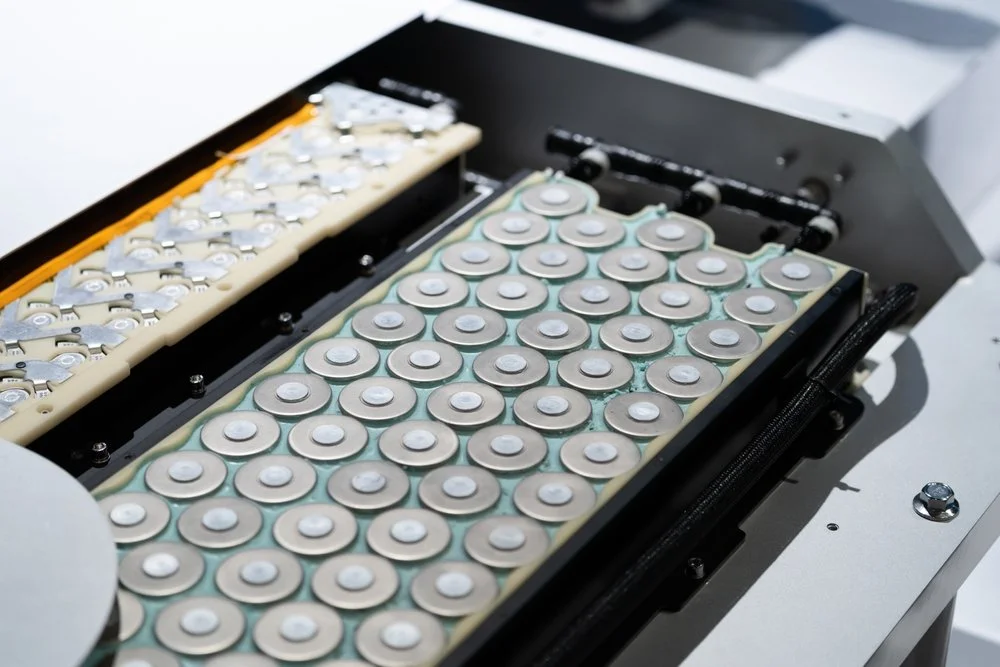
Sodium-ion is the dark horse of EV battery chemistry. It swaps lithium for sodium, which is vastly more abundant and far cheaper, at the cost of lower energy density.
CATL has begun series production of sodium-ion cells, with the first EVs using them launching in China in 2024–2025.
BYD is building a sodium-ion gigafactory aimed at its cheapest urban EVs.
Energy density is closer to LFP than NMC, so expect 150–250 mile ranges rather than 300+ miles.
Sodium-ion is unlikely to replace LFP or NMC for long-range cars, but it could become the default EV battery type for small, cheap city EVs. That is exactly the kind of second car many UK households are now adding via salary sacrifice.
Which EV battery type should you choose on salary sacrifice?
With BiK (Benefit-in-Kind) sitting at just 3% in 2025/26, the tax savings on anelectric car salary sacrifice scheme are significant. Drivers typically save 20–50% compared with a personal lease. That means battery chemistry should be driven by how you actually use the car, not the headline spec.
Short commute, budget-conscious - LFP
If most of your driving is under 60 miles a day, you charge at home overnight, and you want the cheapest lease rate possible, an LFP EV is the obvious pick on an electric car scheme. The longer cycle life is a bonus if you want to keep the car on after the initial salary sacrifice term.
Long-distance or high-mileage - NMC / NCA
If you're covering 15,000+ miles a year, regularly driving 200+ miles in a single trip, or relying on the public rapid-charging network, NMC or NCA is still the right shout. You'll appreciate the extra range buffer and better winter performance, and if you ever get stuck, it's worth knowinghow to jump start an electric car.
Early-adopter / future-proofing - wait, but not too long
Solid-state is coming, though not before your next salary sacrifice scheme order. A sensible play is to take a 2- or 3-year lease on the best NMC or LFP car for your needs today, then revisit battery technology when your renewal comes up. The fast-moving EV market rewards drivers who avoid lock-in on older tech.
Browse EVs by battery type on The Electric Car Scheme
Ready to compare real cars rather than chemistry diagrams? Browse every EV available throughThe Electric Car Scheme, filter by range, and see exactly how much you'd save on your monthly take-home pay with BiK at just 4%.
Are you an employer?
BOOK A DEMOAre you an employee?
SEE AVAILABLE CARSYou might also like…


ECS GUIDES AND ADVICE
Ready to Go Electric? Your Guides and Tools to a Smooth Switch
-
 How the Scheme Works
Find out how salary sacrifice can work for you or your business.
-
 The Charge Scheme
Save 20-50% on all charging costs through salary sacrifice - at home, the office, or in public..
-
 Complete Employer Protection
All employers and drivers are protected from day 1.
-
 Used Electric Cars
Discover the most affordable way to drive electric. Cars delivered in 14 days.
Last updated: 16/04/2026
Our pricing is based on data collected from The Electric Car Scheme quote tool. All final pricing is inclusive of VAT. All prices above are based on the following lease terms; 10,000 miles pa, 36 months, and are inclusive of Maintenance and Breakdown Cover. The Electric Car Scheme's terms and conditions apply. All deals are subject to credit approval and availability. All deals are subject to excess mileage and damage charges. Prices are calculated based on the following tax saving assumptions; England & Wales, 40% tax rate. The above prices were calculated using a flat payment profile. The Electric Car Scheme Limited provides services for the administration of your salary sacrifice employee benefits. The Electric Car Scheme Holdings Limited is a member of the BVRLA (10608), is authorised and regulated by the FCA under FRN 968270, is an Appointed Representative of Marshall Management Services Ltd under FRN 667174, and is a credit broker and not a lender or insurance provider.
Copyright and Image Usage: All images used on this website are either licensed for commercial use or used with express permission from the copyright holders, in compliance with UK and EU copyright law. We are committed to respecting intellectual property rights and maintaining full compliance with applicable regulations. If you have any questions or concerns regarding image usage or copyright matters, please contact us at marketing@electriccarscheme.com and we will address them promptly.
