
Salary Sacrifice Car Scheme: Save
20–50% on Any EV
Updated for the 2026/27 tax year - BIK 4% on fully electric cars, 6–20% on qualifying plug-in hybrids, 25–37% on petrol and diesel. Learn more about our salary sacrifice car scheme.


What Is Salary Sacrifice?
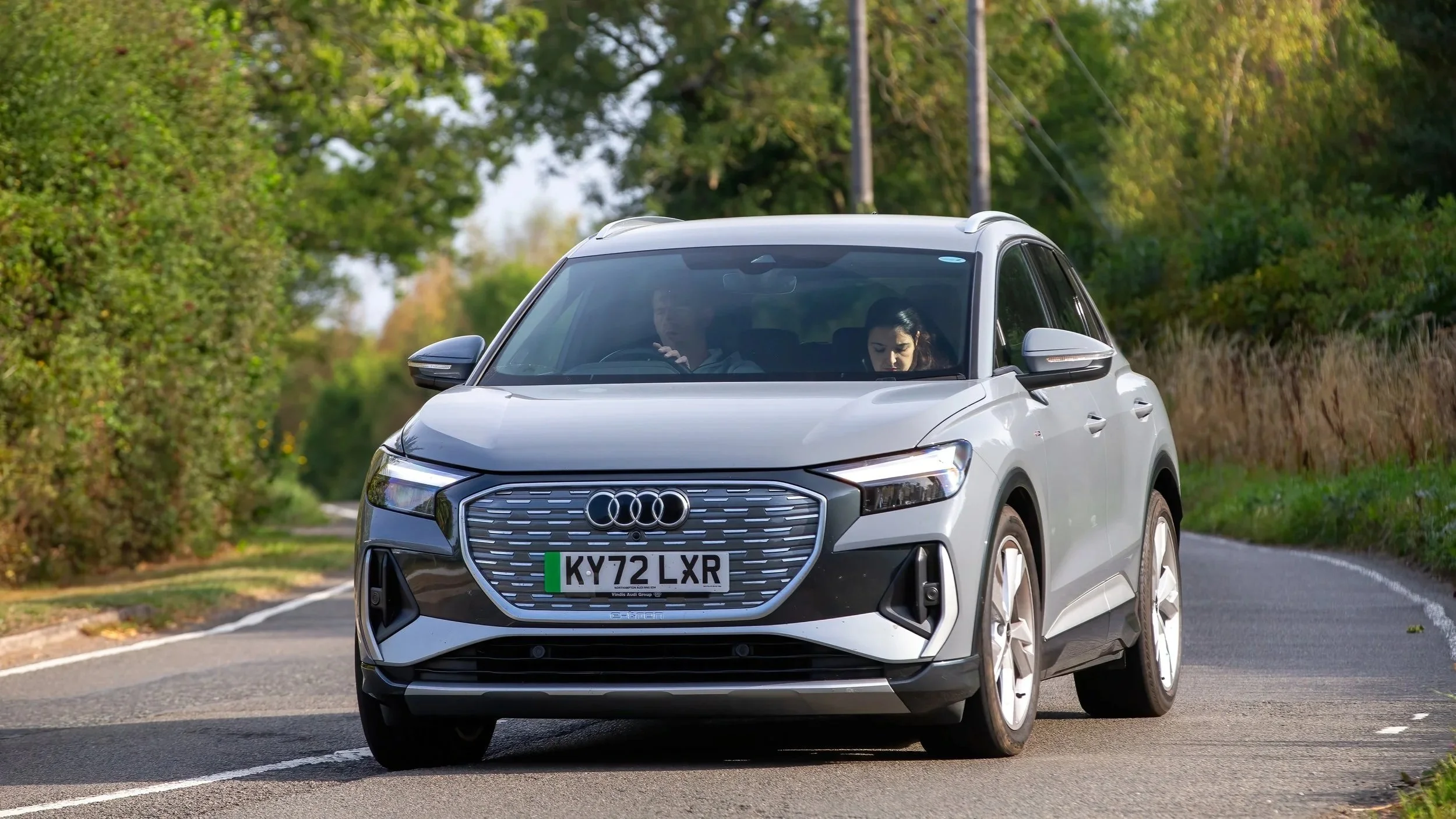
A salary sacrifice car scheme is an HMRC-approved arrangement that lets you lease a brand-new car through your employer by giving up a portion of your gross (pre-tax) salary in exchange. Because the lease cost is taken from your pay before Income Tax and National Insurance are calculated, your overall tax bill drops — and on a fully electric car, where Benefit-in-Kind tax sits at just 4% for the 2026/27 tax year, the combined saving can reach 20–50% versus leasing privately.
What Is Salary Sacrifice for Cars?
Salary sacrifice for cars is a UK workplace scheme that lets employees lease a car from their gross salary, before Income Tax and National Insurance are deducted. It's the same legal mechanism as salary sacrifice for pensions, cycle-to-work, or childcare — but applied to a leased vehicle. In 2026/27, the scheme works best for fully electric cars (4% Benefit-in-Kind) and qualifying plug-in hybrids (6–20% BIK at ≤75 g/km CO₂).

How it Works in Practice
Take an employee earning £45,000 who leases a £35,000 electric car through salary sacrifice at £450 per month gross. That £5,400 a year comes out of their salary before Income Tax and National Insurance - so their taxable income drops from £45,000 to £39,600.
As a 20% rate taxpayer, they save around £1,080 in Income Tax and £432 in NI per year. The Benefit-in-Kind charge on a £35,000 EV in 2026/27 is 4% of P11D value - £1,400 taxable, costing £280 in tax. Net cost: roughly £307 a month. The same car on a personal lease typically runs £475–525. Get a full breakdown in the Benefit-in-Kind guide.
Who is Eligible
Salary sacrifice for cars works for most UK employees on PAYE, but three conditions need to hold. First, the employer has to offer the scheme - there's no individual route.
Second, the deduction can't take gross pay below the National Living Wage, which rose to £12.71 per hour for workers aged 21 and over from 1 April 2026.
Third, the employee usually needs a permanent contract or a fixed-term contract longer than the lease - most providers won't write a 36-month agreement against a 6-month contract.
How the scheme works for companies covers the employer-side requirements in detail.
Salary Sacrifice vs Traditional Company Car Schemes
HR teams often use "company car" and "salary sacrifice" interchangeably, but they're two different products with different tax mechanics, different responsibilities, and different costs. The salary sacrifice scheme has overtaken the traditional company car scheme in most UK businesses since 2020 — but the two still coexist. Here's the side-by-side.
| Salary Sacrifice Scheme | Traditional Company Car Scheme | |
|---|---|---|
| Payment source | Deducted from employee's gross salary, before tax and NI | Paid by the employer as a benefit |
| BIK rate range (2026/27) | 4% on EVs, 6–20% on qualifying PHEVs, 25–37% on petrol/diesel | Same BIK bands apply, but employer absorbs the cost rather than the employee |
| Vehicle choice | Wide — typically any model from the provider's catalogue | Narrow — restricted to the employer's approved fleet list |
| Who picks the car | The employee, within scheme rules | The employer or fleet manager, often by job grade |
| What's bundled | Lease, insurance, maintenance, MOT, breakdown, road tax, sometimes charging | Varies — most cover lease + maintenance; insurance often separate |
| Who pays insurance | Bundled into the monthly sacrifice (employee pays via gross salary) | Usually the employer, through a fleet policy |
| Who pays maintenance | Bundled into the monthly sacrifice | The employer |
| What happens if the employee leaves | Provider charges an early termination fee, increasingly covered by employer protection products | Vehicle returns to the fleet; employee loses access |
Most UK employers running car schemes in 2026 have shifted to salary sacrifice, and the reasons are structural. The Benefit-in-Kind economics on electric cars (4% in 2026/27) make EV salary sacrifice cheaper for the employee than nearly any equivalent personal lease, while the employer carries no fleet, no fuel cards, and no residual-value risk. Employees get to choose their own car instead of being assigned one. Employers get NI savings on every sacrifice, no upfront capital outlay, and a benefit that's particularly attractive to graduate hires and ESG-conscious staff. The mechanics differ by provider — see salary sacrifice car lease explained for the lease structure and salary sacrifice company car explained for the company-car comparison.
What kinds of cars qualify in 2026
The Electric Car Scheme covers fully electric cars, qualifying plug-in hybrids, and used electric vehicles — three categories that share one thing in common: low Benefit-in-Kind tax. Here's what falls inside each category, and what to know about everything outside it.
Fully electric cars (lowest BIK, biggest savings)
Fully electric cars give the deepest savings on salary sacrifice, and the gap will hold for the rest of the decade. The Benefit-in-Kind rate on a zero-emission EV is 4% in 2026/27, rising to 5% in 2027/28, 7% in 2028/29, and capping at 9% in 2029/30. Compare that against 25–37% on petrol or diesel and the EV advantage is roughly four to nine times lower BIK over a typical three-year lease.
The Electric Car Scheme lists more than 100 electric models from manufacturers including Tesla, BMW, Hyundai, Polestar, Volvo, Renault, Kia, MG, Volkswagen, and Toyota — so most price points and use cases are covered. Below are eight popular picks for May 2026 with current monthly costs through the scheme. The full inventory updates as new models launch and stock changes; browse all EVs and get a quote for live pricing on any model, or see this month's best EV deals for the cars showing strongest value.
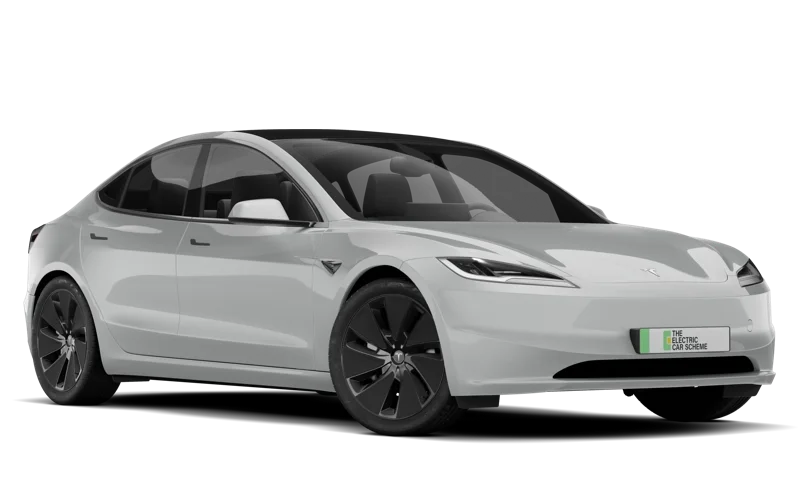
Tesla Model 3
344 miles range
£477/mon
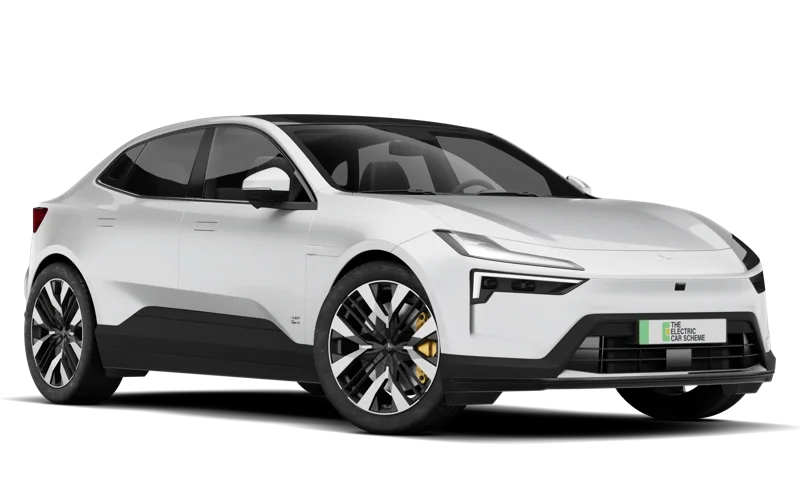
Polestar 4 Estate
385 miles range
£489/mon
Omoda 5 Electric
267 miles range
£260/mon

Ford Explorer
233 miles range
£372/mon

Renault 5 E-tech
192 miles range
£229/mon

Alpine A290
224 miles range
£320/mon
Save 20-50% on the cost of your next EV lease through our electric car salary sacrifice scheme.

Jaecoo 5 Electric
248 miles range
£323/mon

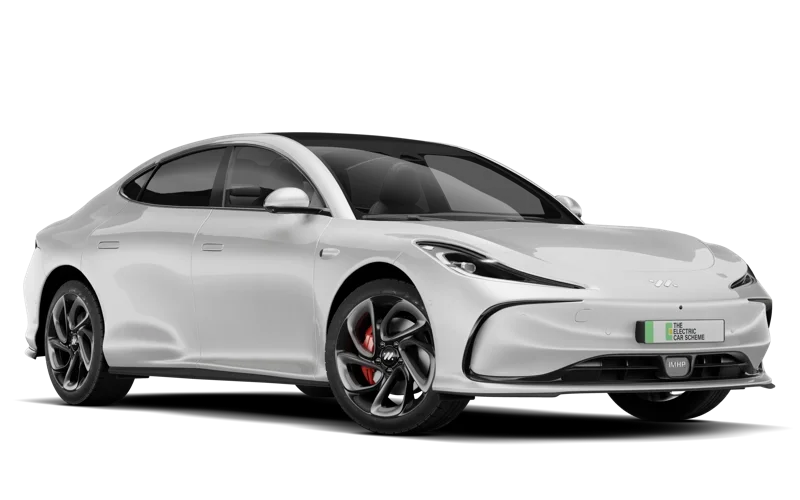
MG Motor UK IM5
345 miles range
£377/mon
Plug-in hybrids (qualifying PHEVs at ≤75 g/km CO₂)
Plug-in hybrids qualify for salary sacrifice when their CO₂ emissions are at or below 75 g/km — but the economics work hardest in the 1–50 g/km band, where 2026/27 BIK ranges from 6% to 17% depending on zero-emission electric range. PHEVs with 130+ miles of electric range sit at 6%; those with 30–39 miles sit at 15%; under 30 miles is 17%. PHEVs in the 51–75 g/km band still qualify but attract roughly 19% BIK — better than petrol, weaker than a low-emission PHEV.
A qualifying plug-in hybrid is the right call for employees who aren't yet ready for fully electric — drivers without home charging access, those covering long motorway distances regularly, or households running one petrol second car already. Four popular PHEVs available through the scheme:
Mercedes-Benz C Class Estate
68 miles range
£981/mon

Mercedes-Benz C Class Saloon
71 miles range
£855/mon

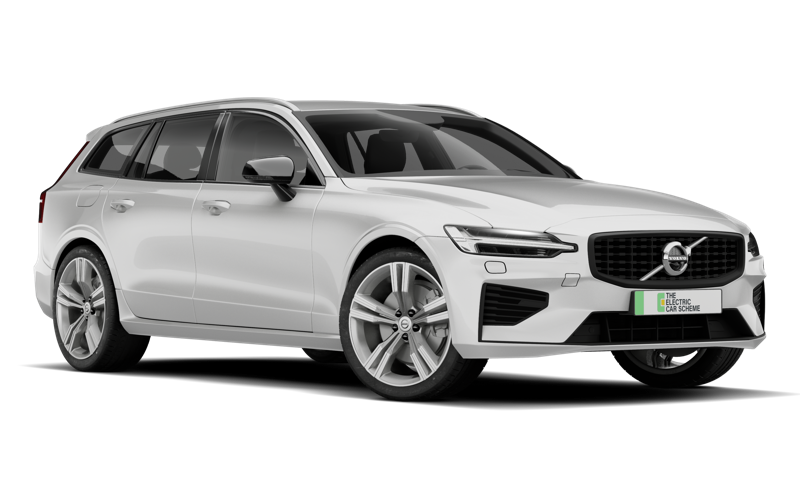
Volvo V60 Sportswagon
62 miles range
£802/mon
SEAT Leon Estate
80 miles range
£501/mon

Used electric cars
Used electric cars are the cheapest entry point into salary sacrifice. Used EV values fell sharply across 2024 and 2025 — average prices down nearly 10% year-on-year by early 2026 — so monthly costs through the scheme are typically a third lower than the equivalent new car. The Electric Car Scheme delivers used EVs within 14 days of order, against the 8–16 week wait typical on new builds.
The market opportunity here is bigger than most employers realise: 97% of senior HR professionals underestimate how much employees value used EVs as a benefit. For graduate hires, employees on entry-level salaries, or anyone for whom monthly cost is the binding constraint, used electric car salary sacrifice is often the option that closes the deal.
What about petrol, diesel, or non-PHEV hybrids?
Salary sacrifice is technically possible for any car, but the BIK math means it rarely makes sense outside of fully electric cars and qualifying plug-in hybrids. A petrol or diesel company car typically attracts 25–37% BIK in 2026/27 against 4% for an EV. On a £35,000 list price, that's £8,750 to £12,950 of taxable benefit each year — enough to wipe out most of the gross-pay saving the scheme creates in the first place.
Some specialist providers, such as Tusker, offer salary sacrifice across petrol, diesel, hybrid, and electric vehicles. For drivers committed to a non-electric car, that wider range may be relevant. Worth comparing the net monthly cost on a petrol vehicle against an equivalent personal lease or car allowance — in most cases, salary sacrifice on petrol or diesel comes out worse than both. For any car that qualifies for low BIK (≤75 g/km CO₂), specialist EV-and-PHEV providers deliver better value.
How much can employees actually save?
The honest answer to "how much can I save?" is that it depends on three things: salary, car choice, and tax band. The two worked examples below cover the most common cases — a basic-rate taxpayer on a fully electric car, and a higher-rate taxpayer on a qualifying plug-in hybrid. Both use real cars at current 2026/27 figures.
Worked example: £40,000 earner, fully electric (4% BIK, 2026/27)
Here's the monthly math on a Renault 5 E-tech (£24,000 list price, £229/month gross sacrifice through The Electric Car Scheme), for an employee earning £40,000.

| Item | Amount |
|---|---|
| List price (P11D value) | £24,000 |
| Gross monthly sacrifice (inc VAT) | £229 |
| Income Tax saving (20%) | -£46 |
| National Insurance saving (8%) | -£18 |
| Benefit-in-Kind tax (4% of P11D ÷ 12, at 20% marginal rate) | £16 |
| Net monthly cost | £181 |
| Equivalent personal lease | £315 |
| Saving vs personal lease | £134/month (~43%) |
Figures based on a 20% basic-rate taxpayer in England, 2026/27 tax year. Your actual saving depends on salary, car choice, term, and mileage. Get a personalised quote.
Worked example: £80,000 earner, qualifying PHEV (8% BIK band, 2026/27)
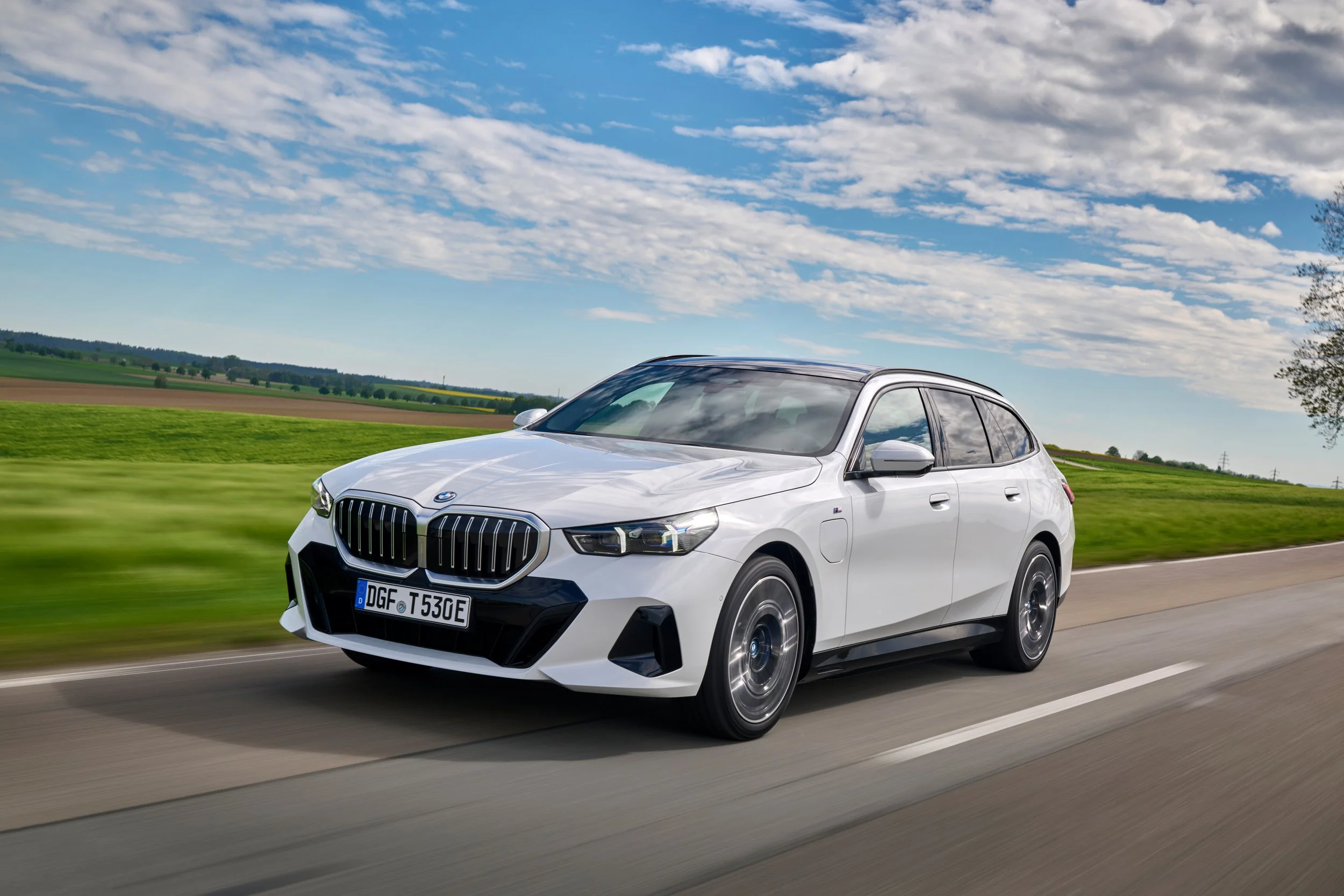
Here's the same math for a higher-rate taxpayer on a qualifying plug-in hybrid — in this case a BMW 530e Touring (£55,000 list price, 70-mile electric range, 8% BIK band), at £580/month gross sacrifice for an employee earning £80,000.
| Item | Amount |
|---|---|
| List price (P11D value) | £55,000 |
| Gross monthly sacrifice (inc VAT) | £580 |
| Income Tax saving (40%) | -£232 |
| National Insurance saving (2%) | -£12 |
| Benefit-in-Kind tax (8% of P11D ÷ 12, at 40% marginal rate) | £147 |
| Net monthly cost | £483 |
| Equivalent personal lease | £700 |
| Saving vs personal lease | £217/month (~31%) |
Figures based on a 40% higher-rate taxpayer in England, 2026/27 tax year. The 2% NI rate applies because the sacrificed amount sits above the upper earnings limit (£50,270). Your actual saving depends on salary, car choice, term, and mileage. Get a personalised quote.
Why electric saves more than PHEV
The £40,000 earner in the first example saves 43% of the personal-lease cost. The £80,000 earner on a PHEV in the second example saves 31%. Tax band explains some of the gap — but not all of it. The bigger lever is BIK.
An EV at 4% BIK costs the £80,000 earner roughly £73 less per month than the same-priced PHEV at 8% BIK. Over a three-year lease, that's £2,600 in extra saving for going fully electric. PHEVs deliver real value for employees who can't yet commit to pure EV — long-distance commuters, drivers without home charging — but for those who can, EV is the deeper saving every month.
See the full mechanic in the employee tax savings on electric car schemes guide, or run your own numbers in the salary sacrifice calculator.
How employers set up salary sacrifice
Setting up salary sacrifice for cars takes weeks, not months. Three steps cover it.
The provider market splits along five clear lines: vehicle range (EV-only versus EV-plus-PHEV), employer protection (Day 1 versus 3-month exclusion), charging integration (bundled versus separate), set-up cost (free versus tiered), and pricing engine (multi-funder versus single-funder).
Multi-funder providers run live tenders across multiple lease companies for each quote, which typically beats single-funder pricing by 5–15% on the same car. Setup itself runs 7–14 days end-to-end with most providers — credit check, supplier agreement, payroll integration.
Compare the eight largest UK providers in the best electric car salary sacrifice providers guide.

Choose a Provider
Payroll integration
Payroll integration is the operationally simplest step. The provider deducts the agreed sacrifice amount from each participating employee's gross salary every month, before Income Tax and National Insurance are calculated.
The employer reports the benefit through PAYE and the relevant P11D entries; the provider supplies the data each tax year. Employer National Insurance savings — typically 13.8–15% of the sacrificed amount — sit with the business and can offset scheme administration costs entirely.
The Electric Car Scheme provides reporting tools that handle PAYE, P11D, and P46(Car) data automatically, so HR and finance teams don't carry the workload manually.

Risk Management from Day 1
Early leaver risk is the largest concern HR teams raise about salary sacrifice — what happens if a participating employee resigns, is made redundant, goes on long-term sick leave, or takes parental leave mid-lease. Most providers cover early termination, but with a 3-month exclusion period before protection kicks in. Anyone who leaves inside that window leaves the employer carrying the lease.
The Electric Car Scheme's Complete Employer Protection covers the employer from Day 1. No exclusion period, no excess to pay, no per-event cap. Resignation, redundancy, long-term illness, parental leave, and accidental vehicle damage are all covered from the day the lease starts. The employer's exposure to early termination charges is effectively zero across the lease term.

Why Most UK Schemes Focus on EV and Qualifying PHEVs in 2026

Three forces explain why the UK salary sacrifice market has consolidated around fully electric cars and qualifying plug-in hybrids in 2026. The economics are the most immediate.
A 4% Benefit-in-Kind charge on a £35,000 EV in 2026/27 produces £1,400 of taxable benefit per year — about £280 in tax for a basic-rate employee, £560 for a higher-rate one. The same £35,000 car at a 30% petrol BIK rate produces £10,500 of taxable benefit, costing £2,100 to £4,200 a year depending on tax band. That £1,500 to £3,500 annual gap is what makes the salary sacrifice arithmetic work for an EV and break for a petrol or diesel car. HMRC has confirmed the EV BIK schedule through 2029/30 — capping at 9% — so the EV advantage holds for the full term of any lease starting now.
The regulatory backdrop reinforces the pattern. The Zero Emission Vehicle Mandate requires 33% of new car sales to be fully electric in 2026, scaling to 38% in 2027, 80% in 2030, and 100% in 2035 — though the government opened a formal review of these targets in March 2026, with the report expected by early 2027. Salary sacrifice is the most efficient way employers can route employees toward EVs without bearing the whole cost themselves.
The third reason is corporate. Most of the UK employers running these schemes treat them as a measurable ESG lever — a benefit that reduces Scope 3 emissions, supports recruitment, and aligns with stated net-zero commitments without a cash outlay.
How to choose a salary sacrifice provider
Six criteria separate strong salary sacrifice electric car providers from weak ones. Working through them in this order matches the order in which they typically affect employers and employees in practice.

Employer protection from Day 1, not after a 3-month exclusion.
Most providers cover early termination only after a 3-month exclusion period, which leaves the employer carrying £6,000–£15,000 per car if a participating employee leaves inside that window. The strongest providers protect from the day the lease starts, with no exclusion period and no excess.
Multi-funder pricing rather than single-funder.
Multi-funder providers run live tenders across multiple lease companies for each quote, which typically beats single-funder pricing by 5–15% on the same car.
Employer protection from Day 1, not after a 3-month exclusion.
Most providers cover early termination only after a 3-month exclusion period, which leaves the employer carrying £6,000–£15,000 per car if a participating employee leaves inside that window. The strongest providers protect from the day the lease starts, with no exclusion period and no excess.
Multi-funder pricing rather than single-funder.
Multi-funder providers run live tenders across multiple lease companies for each quote, which typically beats single-funder pricing by 5–15% on the same car.
New and used EV inventory, not new only.
Used EV pricing has fallen sharply across 2024–2025, opening a meaningfully cheaper entry point. Providers who carry both new and used can match wider salary bands and team profiles.
Charging integration, not bolted-on.
Look for providers offering salary sacrifice on EV charging — home, workplace, and public — alongside the car itself.
£0 set-up cost.
Decent providers don't charge employers to launch the scheme. Set-up fees are an early signal of weaker product economics elsewhere.
5-star Trustpilot rating, not just "high".
Trustpilot scores under 4.5 on a sample of 1,000+ reviews indicate routine service issues. Aim for 4.7+ as the minimum.
The salary sacrifice scheme comparison breaks the eight largest UK providers down against each criterion.
What we cover at The Electric Car Scheme
The Electric Car Scheme covers fully electric cars from more than 100 models — Tesla, BMW, Hyundai, Polestar, Volvo, Renault, Kia, MG, and others — and qualifying plug-in hybrids at ≤75 g/km CO₂. New and used EVs are both available; used inventory delivers within 14 days of order against the 8–16 weeks typical on new builds. Salary sacrifice EV charging is available alongside the car through The Charge Scheme, covering home, workplace, and public networks.
What we don't cover
We don't offer salary sacrifice on petrol, diesel, or non-qualifying hybrids. The Benefit-in-Kind economics don't work for those vehicles — a 25–37% BIK rate eats the gross-pay saving the scheme creates — and we'd rather tell you that than sell you a product with marginal value. For drivers committed to a non-electric car, generalist providers covering the wider vehicle range may be a better fit. For anything qualifying for low BIK, we deliver better value than a generalist.
Our differentiators
Day 1 Complete Employer Protection covers the employer from the day the lease starts — no 3-month exclusion, no excess to pay, no per-event cap. Resignation, redundancy, long-term illness, parental leave, and accidental vehicle damage are all included.
Our multi-funder pricing engine runs live tenders across multiple lease companies for every quote, which typically beats single-funder providers by 5–15% on the same car. New and used EV inventory both sit on the same platform, with used delivery within 14 days. The Charge Scheme adds salary sacrifice EV charging — home, workplace, and public — alongside the car itself.
The Electric Car Scheme was named Best Salary Sacrifice Broker 2026 at the Broker News Awards, Best Salary Sacrifice Provider 2024 and 2025 at the Car Sloth Awards, and is rated 5 stars on Trustpilot. Holland & Barrett, Leeds Bradford Airport, Millwall FC, TopCashback, and Time Out Group are among the named clients running the scheme. The full list of accreditations is in our awards and accreditations page.
Set-up cost for employers is £0. Case studies covering recent client launches show typical implementation in 7–14 days.
Frequently Asked Questions
-
A salary sacrifice car is an electric vehicle or qualifying plug-in hybrid provided to an employee by their employer through a salary sacrifice scheme. The employee agrees to reduce their gross salary by the lease cost of the car, which lowers their taxable income and reduces the Income Tax and National Insurance they pay each month. The car is technically a company car, so Benefit-in-Kind tax applies — but for fully electric cars the rate is just 4% in 2026/27.
-
Most employees save 20–50% versus the cost of a comparable personal lease. The exact figure depends on salary, car choice, and tax band. A basic-rate (20%) taxpayer leasing a £24,000 electric car typically saves around 40%; a higher-rate (40%) taxpayer can save more on a higher-spec car because Income Tax savings outweigh the additional Benefit-in-Kind charge. The salary sacrifice calculator gives a personalised figure against any car.
-
Eligibility is set by the employer, but the scheme is open to most UK employees on PAYE. Three conditions need to hold: the employer must offer the scheme; the deduction can't take gross pay below the National Living Wage (£12.71 per hour for workers aged 21 and over from April 2026); and the employee usually needs a permanent contract, or a fixed-term contract that runs longer than the lease term.
-
If you leave your employer during the lease term, the salary sacrifice deductions stop and the vehicle is typically returned. Through The Electric Car Scheme, employees and employers are covered by Complete Employer Protection from Day 1 — no exclusion period, no excess. This means neither party faces unexpected early termination costs in the most common circumstances, including resignation, redundancy, long-term illness, and parental leave.
-
Salary sacrifice is technically possible for any car, but the Benefit-in-Kind math means it rarely makes sense for petrol or diesel. A petrol or diesel company car typically attracts 25–37% BIK in 2026/27 against 4% for an electric one. The taxable benefit on a £35,000 petrol car can reach £10,500 a year — enough to wipe out most of the gross-pay saving the scheme creates. Some generalist providers offer the wider vehicle range; for anything that qualifies for low BIK, specialist providers deliver better value.
-
Yes, if it's a qualifying plug-in hybrid emitting 75 g/km CO₂ or less. Qualifying PHEVs attract Benefit-in-Kind rates of 6–17% in 2026/27 depending on zero-emission electric range — meaningfully lower than 25–37% on a petrol car. Non-PHEV hybrids and mild hybrids don't qualify because their BIK rates sit closer to petrol. The strongest PHEV economics live in the 1–50 g/km band, where most modern qualifying PHEVs sit.
-
Yes. The Electric Car Scheme offers used electric cars on salary sacrifice with delivery typically within 14 days of order — much faster than the 8–16 weeks common on new builds. Used EV monthly costs are usually around a third lower than the equivalent new car because used EV values have fallen sharply across 2024–2025. For employees on entry-level salaries or anyone where monthly cost is the binding constraint, used is often the cheapest entry point.
-
Yes — and no. Both salary sacrifice and traditional company cars count as "company cars" under HMRC rules, so Benefit-in-Kind tax applies. The difference is the rate and who chooses the car: 4% BIK on fully electric cars in 2026/27 versus 25–37% on petrol or diesel, and the employee picks the vehicle rather than the employer assigning it. Same legal framework, very different economics — which is why most UK schemes today focus on EV.
-
Because every car available through the scheme is either fully electric or a qualifying plug-in hybrid (≤75 g/km CO₂). Every vehicle qualifies for the lowest Benefit-in-Kind tax bands - and produces a substantially lower carbon footprint than a petrol or diesel equivalent.
The name reflects what the scheme actually does: it makes greener driving genuinely affordable for everyday employees, while supporting your business on the journey to Net Zero. "The Electric Car Scheme" is our formal name; "Green Car Scheme" is shorthand for the same thing.
-
Most salary sacrifice car leases run 24, 36, or 48 months. The 36-month (3-year) term is the most common because it balances total cost against vehicle depreciation. Mileage allowances are set at order — typically 8,000, 10,000, or 15,000 miles per year — and excess mileage is charged at the end of the lease. The scheme runs for the full term unless the employee leaves their job, in which case Complete Employer Protection covers most early termination scenarios.
Ready to Get Started?
Last updated: May 2026. BIK rates and tax thresholds are set by HMRC and subject to change. The 4% BIK rate applies to fully electric cars in the 2026/27 tax year, rising 1 percentage point each year to 9% by 2029/30. Always check the latest HMRC guidance on benefit-in-kind taxation for current figures. Worked examples are illustrative; actual savings depend on individual circumstances.