Volkswagen ID. EVERY1: Price, Range, And What It Will Cost To Salary Sacrifice

All images in this article have been taken from Volkswagen’s official newsroom unless stated otherwise
One of the most persistent arguments against driving electric is cost. You’ve probably heard someone say, “Electric cars are so expensive. The upfront cost can’t be justified.” The Volkswagen ID.EVERY 1 squashes that argument completely.
It was first revealed as a concept car in March 2025 and has since committed to a factory, production date and volume target for building it. It's the smallest and cheapest model in the company's electric range, sitting below the ID. Polo and aimed at drivers who want a new car rather than a used one. Volkswagen describes the goal plainly, promising a car for "around 20,000 euros" built in Europe for European buyers.
In this guide, we cover the VW ID.EVERY 1’s specifications, expected UK timelines, cost, and the rival electric city cars available to salary sacrifice from The Electric Car Scheme.
The Short Answer: How Much Will The VW.ID EVERY1 Cost To Salary Sacrifice?
The VW.ID EVERY1 can’t be quoted on a salary sacrifice scheme yet, because Volkswagen hasn’t confirmed UK pricing. What’s certain is BIK rates. For 2026/27, the Benefit-in-Kind (BIK) tax is set to 4%, rising by one percentage point the following year. Based on this, a £19,000 electric car creates a taxable benefit of £760 a year.
That costs a basic-rate taxpayer about £13 a month and a higher-rate taxpayer ~£25. The same car with a petrol engine, taxed at 37%, would cost that higher-rate driver roughly £234 a month. The Electric Car Scheme will quote the car as soon as Volkswagen confirms pricing.
What Is The Volkswagen ID.EVERY1?
The ID.EVERY1 is a four-seat electric city car and the spiritual successor to the Up.
Thomas Schäfer, CEO of Volkswagen Passenger Cars, called it "the last piece of the puzzle on our journey to having the widest model selection in the volume segment", and the company frames it as "a model from Europe for Europe". It sits below the ID.Polo as the cheapest Volkswagen electric car the company has committed to building.
What Will Volkswagen Call The ID.EVERY 1 In Showrooms?
Three names circulate for the same electric city car, which causes some confusion:
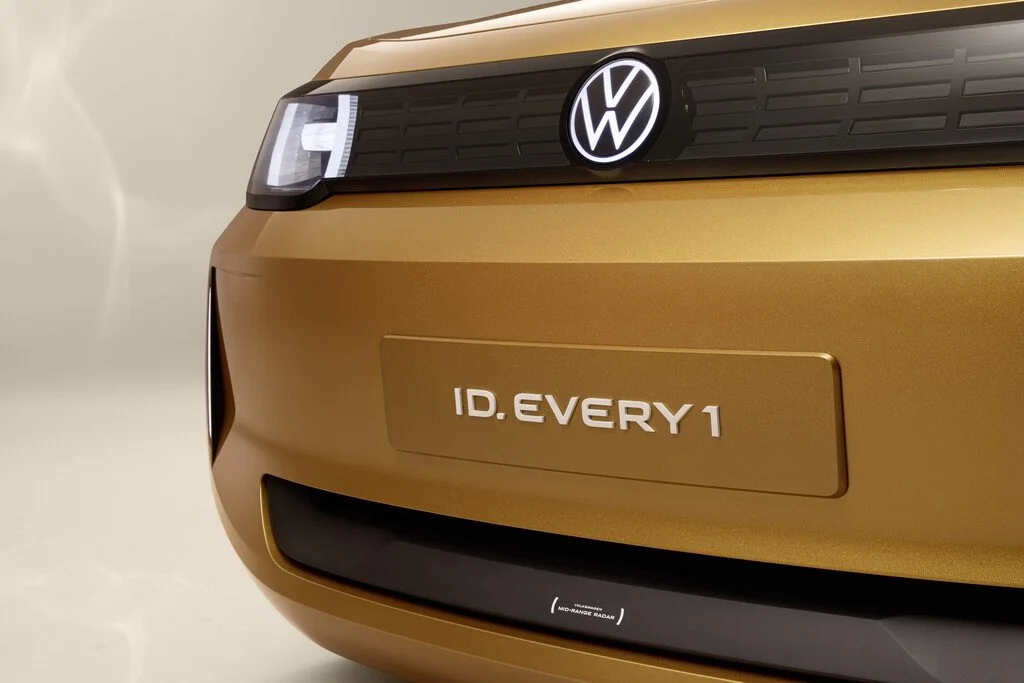
ID.EVERY1 is the show car name, and the only one Volkswagen uses officially.
VW ID1 is internal project shorthand that the motoring press adopted. Searches for the VW ID1 point here, but it has never been a retail badge.
ID. Up is the production name Auto Express reported in August 2026, reviving the nameplate the car replaces. ID. Lupo and ID. Fox have also circulated in the European press.
Volkswagen confirmed a new naming strategy in September 2025 under which ID numerals give way to established nameplates, turning the ID.2all into the ID.Polo and the ID.CROSS concept into the ID.Cross. That strategy means the production car almost certainly won't wear ID.EVERY1 or ID1 in showrooms. Volkswagen hasn't confirmed a replacement, so treat ID.EVERY1 as the concept and ID. Up as the likely badge.
How Much Will The VW.EVERY1 Cost In The UK?
Volkswagen targets around €20,000, and the £17,000 figure everyone quotes comes from converting that number at the March 2025 exchange rate. Volkswagen has said nothing about British pricing.
Why £17,000 Is The Wrong Number
The ID.Polo gives us a direct precedent for how these conversions land:
Volkswagen targeted the ID.2all at €25,000
It reached the UK in July 2026 as the ID.Polo at £23,945
That's 96% of the euro figure, not the 85% a direct currency conversion implies
Apply the same relationship to €20,000 and the entry Volkswagen lands nearer £19,000 in Britain. Anyone comparing salary sacrifice cars should plan around that figure rather than the headline.
Will The ID.EVERY1 Qualify For The Electric Car Grant?
There’s a possibility that the Volkswagen ID.EVERY1 will qualify for The Electric Car Grant.
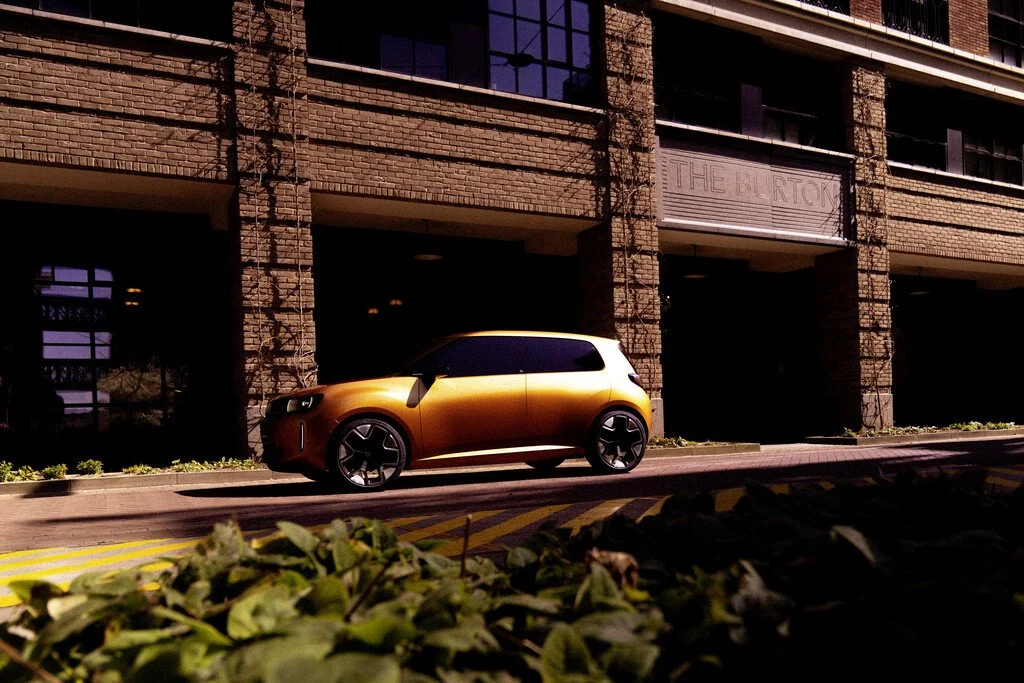
Eligibility for the grant depends on where the manufacturer builds the car and the carbon intensity of manufacturing. For example, the ID.Polo's 52kWh versions currently qualify for a £1,500 grant. Volkswagen will build the ID.EVERY1 in Portugal, which makes it a plausible candidate, though nobody has confirmed eligibility and the terms have already changed once.
ID.EVERY1 Range, Specs And Technology
Volkswagen's official figures set out what the production car will offer. The headline ID.EVERY1 range figure is at least 250km (or 155 miles) from the entry-level battery, with a larger pack reported to follow.
| Specification | Figure |
|---|---|
| Motor | 70kW (95PS), front-wheel drive |
| Range | At least 155 miles (250km) |
| Top speed | 130km/h (81mph) |
| Length | 3,880mm |
| Boot | 305 litres (Up: 251 litres) |
| Seats | Four |
| Platform | Modified MEB Entry |
Software And Interior


The ID.EVERY1 will be the first Volkswagen to run the software architecture from the group's joint venture with Rivian. The zonal system supports over-the-air updates across the car's life rather than freezing its capability at the point of sale.
Volkswagen has also answered criticism of its recent interiors by restoring physical controls for temperature, heating and volume. Buyers of small electric cars on salary sacrifice tend to choose on running cost rather than range, which suits this car.
When Will The VW ID.EVERY1 Go On Sale In The UK?
Volkswagen has committed to production dates rather than UK showroom dates, and the two sit further apart than the 2027 headline suggests:
January 2027: Volkswagen is expected to show the interior at CES in Las Vegas
September 2027: world premiere anticipated at the Munich show
September 2027: series production starts at Palmela in Portugal, at around 100,000 units a year
Late 2027 into 2028: UK order books open, first customer deliveries follow
Volkswagen chose Portugal because its cost base makes a €20,000 car viable, which signals the company intends to hold the price target. Anyone planning around the 2030 phase-out of new petrol and diesel car sales has time, but shouldn't wait for this car if they need a replacement sooner.
What Will The ID.EVERY1 Cost To Salary Sacrifice?
No scheme can quote the car until Volkswagen confirms supply and list pricing. The tax, however, calculates cleanly, and that's where the ID.EVERY1 salary sacrifice case is strongest. HMRC taxes pure electric cars at 4% benefit-in-kind for the 2026/27 tax year, rising to 5% in 2027/28 and 7% in 2028/29, against a maximum of 37% for petrol and diesel.
The table applies that schedule to a £19,000 car, using the working price assumption rather than a confirmed list price:
| Tax year | BiK rate | Taxable benefit | Basic-rate tax | Higher-rate tax |
|---|---|---|---|---|
| 2026/27 | 4% | £760 | £12.67/month | £25.33/month |
| 2027/28 | 5% | £950 | £15.83/month | £31.67/month |
| 2028/29 | 7% | £1,330 | £22.17/month | £44.33/month |
| Petrol equivalent, 2026/27 | 37% | £7,030 | £117.17/month | £234.33/month |
The bottom row carries the argument. A higher-rate taxpayer in a £19,000 petrol city car pays roughly £234 a month in tax alone, against about £25 in the electric equivalent. Employees on a salary sacrifice scheme typically save between 20% and 50% on the vehicle cost, and that tax gap sits on top.


What Cars Can You Salary Sacrifice Today?
Drivers who want this price bracket now don't have to wait until 2028. The two closest live equivalents both quote through the scheme today, on a 36-month term at 10,000 miles a year with a flat payment profile, for an employee earning £60,000:
| Model | Gross monthly (inc VAT) | Income tax saving | NI saving | Benefit-in-kind tax | Net monthly cost |
|---|---|---|---|---|---|
| Dacia Spring 24kWh Expression 70 | £341 | -£136 | -£7 | +£25 | £222 |
| Leapmotor T03 37kWh | £312 | -£125 | -£6 | +£33 | £214 |
The Dacia Spring lists £1,005 cheaper than the Leapmotor T03, yet costs more every month on salary sacrifice, because monthly cost tracks depreciation, funder rates and P11D rather than the showroom price.
Anyone asking whether salary sacrifice is worth it should compare quotes rather than list prices. The Electric Car Scheme quotes any model from any UK funder through its multi-funder pricing engine, so the entry Volkswagen joins the range the moment Volkswagen confirms supply, and on list price alone it will sit above both cars here.

"Price has been the last real argument against going electric. A new Volkswagen at around £19,000, taxed at 4% benefit-in-kind for 2026/27, costs a higher-rate taxpayer about £25 a month in company car tax. The petrol equivalent costs that same driver roughly £234. That's the point where salary sacrifice stops being a perk and becomes the obvious way to run a car."
Thom Groot, Co-founder & CEO, The Electric Car Scheme
How Does The ID.EVERY1 Compare To Other Cheap EVs?
The sub-£20,000 class has filled out since the concept reveal, so the entry Volkswagen arrives into competition rather than open space.
Two things stand out from that table:
It won't be the cheapest EV. The Dacia Spring reclaimed the UK's cheapest new car title at £11,990 in July 2026, and the Leapmotor T03 sits close behind at £12,995.
It will be the cheapest mainstream European one. Both budget rivals are built in China, which rules them out of the Electric Car Grant, and both trade interior quality and dealer coverage for the low price.
The Citroën Ami sits outside this comparison because its quadricycle classification changes how HMRC taxes it, which means it doesn't work through a scheme the way these models do. Buyers weighing the cheapest EVs of 2027 realistically choose between the entry Volkswagen, the Renault Twingo E-Tech and the two Chinese-built city cars.
Set against the best small electric cars and the cheapest electric cars in the UK, the Volkswagen competes on dealer network, warranty and grant eligibility rather than on headline price.
Frequently Asked Questions
How Much Will The VW ID.EVERY1 Cost?
Volkswagen targets around €20,000 in Europe, which points to roughly £19,000 in the UK. That estimate follows the ID.Polo, targeted at €25,000 and launched in Britain at £23,945. The £17,000 figure repeated since the reveal is a currency conversion rather than confirmed UK pricing.
What Is The ID.EVERY1 Range?
Volkswagen has confirmed at least 155 miles, or 250km, from the entry battery. Reports indicate a larger battery will follow for drivers covering longer distances. The figure suits the urban and commuter use the car targets.
When Does The VW ID.EVERY1 Go On Sale In The UK?
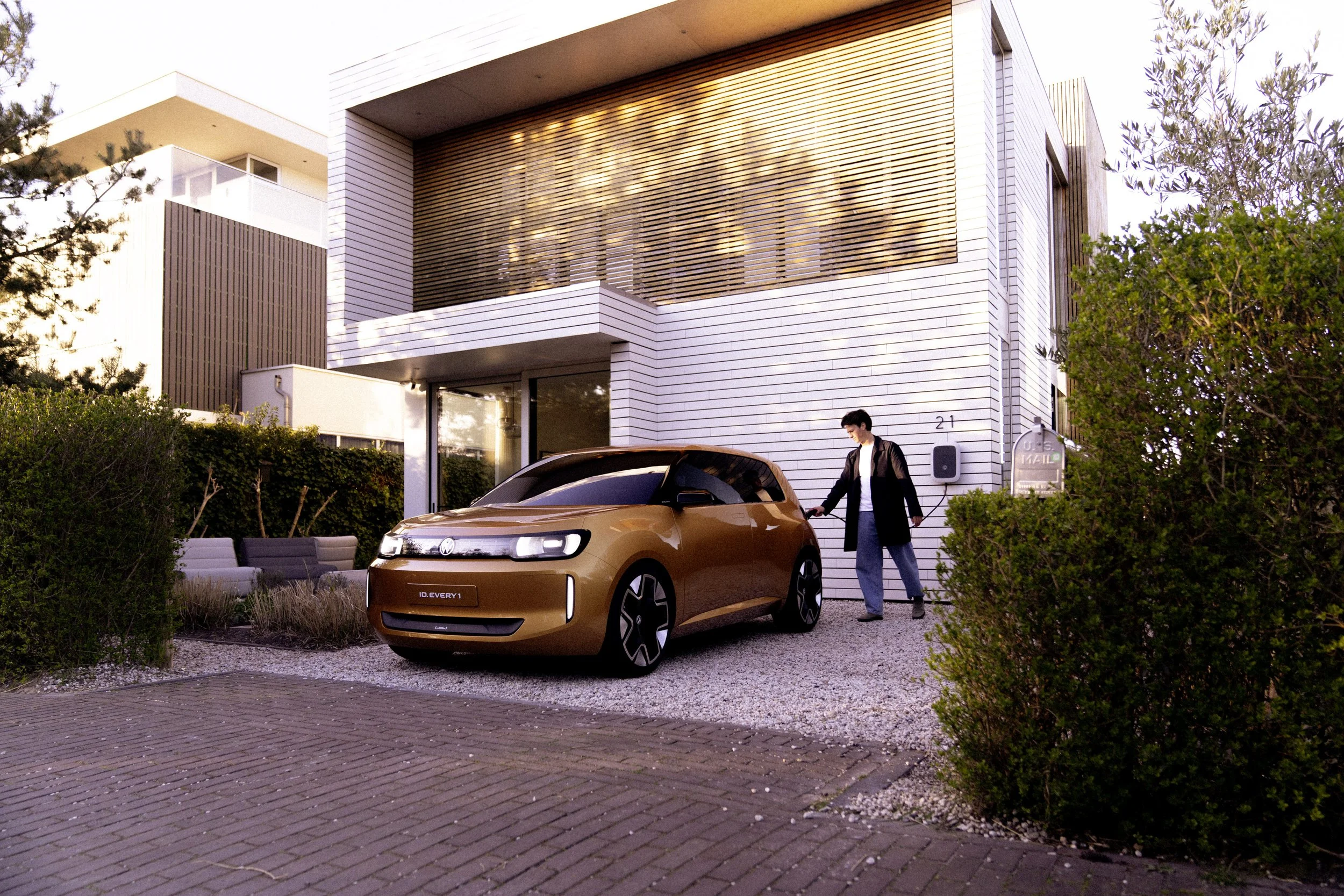
Series production starts at Volkswagen's Palmela plant in Portugal in September 2027. UK order books open late that year, with first deliveries running into 2028.
Can You Salary Sacrifice A VW ID.EVERY1?
Yes, once the car reaches the UK and Volkswagen confirms list pricing. Schemes need confirmed supply and pricing before they can quote a model, so nobody can order it yet.
Is The ID.EVERY1 The Cheapest EV?
No. The Dacia Spring at £11,990 and the Leapmotor T03 at £12,995 both undercut it. Volkswagen will offer the cheapest electric car from a mainstream European manufacturer, which matters for dealer coverage, warranty and residual values.
The VW ID.EVERY1 matters less as a piece of design than as a price point. Volkswagen has committed a plant, a production date and a volume target to building a cheap electric car in Europe, and the September 2027 start at Palmela suggests the company will hold the €20,000 goal rather than quietly drop it.
UK pricing looks likelier to land around £19,000 than the £17,000 quoted at the reveal, and first deliveries run into 2028, so treat this as a car to plan for rather than wait on. The tax position holds either way, because at 4% benefit-in-kind for 2026/27 the company car tax at this price is a fraction of the petrol equivalent.
See what an electric car costs you through salary sacrifice, with pricing from every major UK funder in one place, by visiting our quote tool.
ECS GUIDES AND ADVICE
Ready to Go Electric? Your Guides and Tools to a Smooth Switch
-
 How the Scheme Works
Find out how salary sacrifice can work for you or your business.
-
 The Charge Scheme
Save 20-50% on all charging costs through salary sacrifice - at home, the office, or in public..
-
 Complete Employer Protection
All employers and drivers are protected from day 1.
-
 Used Electric Cars
Discover the most affordable way to drive electric. Cars delivered in 14 days.
Are you an employer?
BOOK A DEMOAre you an employee?
SEE AVAILABLE CARSYou Might Also Like…


Last updated: 27.08.26
Our pricing is based on data collected from The Electric Car Scheme quote tool. All final pricing is inclusive of VAT. All prices above are based on the following lease terms; 10,000 miles pa, 36 months, and are inclusive of Maintenance and Breakdown Cover. The Electric Car Scheme’s terms and conditions apply. All deals are subject to credit approval and availability. All deals are subject to excess mileage and damage charges. Prices are calculated based on the following tax saving assumptions; England & Wales, 40% tax rate. The above prices were calculated using a flat payment profile. The Electric Car Scheme Limited provides services for the administration of your salary sacrifice employee benefits. The Electric Car Scheme Holdings Limited is a member of the BVRLA (10608), is authorised and regulated by the FCA under FRN 968270, is an Appointed Representative of Marshall Management Services Ltd under FRN 667174, and is a credit broker and not a lender or insurance provider.
Copyright and Image Usage: All images used on this website are either licensed for commercial use or used with express permission from the copyright holders, in compliance with UK and EU copyright law. We are committed to respecting intellectual property rights and maintaining full compliance with applicable regulations. If you have any questions or concerns regarding image usage or copyright matters, please contact us at marketing@electriccarscheme.com and we will address them promptly.