
The Electric Car Scheme at 6: Our Impact, Our Awards, Our Difference
Source: The Electric Car Scheme
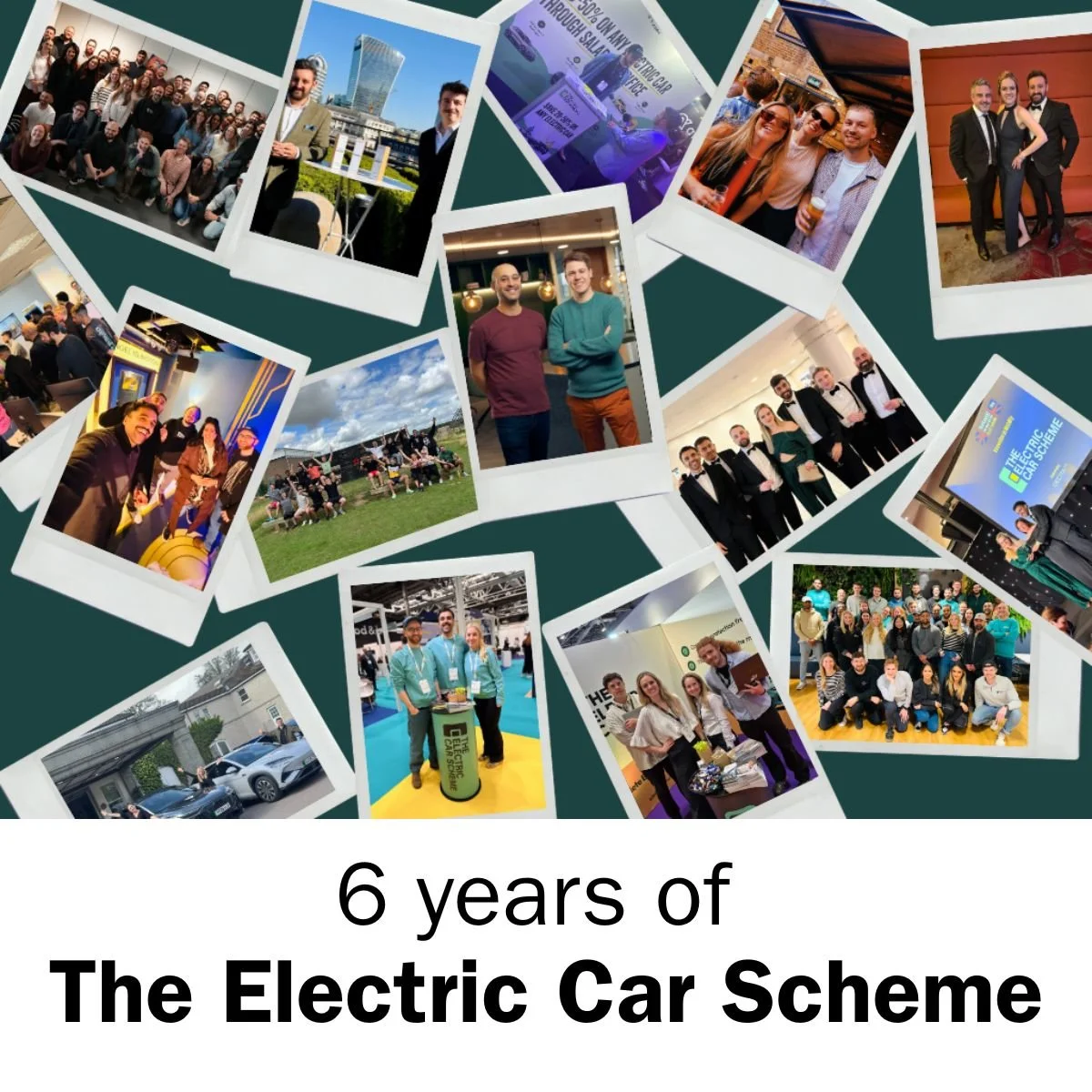
When The Electric Car Scheme launched in 2020, electric car salary sacrifice was a niche idea most HR teams had never heard of. Six years on, the picture has changed completely: the majority of UK HR teams now plan to offer it, the pure-electric Benefit-in-Kind rate sits at just 4% for 2026/27, and thousands of new and used electric cars are on UK roads through our scheme. A sixth birthday is a useful moment to look past the monthly maths and ask a bigger question: what has six years of this actually achieved, for drivers, for the businesses that offer it, and for the planet? This is that reckoning, told through the lens we hold ourselves to as a B Corp, where environmental, social and governance outcomes matter as much as commercial ones.
The impact on the planet
The reason salary sacrifice exists in its current form is policy: government set a deliberately low Benefit-in-Kind rate on electric cars to accelerate the shift away from petrol and diesel. The point of the scheme, then, was always environmental, and the cumulative effect is now substantial. Employees driving electric through The Electric Car Scheme have saved an estimated 37,000 tonnes of CO₂e since 2020. That is not a projection or a marketing round-up; it is the kind of measured outcome we publish in our annual ESG impact report, because a B Corp is required to show its working rather than simply claim a green halo.
The number matters because it represents tailpipe emissions that never happened, multiplied across thousands of cars and hundreds of thousands of journeys. Every employee who moved from a high-emission petrol car, taxed at up to 37% Benefit-in-Kind, to a pure electric car at 4% for 2026/27, changed both their tax position and their carbon footprint in the same decision. The financial incentive and the environmental one point in the same direction, which is exactly what good policy is meant to do, and it is the foundation of everything else here.
The impact on drivers
For the individual, six years has turned electric car salary sacrifice from a curiosity into the cheapest way to drive a brand-new electric car. Across our 2026 customer base, drivers save up to £15,000 a year on average, with the exact figure set by salary band: a basic-rate taxpayer saves around 20%, while an additional-rate taxpayer earning above £125,140 can save up to 50% on a like-for-like basis. Those savings are real, government-backed and well within the range HMRC understands; if you ever see a provider advertising 60% or more, they are folding the employer's National Insurance saving into the employee headline, which is not money the employee actually receives.
What has changed most for drivers is what comes bundled into the single monthly payment. The car, comprehensive insurance, servicing, maintenance, road tax and breakdown cover all sit inside one deduction, with no credit check, because the lease is held by the employer rather than the individual. And in 2026 the saving extends beyond the car itself: The Charge Scheme, our market-leading add-on, lets drivers salary sacrifice their home and public EV charging too, saving a further 20-50% on the electricity that actually moves the car. If you want to see your own numbers rather than an average, our salary sacrifice calculator gives a figure for any car at your salary.
The impact on businesses
For employers, the six-year shift is about risk and effort coming down while the value of the benefit goes up. The single biggest reason businesses hesitated in the early years was the fear of being left with a liability if an employee left mid-contract. We answered that with Complete Employer Protection, the only package in UK EV salary sacrifice that protects both employer and employee from day one, covering every reason someone might leave early, from resignation and redundancy to dismissal, illness and family leave, with no exclusion period. That cover is the difference between a benefit a finance director worries about and one they are happy to sign off.
The other two changes are quieter but just as real. First, six years of supplier relationships means we secure lower lease costs than an employee would get going direct, so the saving an employer is offering is genuinely larger. Second, the administration that once took HR weeks of setup now takes barely any of their time, because we run the scheme around them. There is no set-up cost to the employer, and the reduction in employer National Insurance on the sacrificed salary means most businesses run the benefit at no net cost. For HR and finance teams weighing it up, our guide to how salary sacrifice works for companies sets out the mechanics, and the governance side of that, doing the benefit properly rather than cheaply, is part of what our B Corp status holds us to.
The awards, and what they actually signal
Recognition is not the goal, but it is a useful external check on whether the work holds up. The Electric Car Scheme has been named the UK's best salary sacrifice provider for two consecutive years by Car Sloth (2024 and 2025), was named EV Salary Sacrifice Provider of the Year 2026 by SME News, and won Best Salary Sacrifice Broker at the Broker News Awards 2026. Alongside the awards sits an "Excellent" rating on Trustpilot, which is the more honest measure because it comes from the drivers and HR teams using the scheme day to day rather than from a judging panel.
Underpinning all of it is our B Corp certification: an independent, audited verification of social and environmental performance that very few companies in our sector hold. Awards tell you a product is good; B Corp status tells you the business behind it is built to a standard. Both matter, but for a company whose entire reason to exist is environmental, the second is the one we care most about.
What makes us different
Pulling the threads together, our difference comes down to three things that competing providers do not match in combination. Risk protection that covers both sides from day one, so neither employer nor employee is exposed if life changes. The best prices for a team, earned through six years of supplier relationships rather than promised in a pitch. And the admin done for you, so offering the benefit costs HR almost no time and the business no net money. Layer The Charge Scheme on top and a driver can salary sacrifice both the car and the charging, which is as close to a complete electric-driving package as the market currently offers. If you want the independent view, our rundown of the best electric car salary sacrifice providers sets us against the field.
Six years in numbers
| Measure | Six-year impact |
|---|---|
| CO₂e saved by drivers | ~37,000 tonnes since 2020 |
| Average driver saving | Up to £15,000 a year (2026 customer base) |
| Employee saving range | 20-50%, by tax band |
| Charging saving | 20-50% via The Charge Scheme |
| 2026/27 Benefit-in-Kind rate | 4% on pure electric cars |
| Independent recognition | B Corp certified; "Excellent" on Trustpilot |
| Awards | Best provider 2024 & 2025 (Car Sloth); SME News 2026; Broker News Awards 2026 |
The next six years
Electric car salary sacrifice today is not what it was six years ago, and that is the achievement worth marking. It has gone from an idea HR teams had to be talked into, to a benefit that saves drivers thousands a year, costs most businesses nothing net to run, and has kept an estimated 37,000 tonnes of CO₂e out of the air. The Benefit-in-Kind rate stays low and predictable for years ahead, at 4% for 2026/27 and rising only gently after that, so the window that made the first six years possible is still wide open. If you want to see what has changed, the clearest way is to look at the figures for yourself: explore what an electric car salary sacrifice scheme involves or read our full ESG impact report to see the working behind the numbers above.
Are you an employer?
BOOK A DEMOAre you an employee?
SEE AVAILABLE CARSECS GUIDES AND ADVICE
Ready to Go Electric? Your Guides and Tools to a Smooth Switch
-
 How the Scheme Works
Find out how salary sacrifice can work for you or your business.
-
 The Charge Scheme
Save 20-50% on all charging costs through salary sacrifice - at home, the office, or in public..
-
 Complete Employer Protection
All employers and drivers are protected from day 1.
-
 Used Electric Cars
Discover the most affordable way to drive electric. Cars delivered in 14 days.
You might also like…


Last updated: 03/06/2026
Our pricing is based on data collected from The Electric Car Scheme quote tool. All final pricing is inclusive of VAT. All prices above are based on the following lease terms; 10,000 miles pa, 36 months, and are inclusive of Maintenance and Breakdown Cover. The Electric Car Scheme’s terms and conditions apply. All deals are subject to credit approval and availability. All deals are subject to excess mileage and damage charges. Prices are calculated based on the following tax saving assumptions; England & Wales, 40% tax rate. The above prices were calculated using a flat payment profile. The Electric Car Scheme Limited provides services for the administration of your salary sacrifice employee benefits. The Electric Car Scheme Holdings Limited is a member of the BVRLA (10608), is authorised and regulated by the FCA under FRN 968270, is an Appointed Representative of Marshall Management Services Ltd under FRN 667174, and is a credit broker and not a lender or insurance provider.
Copyright and Image Usage: All images used on this website are either licensed for commercial use or used with express permission from the copyright holders, in compliance with UK and EU copyright law. We are committed to respecting intellectual property rights and maintaining full compliance with applicable regulations. If you have any questions or concerns regarding image usage or copyright matters, please contact us at marketing@electriccarscheme.com and we will address them promptly.
