Image source: Shutterstock
Electric cars work by storing energy in a rechargeable battery pack and sending it through an inverter to an electric motor, which turns the wheels. Braking recovers some energy back into the battery, and you recharge from a home, workplace or public charger. Most have no petrol engine, exhaust or multi-speed gearbox. This guide explains how electric cars work, from the battery and motor to charging and the main types of EV.
Electric car salary sacrifice option typically saves employees 20 to 50% compared with a personal lease. The Electric Car Scheme provides British drivers with a cost-effective pathway to cleaner, more sustainable transport technology.
What Are The Basic Components of an Electric Car?
Several components are integral and unique to electric vehicles, from batteries to regenerative braking systems.
What Does an Inverter Do?
An inverter transforms the direct current (DC) power into the alternating current (AC) power that an electric vehicle motor needs. The inverter can control how fast the motor spins by changing the frequency of the alternating current.
What Does the Electric Motor Do?
Getting electricity from the inverter, the electric traction motor is what makes an electric vehicle go. When AC electrons reach the motor through the inverter, they create a spinning magnetic field that makes the motor turn.
Regenerative Braking Systems
Regenerative brakes reverse electric motors, acting as generators to return energy to the battery. Every time you slow down, especially in urban driving, the car recaptures some energy and stores it back in the battery. Drivers typically see fewer charging sessions and less brake wear as a result.
Electric Car Heaters
Unlike traditional vehicles that use waste heat from combustion engines, EVs generate cabin warmth through dedicated electric heating elements. Modern electric car technology increasingly favours heat pump systems over conventional resistive heaters, which typically use less electricity.
Heat pumps function similarly to air conditioners but in reverse, extracting ambient heat from outside air and transferring it into the vehicle cabin. This modular heating solution can deliver up to three times the heating efficiency of resistive systems, preserving battery range during colder months. Manufacturers like Tesla, Nissan, and Volkswagen have integrated advanced heat pump technology across their EV models available through company electric car schemes, with data showing they can reduce heating-related battery drain by up to 30% in British winter conditions.
How Do Electric Car Batteries Work?
The main difference between an electric car and a fuel-powered car is the battery.
While driving, the battery discharges as electrons shift from one electrode to another, creating an electric current that propels the motor and moves the car's wheels. Recharging the battery, whether at home, work, or a public charging point, reverses the electron flow, restoring the battery's charge.
What Are The Different Types of EV Battery?
There are three different types of EV battery cells: cylindrical, prismatic, and pouch. All three of these batteries are lithium-ion-based with casing.
| EV battery cell types compared | Cylindrical | Prismatic | Pouch |
|---|---|---|---|
| Main advantage | High-temperature resistance and low-cost, standardised production | No gaps when combined in a battery pack | Suits cars where space is limited |
| Where it's used | Tesla is an advocate | Common in BMW and Volkswagen models | Newer to EVs, with possible overheating (thermal runaway) |
What Do kW and kWh Mean on an Electric Car?
Electric car battery capacity is measured in kilowatt-hours (kWh). Battery sizes vary between car models. The more kilowatt-hours your battery holds, the longer the driving range and the further you can travel on a single charge. Charging speed is measured in kilowatts (kW), and a higher-kW charger delivers more energy each hour. It is important to consider what battery capacity and driving range you’ll need before you look to lease an EV.
How Do You Charge an Electric Car?
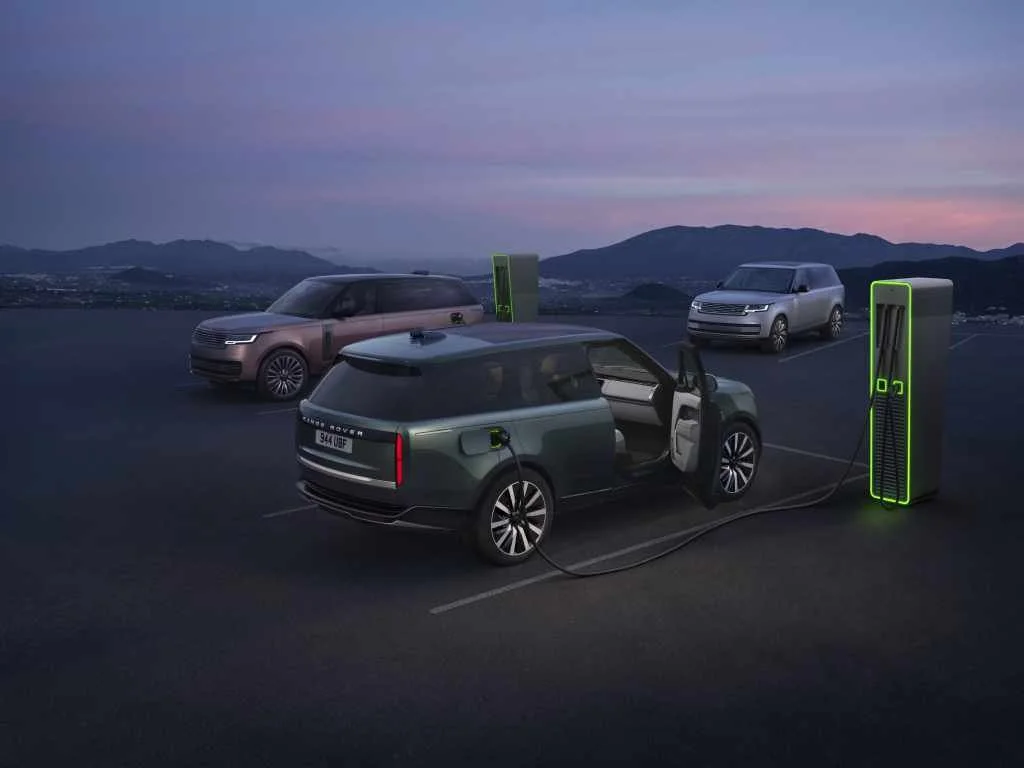
Charging your car at home on a home charge point is the most convenient method, providing a sufficient daily driving range for the average driver, especially when done overnight. Home chargers are commonly rated at 7kW. Through The Charge Scheme, employees can salary sacrifice charging costs and typically save 20 to 50% on charging.
You can also charge your EV at work. The final place you can charge your EV is in public. This is the most expensive way of charging your car but can be convenient when on a long journey. Rapid charging provides up to 80% of charge in as little as 20-30 minutes.
How Quickly Do EV Batteries Degrade?
EV batteries typically degrade because of temperature, cycles and time. On average, EV batteries degrade at a rate of 2.3% of maximum capacity per year. Heavy use of DC fast charging above 100kW is linked to faster degradation, at up to 3.0% a year. Batteries that leave a car can also go on to second-life uses.
How Do Electric Car Motors Work?
EVs use both alternating current and direct current motors, and there are several variations of each.
| EV motor types compared | DC motor | Brushless DC (BLDC) | PMSM | AC motor |
|---|---|---|---|---|
| How it works | Brushed motor | Removes the brushes and commutators | Permanent magnets embedded in the rotor create the magnetic field | Synchronous (rotor acts as an electromagnet) or asynchronous (stator creates a rotating field) |
| Main point | High starting torque, but brushes need more maintenance | Efficient, lower maintenance, often built into the wheel hub | High power rating, usually in high-performance cars | Both types work in reverse for regenerative braking |
What Are the Benefits of Electric Motors?
Electric motors can be used within a much wider speed range than internal combustion engines. Maximum torque is available from a standing start, providing traction right away. Most use a single fixed-ratio reduction gear, so they don't need a clutch or a multi-speed gearbox.
What Are the Different Types of Electric Cars?
Battery electric vehicles (BEVs) run solely on electric power with no internal combustion engine, so they have zero tailpipe emissions. Hybrids combine a petrol or diesel engine with an electric drive system and don't qualify for the full benefits of electric car salary sacrifice schemes.
Plug-in hybrids (PHEVs) add a larger battery you can charge externally, but an ECIU analysis published in May 2024 found the UK's top-selling PHEVs cost around £500 a year more to fuel than manufacturers' figures suggested, and £672 a year more than a full EV. PHEVs also receive less favourable Benefit in Kind rates, as the 4% rate for 2026/27 applies only to zero-emission cars.
What Is a Fuel Cell Electric Car (FCEV)?
Fuel cell electric cars (FCEVs) generate electricity from hydrogen and oxygen and emit only water vapour. Hydrogen refuelling infrastructure in the UK is extremely limited, and FCEVs aren't available through electric car salary sacrifice schemes.
Can an Electric Car Work for You?
Switching to an electric car is one of the most significant ways you can make a positive change to net zero. Many people are limited by information, access, price and complexity.
The major benefit of electric cars is the contribution that they can make towards improving the air quality in towns and cities. Electric cars don’t produce tailpipe carbon dioxide emissions when driving, which reduces air pollution.
Salary sacrifice can reduce the cost of getting into an electric car. Employees typically save 20 to 50% compared with a personal lease, and the all-inclusive package from The Electric Car Scheme covers insurance, servicing and maintenance, breakdown cover and road tax (VED), with tyres and home charging optional. Zero-emission cars have a Benefit in Kind rate of 4% in 2026/27, rising to 5% in 2027/28, 7% in 2028/29 (a 2 percentage point rise), 9% in 2029/30 and 10% in 2030/31, while petrol and diesel cars can be taxed at up to 37% in 2026/27.
Used EVs on salary sacrifice come with verified battery health, the same all-inclusive package and delivery in as little as 14 days.
Frequently Asked Questions
How Long Do Electric Car Batteries Last?
Electric car batteries lose approximately 2.3% of their capacity a year on average. Heavy use of DC fast charging above 100kW is linked to faster degradation.
How Far Can an Electric Car Travel on One Charge?
Official WLTP range runs from about 250 to 350 miles for most new electric cars, according to our latest electric car range figures. Real-world range is typically lower, particularly in winter and at motorway speeds.
What Is the Difference Between an EV, a Hybrid and a PHEV?
An EV runs only on a battery, a hybrid pairs a petrol or diesel engine with an electric drive, and a plug-in hybrid (PHEV) adds a battery you can charge externally. A hybrid charges its battery through regenerative braking rather than from a charger.
Do Electric Cars Need Servicing?
Yes, electric cars still need regular servicing, but there's no engine oil to change and regenerative braking may reduce brake wear. Electric car maintenance and servicing needs are typically lower than for petrol cars.
Electric cars store energy in a battery, pass it through an inverter to a motor and recover some energy when you brake. You can charge at home, at work or in public, and battery capacity is measured in kWh. Only fully electric cars qualify for the zero-emission Benefit in Kind rates, while hybrids and plug-in hybrids combine electric power with a petrol or diesel engine. Through electric car salary sacrifice, employees typically save 20 to 50% compared with a personal lease, and 200+ new and used electric cars are available.
Find out what an electric car could cost you each month. Get a quote with The Electric Car Scheme to see 200+ new and used electric cars, the all-inclusive monthly payment and the monthly cost for your pay.
You Might Also Like…



Our pricing is based on data collected from The Electric Car Scheme quote tool. All final pricing is inclusive of VAT. All prices above are based on the following lease terms; 10,000 miles pa, 36 months, and are inclusive of Maintenance and Breakdown Cover. The Electric Car Scheme’s terms and conditions apply. All deals are subject to credit approval and availability. All deals are subject to excess mileage and damage charges. Prices are calculated based on the following tax saving assumptions; England & Wales, 40% tax rate. The above prices were calculated using a flat payment profile. The Electric Car Scheme Limited provides services for the administration of your salary sacrifice employee benefits. The Electric Car Scheme Holdings Limited is a member of the BVRLA (10608), is authorised and regulated by the FCA under FRN 968270, is an Appointed Representative of Marshall Management Services Ltd under FRN 667174, and is a credit broker and not a lender or insurance provider.
Copyright and Image Usage: All images used on this website are either licensed for commercial use or used with express permission from the copyright holders, in compliance with UK and EU copyright law. We are committed to respecting intellectual property rights and maintaining full compliance with applicable regulations. If you have any questions or concerns regarding image usage or copyright matters, please contact us at marketing@electriccarscheme.com and we will address them promptly.