Electric Car Grant 2026: £3,750 Off New Electric Cars and Salary Sacrifice Savings

Source: Shutterstock
The Electric Car Grant takes up to £3,750 off the price of a new electric car in the UK. The government-funded scheme is worth about £2bn, opened on 15 July 2025 and runs until 31 March 2030 or until the funding is used up. It replaced the Plug-in Car Grant and applies to cars priced at or below £37,000, with the dealer deducting the discount at the point of sale. Cars in band one receive £3,750 and cars in band two receive £1,500, depending on how sustainably they're produced.
The grant works alongside electric car salary sacrifice. Employees typically save 20-50% on the cost of a new electric car through a salary sacrifice scheme, and the Benefit-in-Kind (BiK) rate is 4% in 2026/27, compared with a maximum of 37% for petrol and diesel cars in 2026/27. This guide from The Electric Car Scheme explains who qualifies, which cars are eligible and what a grant-eligible car costs through salary sacrifice.
What Are the New Electric Car Grants?
The new electric car grants provide discounts ranging from £1,500 to £3,750 for eligible vehicles costing up to £37,000. The grant is based on the car’s emissions, with the most environmentally friendly vehicles set to receive the largest reductions.
This means that the cars set to benefit the most will be pure electric vehicles (EVs), priced under £37,000. The grants will be available directly at dealerships (or point of sale) when purchasing a new electric car.
The Electric Car Grant Is a Two-Tier Grant
£3,750 discounts will be given to vehicles of manufacturers with the lowest production emissions and verified Science Based Targets
£1,500 discounts will apply to other qualifying electric vehicles under £37,000
This £2 billion government scheme runs until 31 March 2030, or until the funding is used, and let’s buyers claim the discount immediately at the point of purchase, rather than through a complex application process. The scheme opened to manufacturer applications on 15 July 2025, and the dealer applies the discount when you buy or lease, so there's nothing to claim. It replaced the Plug-in Car Grant, and only new cars with a list price of £37,000 or less qualify.
These grants incentivise the cleanest manufacturers, meaning that brands must commit to a Science-Based Target (SBT) and have a history of real emissions reduction progress in order to qualify for this discount. The greenest cars will get the full £3,750, whilst others that aren’t as climate-friendly may still access a £1,500 discount.
Around 20 models currently qualify for the full £3,750 and more than 45 qualify for £1,500, according to the list of eligible cars, which changes as manufacturers add models. Many of them are available as a salary sacrifice car through The Electric Car Scheme.
The grants are part of the government's broader strategy to encourage drivers to move away from petrol and diesel vehicles, supporting the pledge to ban the sale of new fully petrol or diesel cars and vans from 2030.
What Types Of Cars Are Eligible?
The eligibility criteria ensures that only the most climate-friendly vehicles will be able to benefit from the grants, making it cheaper for drivers to access a wide range of reliable EVs. To be eligible for The Electric Car Grant, manufacturers must demonstrate that their cars fit the following criteria:
Zero tailpipe CO₂ emissions
Minimum 100-mile WLTP range
8-year/100,000-mile battery warranty (≥70% capacity retention)
3-year/60,000-mile general vehicle warranty
UN Regulation No. 100 type approval
To secure the full grant, manufacturers will have to demonstrate the lowest production emissions and verified Science Based Targets.
The GOV.UK list currently includes the following examples, and it changes as manufacturers add models.
Band one (£3,750): the Nissan Leaf, Renault 5 (52kWh version), Renault Megane, Alpine A290, MINI Countryman Electric and Hyundai Kona Electric.
Band two (£1,500): the Volkswagen ID.3, ID.4 and ID.5, Cupra Born, Peugeot E-208, Nissan Ariya, Toyota C-HR+ and the Vauxhall range.
Volkswagen ID.4 and ID.5: both qualify for the £1,500 grant, with the entry price dropping to £35,495 after the grant. The eligible ID.4 variants are Pure Essential, Pure Match and Pro Essential, and the eligible ID.5 variants are Pure Match and Pro Essential.
Toyota C-HR+: qualifies for the £1,500 grant, with the Icon listed from £34,495 before the grant and up to 378 miles of WLTP range on the 77kWh versions.
Vauxhall: the Corsa Electric, Combo Life Electric, Astra Electric, Mokka Electric, Frontera Electric and Grandland Electric all qualify for the £1,500 grant, so the whole range is eligible.
Why Are These Grants Being Introduced?
The government is introducing these grants to address several key challenges in electric vehicle adoption:
Accelerating EV Sales:
Battery electric cars made up 28.3% of new car registrations in September 2026, a record month of 99,201 cars, and 26.2% across the first nine months of the year, according to SMMT. That's still below the 33% ZEV mandate target for 2026, which applies to manufacturers rather than to drivers or employers. The grants aim to bridge this gap by making EVs more financially attractive to consumers. SMMT credits the grant as one reason demand has strengthened, alongside wider model choice and manufacturer discounts, and the government says more than 160,000 drivers have bought an EV with help from the grant since it launched, according to its August 2026 ZEV mandate review announcement.
What About Charging Infrastructure Concerns?
122,724 public EV chargers across the UK at the end of July 2026, according to Zapmap data reported by EV Fleet World, the government recognises that affordability and infrastructure must work together.
Supporting the 2030 Transition:
As the deadline for banning new petrol and diesel car sales approaches, these grants provide useful support to help drivers make the switch to electric vehicles before the deadline takes effect. The 2030 phase-out applies to new petrol and diesel car sales only, not to cars already on the road. The government opened a review of the ZEV mandate on 14 August 2026, with responses due by 23 October 2026, so the 80% manufacturer target for 2030 is the current position rather than a settled one.
Reducing Financial Barriers
With 40% of UK households lacking a driveway, many potential EV buyers face additional costs for charging solutions. These grants help offset some of these concerns by reducing the upfront vehicle cost.
When Will the Grants Be Available?
The grant opened on 15 July 2025, and dealers apply the discount automatically to eligible cars. The scheme closes on 31 March 2030, or sooner if the funding is used up, which provides sustained support for electric vehicle adoption through to the end of the decade.
This timeline aligns with the government's broader electrification strategy, ensuring grants are available during the crucial period leading up to the 2030 ban on new petrol and diesel vehicle sales.
How Do These Grants Affect Salary Sacrifice Electric Cars?
The new electric car grants significantly enhance the value proposition ofsalary sacrifice electric car schemes. When combined with existing salary sacrifice benefits, drivers can achieve unprecedented savings on electric vehicle costs. The Electric Car Grant works seamlessly with salary sacrifice car schemes, creating larger savings on electric vehicle costs.
How Would The Monthly Savings Breakdown Work?
The £3,750 grant spread over a typical three-year lease reduces monthly costs by approximately £104, when applied to a car valued at under £37k. This applies to band one cars. Band two cars receive up to £1,500.
Combined Benefits
When you combine these grants with existing salary sacrifice advantages, the total savings become substantial:
Employees typically save 20 to 50% through salary sacrifice schemes
4% Benefit-in-Kind rate in 2026/27 for electric vehicles (compared to up to 37% for petrol/diesel cars)
Reduced National Insurance contributions through salary sacrifice
Benefit in Kind rates for fully electric cars are 4% in 2026/27, 5% in 2027/28, 7% in 2028/29 and 9% in 2029/30, and the 2028/29 rate is a 2 percentage point rise on 2027/28. Petrol and diesel cars face a maximum rate of 37% in 2026/27, rising to 38% in 2028/29 and 39% in 2029/30. The gap stays wide throughout, which is why Benefit in Kind remains a strong part of the case for an electric car.
Here's a worked example using the Toyota C-HR+ Icon (123kW, 58kWh). The monthly cost from The Electric Car Scheme quote tool falls as the tax band rises, because a higher tax band gives a larger income tax saving. Your own cost will depend on the car, the term and your circumstances, so treat the figures as an estimate.
| Salary and tax band | Monthly cost from (new) |
|---|---|
| £40,000 (20%) | £643 |
| £65,000 (40%) | £566 |
| £130,000 (45%) | £502 |
Quote assumptions: 10,000 miles a year, a 36-month term and a flat payment profile. Figures are estimates and vary with the car and your circumstances.
Best Cars Under £37,000 to Maximise Savings
To qualify for the maximum grant benefits, vehicles must cost under £37,000 and meet specific environmental criteria. Here are the best electric cars available throughThe Electric Car Scheme that maximise your savings:
Best Value Electric Cars:
Volkswagen ID.3
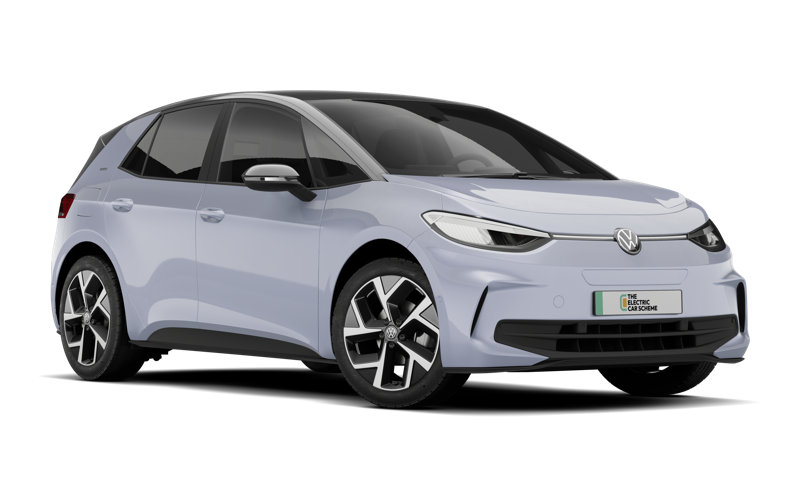
There are various trims available under £37,000. The ID.3 has a starting price of the starting price of around £30,860, further reduced to £29,360 (band two, £1,500) with the grants applied. Benefitting from more refinement and performance than the lowest priced EVs on the market, the ID.3 presents a sensible choice for many types of drivers.
Renault 5
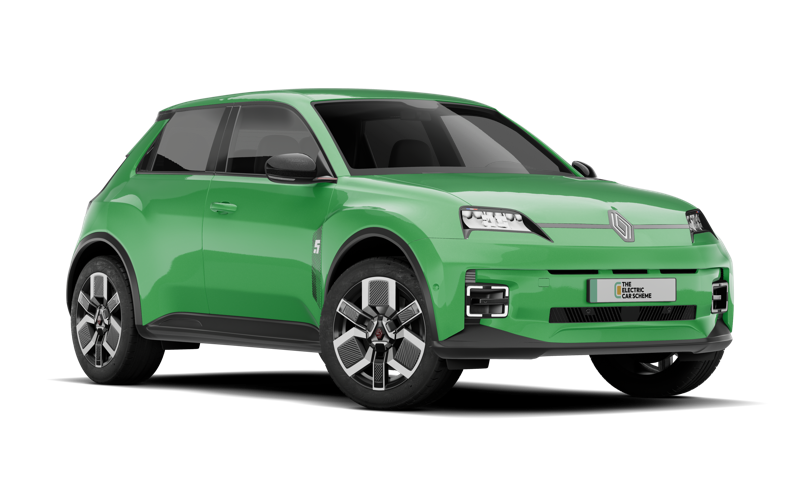
Priced at £22,995 currently, the Renault 5 is a refreshed classic is a popular EV for drivers wanting a modern, capable, and compact vehicle to take them around town. Applying the grant would make this EV even more affordable - £21,495 for the 40kWh version (band two, £1,500). The 52kWh version qualifies for the full £3,750 (band one).
Premium Options Under £37,000:
Hyundai Kona Electric
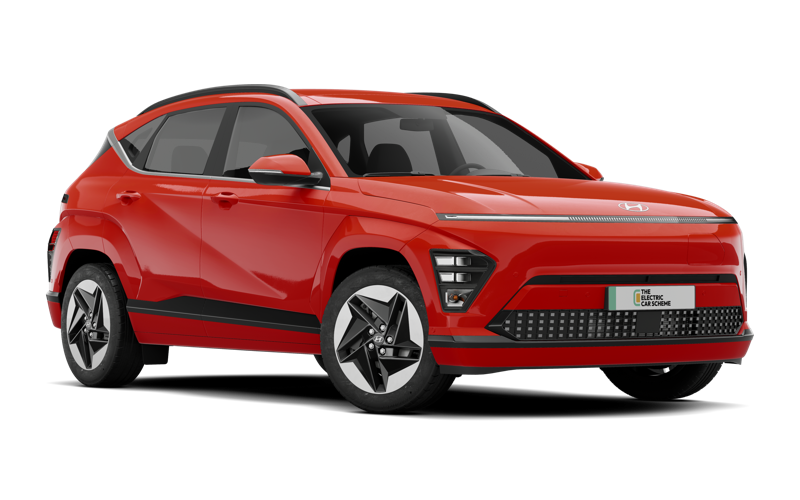
The base models of the Kona Electric start at £34,000, coming down to £30,250 with the grant applied. The Hyundai Kona is a good choice for both commuters and families, benefitting from premium features, a refined interior, and decent space throughout.
Grant-Eligible Electric Cars Compared
We compared ten grant-eligible electric cars using five selection criteria:
Salary sacrifice value: monthly cost against what the car offers.
Running costs: efficiency, charging speed and maintenance.
Practicality: space, range and everyday usability.
Build quality: reliability and refinement.
Technology: safety, connectivity and driver assistance.
The table is ordered by estimated net monthly cost, lowest first. Figures come from The Electric Car Scheme quote tool for a £60,000 salary (40% tax band), so they're estimates and will vary with the car, term and your circumstances. The trim shown is the one quoted. Quote assumptions: 10,000 miles a year, a 36-month term, a flat payment profile and a £60,000 salary.
| Car and trim quoted | Grant band | Average monthly salary sacrifice (inc VAT) | Estimated net monthly cost | Why it stands out | Main drawback |
|---|---|---|---|---|---|
| Renault 5 E-Tech, 110kW Techno + Comfort Range 52kWh | Band 1 | £481 | £338 | Retro styling and strong value | Tight rear seats |
| Peugeot E-208, 100kW GT Premium 50kWh | Band 2 | £506 | £355 | Competitive payments and convenient city use | Firm ride, limited boot space |
| Citroën ë-C4, 115kW Max Extended Range 54kWh | Band 2 | £519 | £368 | Comfortable seats and a refined ride | Sloping roofline reduces boot space |
| Citroën ë-C3 Aircross, 83kW Standard Range Max 44kWh | Band 2 | £545 | £369 | Practical city size and low running costs | Limited range |
| Alpine A290, 130kW GT+ 52kWh | Band 1 | £528 | £378 | Engaging to drive | Limited family practicality |
| Cupra Born, 170kW V1 79kWh | Band 2 | £553 | £399 | Sporty handling and quick acceleration | Higher payments, limited rear space |
| Skoda Elroq Estate, 140kW 60 SE L 61kWh | Band 2 | £619 | £431 | Roomy estate body suited to families | Higher payments than the smaller hatchbacks |
| Nissan Ariya, 160kW Advance 63kWh | Band 2 | £636 | £452 | Premium interior and long range | Higher payments |
| Vauxhall Grandland Electric, 157kW Design 73kWh | Band 2 | £662 | £462 | Spacious and suited to families | Higher payments |
| Volkswagen ID.3, 125kW Essential Pure 52kWh | Band 2 | £721 | £552 | Strong build quality and a roomy cabin | Touch-heavy controls |
The Electric Car Grant applies to selected trims only, and eligibility depends on the specific trim and its price. The Nissan Ariya is one example, where only certain trims qualify, so check that your chosen trim is eligible for the grant before you order.
For a quicker shortlist, pick by how you drive:
City driving: Citroën ë-C3 and Peugeot E-208.
Families: Vauxhall Grandland Electric and Skoda Elroq.
Performance: Cupra Born and Alpine A290.
Value: Renault 5 E-Tech and Peugeot E-208.
Range: Nissan Ariya and Vauxhall Grandland Electric.
Other grant-eligible models that missed this comparison include the Peugeot E-2008, Vauxhall Mokka Electric, Renault Scenic E-Tech and Citroën ë-Berlingo, which offer less value or practicality for most drivers than the ten above. Our broader guide to the best value electric cars covers more options beyond the grant list.
The Electric Car Scheme: Your Gateway to Greater Savings
At The Electric Car Scheme, we're committed to helping you maximise every available saving on your transition to electric driving. The scheme is set up to work alongside these government grants, ensuring you benefit from comprehensive support.
We provide expert guidance on accessing the Electric Car Grant alongside our award-winning salary sacrifice service. The Electric Car Scheme’s Complete Employer Protection safeguards businesses from unexpected costs, whilst employees enjoy customer service, rated Excellent with a 4.8 TrustScore on Trustpilot.
At The Electric Car Scheme, a salary sacrifice package that includes The Charge Scheme for charging savings. We also offer optional home charger installation, and comprehensive insurance. Insurance, servicing and maintenance, breakdown cover and road tax are included in the monthly cost.
Frequently Asked Questions
How Much Can I Save With the Electric Car Grant?
The grant takes up to £3,750 off an eligible new electric car, or up to £1,500 for band two cars. Salary sacrifice adds to this, because employees typically save 20 to 50% compared with a personal lease. Your own saving depends on the car, your tax band and the term, and a salary sacrifice calculator shows an estimate for a specific car.
Do I Need to Apply for the Electric Car Grant Myself?
No, the dealer applies the discount when you buy or lease an eligible car, so there's nothing to claim. The grant lowers the price of the car, which in turn lowers the monthly cost of a salary sacrifice scheme. GOV.UK confirms that drivers don't apply directly.
Can I Combine the Electric Car Grant With Salary Sacrifice?
Yes, the two work together. The grant reduces the price of the car, and salary sacrifice then takes the monthly cost from your gross pay before tax and National Insurance. The low Benefit in Kind rate, 4% in 2026/27, keeps the tax on the benefit small, as explained in our guide to Benefit in Kind.
What's the Difference Between Band One and Band Two Grants?
Band one gives up to £3,750 and band two gives up to £1,500. Band one applies to manufacturers with the lowest production emissions and verified Science Based Targets, and band two covers other qualifying cars. Examples on the eligible list include the Nissan Leaf and Renault 5 (52kWh) in band one, and the Volkswagen ID.3 and Cupra Born in band two.
How Long Does the Electric Car Grant Last?
The grant closes on 31 March 2030, or sooner if the funding is used up. The government opened a review of the ZEV mandate in August 2026, which looks at manufacturer sales targets rather than the grant itself. Because funding is limited, it's sensible to check the current position before you order.
Ready to Save?
With the new grants reducing costs by up to £3,750 and salary sacrifice schemes offering typical savings of 20-50%, it's a good time to look at switching to an electric car. Combined with the current 4% Benefit-in-Kind rate in 2026/27, UK drivers can access premium electric vehicles at lower monthly costs. You can see how much you could save by visiting our quote tool and browsing the cars available.
The transition to electric driving is more affordable and accessible than it was. Let The Electric Car Scheme help you navigate the new grant system and maximise your savings on the journey to sustainable driving.
Are you an employer?
BOOK A DEMOAre you an employee?
SEE AVAILABLE CARSYou Might Also Like…


Last updated: 09.10.2026
Our pricing is based on data collected from The Electric Car Scheme quote tool. All final pricing is inclusive of VAT. All prices above are based on the following lease terms; 10,000 miles pa, 36 months, and are inclusive of Maintenance and Breakdown Cover. The Electric Car Scheme’s terms and conditions apply. All deals are subject to credit approval and availability. All deals are subject to excess mileage and damage charges. Prices are calculated based on the following tax saving assumptions; England & Wales, 40% tax rate. The above prices were calculated using a flat payment profile. The Electric Car Scheme Limited provides services for the administration of your salary sacrifice employee benefits. The Electric Car Scheme Holdings Limited is a member of the BVRLA (10608), is authorised and regulated by the FCA under FRN 968270, is an Appointed Representative of Marshall Management Services Ltd under FRN 667174, and is a credit broker and not a lender or insurance provider.
Copyright and Image Usage: All images used on this website are either licensed for commercial use or used with express permission from the copyright holders, in compliance with UK and EU copyright law. We are committed to respecting intellectual property rights and maintaining full compliance with applicable regulations. If you have any questions or concerns regarding image usage or copyright matters, please contact us at marketing@electriccarscheme.com and we will address them promptly.