Best Electric Sports Cars in 2026: Top Performance EVs Reviewed

Source: Alpine Press Room
The best electric sports cars in 2026 include the Porsche Taycan, Audi RS e-tron GT, Hyundai IONIQ 5 N and Alpine A290. Through electric car salary sacrifice, a higher-rate taxpayer on £62,000 typically pays between £380 and £1,988 a month net, with a zero-emission BiK at 4% in 2026/27.
Sports cars have shaped motoring since the early 20th century, captivating consumers with sleek designs and remarkable speed. While these vehicles have traditionally been defined by the roar of their engines and mechanical prowess, a new era of performance is emerging: one that's purely electric.
In 2026, electric vehicles are now matching, and often beating, their petrol counterparts, redefining what's possible in the world of high-performance automobiles. From the track-focused Lotus Evija to the daily-driver Tesla Model 3 Performance, electric sports cars are proving that sustainable mobility and exhilarating performance can coexist.
In this guide, we'll compare the electric sports cars worth knowing about in 2026, from hypercars to the models you can lease through salary sacrifice schemes. We've also covered the fastest EVs on sale, how the tax works and which new launches are still to come.
What Are the Best Electric Sports Cars in 2026?
These halo models set the benchmark for electric performance in 2026, and the figures below are manufacturer claims unless stated.
| Electric halo cars compared | Power | Acceleration | Top speed | WLTP range |
|---|---|---|---|---|
| Porsche Taycan Turbo S | 700kW (938hp) with Launch Control | 2.4s 0-62mph | 162mph | 356 to 393 miles |
| Audi RS e-tron GT Performance | 680kW (925PS) with launch control | 2.5s 0-62mph | 155mph | Up to 365 miles |
| Lotus Evija | Around 1,500kW (2,000hp) | Under 3s 0-60mph (launch claim) | 200mph+ | 215 miles |
| Rimac Nevera R | 2,107hp | 1.66s 0-60mph | 268mph | 342 miles |
| Mercedes-AMG EQS 53 | 560kW (751hp) | 3.4s 0-62mph | 155mph | 331 to 389 miles |
| Maserati GranTurismo Folgore | 560kW (751hp) | 2.7s 0-62mph | 202mph | Up to 337 miles |
Porsche Taycan Turbo S
The Porsche Taycan Turbo S stands as a masterpiece of electric vehicle engineering, seamlessly blending the brand's racing heritage with cutting-edge innovation. This high-performance sports car delivers breathtaking acceleration through its dual-motor powertrain, producing up to 925PS (680kW) output with launch control in Performance form.
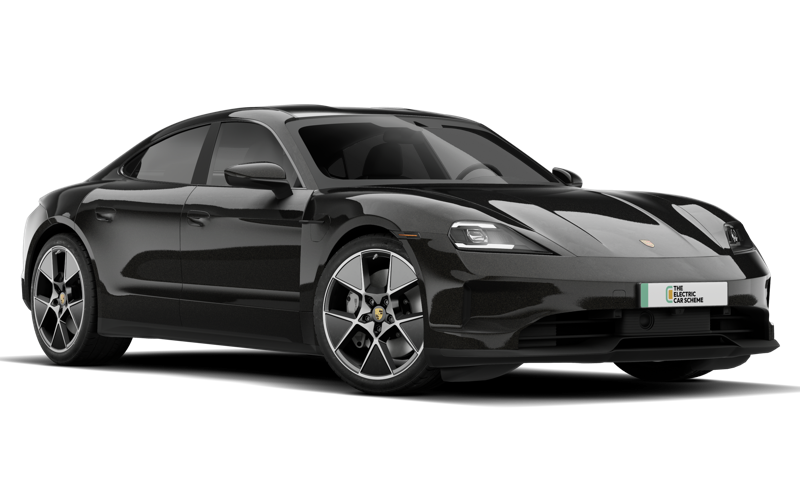
The vehicle's advanced 800V architecture enables ultra-rapid charging, while its sleek, aerodynamic design and low centre of gravity ensure exceptional handling that rivals traditional sports cars. The premium interior features a curved digital dashboard and sustainable materials, proving that eco-friendly mobility doesn't compromise luxury or performance.
Porsche UK quotes 0 to 62mph in 2.4 seconds, a 162mph top speed and a WLTP range of 356 to 393 miles, with prices starting at around £162,000. The even faster Turbo GT claims 0 to 62mph in 2.3 seconds and up to 1,092 horsepower with overboost, according to Car magazine. If a more affordable Taycan appeals, the Porsche Taycan range includes models you can lease through salary sacrifice, covered below.
Audi RS e-tron GT
As Audi's flagship electric sports car, the RS e-tron GT showcases the perfect marriage of performance and luxury. Sharing its platform with the Porsche Taycan, this powerful electric vehicle delivers an exhilarating driving experience with its 637 horsepower output in boost mode.
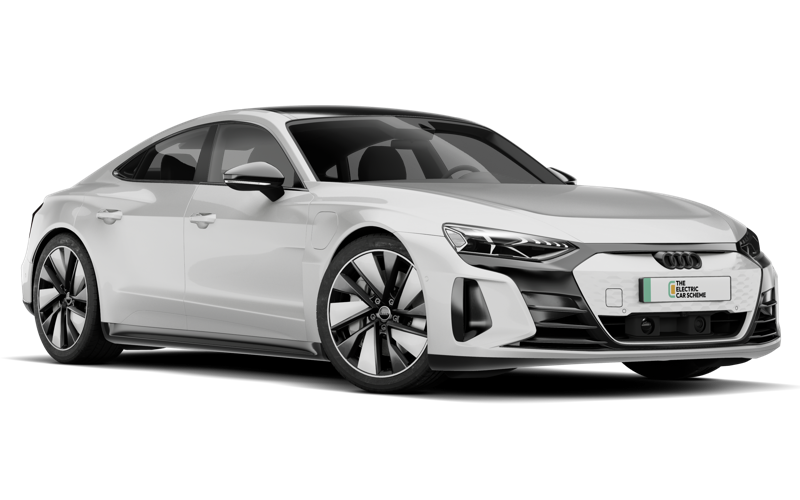
The advanced electric powertrain is complemented by innovative features like all-wheel steering and adaptive air suspension, making it equally capable on both straight-line sprints and challenging corners. The RS e-tron GT's distinctive design language and sophisticated interior exemplify how electric technology can enhance rather than compromise the sports car experience.
Audi lists the Performance model from £143,780, with 0 to 62mph in 2.5 seconds and charging at up to 320kW, which takes the battery from 10 to 80% in 18 minutes. It's also on the quote tool, so the Audi RS e-tron GT appears with a salary sacrifice cost below.
Lotus Evija
The Lotus Evija represents the pinnacle of electric hypercar engineering, pushing the boundaries of what's possible in the realm of high-performance EVs.
This hypercar produces an astounding 2,000 horsepower (around 1,500kW) through its quad-motor powertrain, making it one of the most powerful production cars ever created. Lotus's expertise in lightweight design shines through in the Evija's carbon fibre construction and advanced aerodynamics, featuring unique through-body tunnels that optimise airflow. Limited to 130 units, it shows what electric sports cars can achieve while maintaining Lotus's core principles of exceptional handling and performance.
Deliveries began in 2024, according to Motor1, which also reports a price of over £2 million. Lotus hasn't published an official 0 to 60mph time, though launch claims put it under three seconds, and Top Gear lists a top speed of 217mph.
Rimac Nevera
The Rimac Nevera stands as a landmark achievement in electric vehicle engineering, delivering unprecedented performance through its innovative quad-motor powertrain that produces an astounding 1,914 horsepower. This Croatian-manufactured hypercar achieves remarkable specs: a top speed of 256 mph, 0- 60 mph in just 1.74 seconds, and a WLPT range of around 300 miles.
The advanced battery technology and carbon-fibre monocoque chassis optimise weight distribution, while sophisticated torque vectoring enhances handling beyond traditional sports cars. The aerodynamic design features active elements that respond to driving conditions, integrating race-derived technology with premium luxury features.
The Nevera R, the quicker version, claims 0 to 60mph in 1.66 seconds, 0 to 100mph in 2.96 seconds and a 268mph top speed, according to Rimac's July 2025 record announcement. It starts at €2.3 million, and production is limited to 40 cars. Together, the Nevera and Nevera R show how electric technology can enhance rather than compromise high-performance vehicles.
Mercedes-AMG EQS 53
The Mercedes-AMG EQS 53 represents the pinnacle of electric luxury performance, combining cutting-edge technology with AMG's performance heritage. Its powerful dual-motor electric powertrain delivers up to 751 horsepower with the AMG Dynamic Plus package, while the innovative aerodynamic design achieves a class-leading drag coefficient.
The vehicle features advanced battery technology, AMG-specific suspension tuning, and performance-focused driving dynamics, all wrapped in a luxurious package that includes the striking MBUX Hyperscreen and premium interior appointments, making it a true flagship for Mercedes' electric line-up.
Fleet News data lists 0 to 62mph in 3.4 seconds, and EV Database lists a WLTP range of 331 to 389 miles, though it shows the car as no longer on sale in the UK, so confirm availability with Mercedes-Benz. The quote tool includes the EQS 450 4MATIC rather than the AMG 53, so no salary sacrifice cost is shown for this model. The Mercedes-Benz range is covered separately.
Maserati GranTurismo Folgore
Maserati's first electric model, the GranTurismo Folgore, is a 751 horsepower (560kW) tri-motor grand tourer with 0 to 62mph in 2.7 seconds and a 202mph top speed.
EV Database lists the 2027 model year at £129,605 on the road, with a WLTP range of up to 337 miles. It isn't on the quote tool, so the Maserati Grecale Folgore appears in the salary sacrifice section instead. The Lucid Air Sapphire is often compared with these cars at over 1,200 horsepower, but CAR magazine reports that Lucid has no plans to sell it in the UK, so it isn't covered here.
Which Electric Sports Cars Can You Salary Sacrifice?
At The Electric Car Scheme, we have a variety of high-performance cars you can choose from to salary sacrifice. Salary sacrifice allows employees to typically save 20 to 50% compared with a personal lease by giving up part of their gross salary in exchange for an electric car as a benefit. Because payments come from pre-tax salary, employees pay less income tax and National Insurance, which is where much of the saving comes from.
The table below compares every performance model on the quote tool, using a £62,000 salary, 10,000 miles a year, a 36-month term and a flat payment profile.
| Savings breakdown: £62,000 salary (higher rate) | Average monthly salary sacrifice (inc VAT) | Employee income tax savings | Employee National Insurance savings | Average benefit-in-kind tax over term | Net cost (you pay) |
|---|---|---|---|---|---|
| Hyundai IONIQ 5 N | £1,012 | -£405 | -£20 | £142 | £729 |
| Porsche Taycan (RWD, 105kWh) | £2,072 | -£829 | -£41 | £191 | £1,393 |
| Porsche Taycan 4S Cross Turismo | £2,169 | -£867 | -£43 | £215 | £1,473 |
| Audi RS e-tron GT Performance | £2,894 | -£1,158 | -£58 | £309 | £1,988 |
| Lotus Emeya 600 | £1,539 | -£616 | -£31 | £187 | £1,080 |
| BMW i4 M60 | £1,165 | -£466 | -£23 | £155 | £830 |
| Maserati Grecale Folgore | £2,007 | -£803 | -£40 | £187 | £1,351 |
| Tesla Model 3 Performance AWD | £1,252 | -£501 | -£25 | £130 | £856 |
| Tesla Model 3 Premium Long Range RWD | £870 | -£348 | -£17 | £97 | £602 |
| Polestar 2 Long Range Dual Motor Performance | £978 | -£391 | -£20 | £131 | £698 |
| Kia EV9 GT-Line S AWD | £1,163 | -£465 | -£23 | £168 | £842 |
| Alpine A290 GT+ | £528 | -£211 | -£11 | £73 | £380 |
| Alpine A290 GTS+ | £591 | -£237 | -£12 | £82 | £425 |
Source: The Electric Car Scheme quote tool. Figures assume 10,000 miles a year, 36 months, maintenance and breakdown cover included, England and Wales and a flat payment profile. They're estimates, subject to credit approval and availability.
The average BiK tax column reflects zero-emission BiK of 4% in 2026/27, which rises to 5% in 2027/28, 7% in 2028/29 and 9% in 2029/30. Over a longer term, the BiK rate therefore becomes a bigger share of the monthly cost, so term length matters when you compare cars.
Tesla Model 3 Premium Long Range
While primarily known for its practicality, the Model 3 Premium Long Range proves that everyday electric vehicles can deliver genuine sports car credentials. Its rear-wheel-drive single motor delivers brisk acceleration (0 to 62mph in 5.2 seconds) and composed handling, while Tesla's advanced battery technology offers a WLTP range of up to 466 miles, according to EV Database.
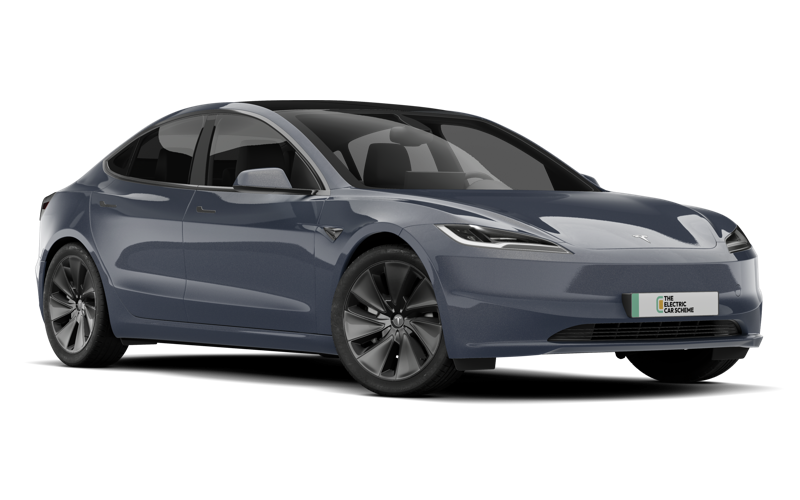
The minimalist interior houses cutting-edge technology, including the company's renowned Autopilot system and over-the-air updates that continually enhance performance and features. On the quote tool, it costs a higher-rate taxpayer a typical £602 a month net. Drivers weighing the Tesla Model 3 against rivals will find that range figure hard to beat in this price bracket.
Tesla Model 3 Performance
The Tesla Model 3 Performance produces 461kW (618 horsepower) from its dual-motor setup, with 0 to 62mph in 3.1 seconds by Tesla's own claim and a 162mph top speed.
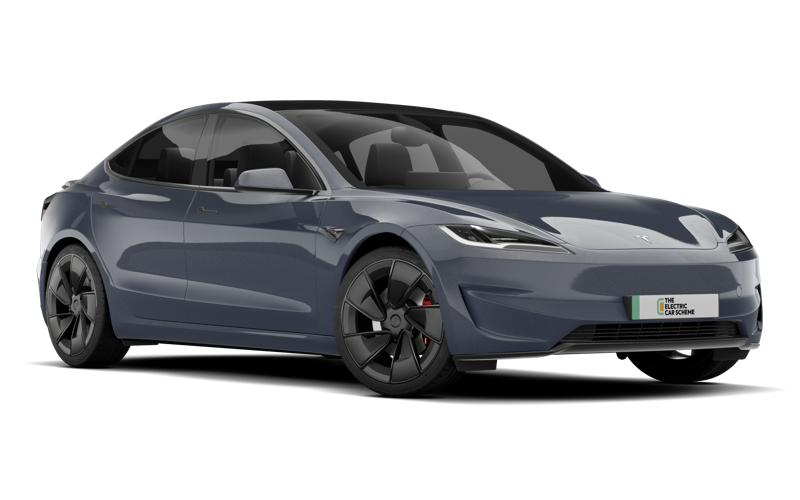
It seats five, with 594 litres of boot space plus an 88-litre front boot, and it charges at up to 250kW, according to EV Database. Published range figures vary between 354 miles and 373 miles for the latest model year, so confirm the figure for your chosen specification. On the quote tool, it costs a typical £856 a month net, one of the most affordable ways into electric performance.
Polestar 2 Performance
The Polestar 2 Performance edition transforms this sophisticated electric fastback into a genuine sports car contender. With Öhlins dampers, Brembo brakes, and a dual-motor powertrain producing 476 horsepower, it delivers engaging performance while maintaining practical everyday usability.
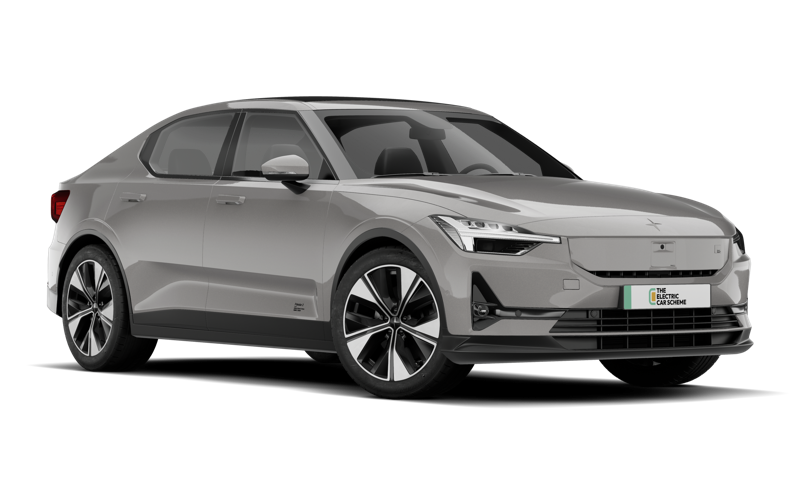
The performance upgrades enhance the vehicle's already impressive handling characteristics, while the distinctive Scandinavian design and premium interior create an upscale driving experience.
Polestar quotes 0 to 60mph in 4.0 seconds and a WLTP range of up to 352 miles.
The quote tool puts the Polestar 2 Performance at a typical £698 a month net.
Porsche Taycan
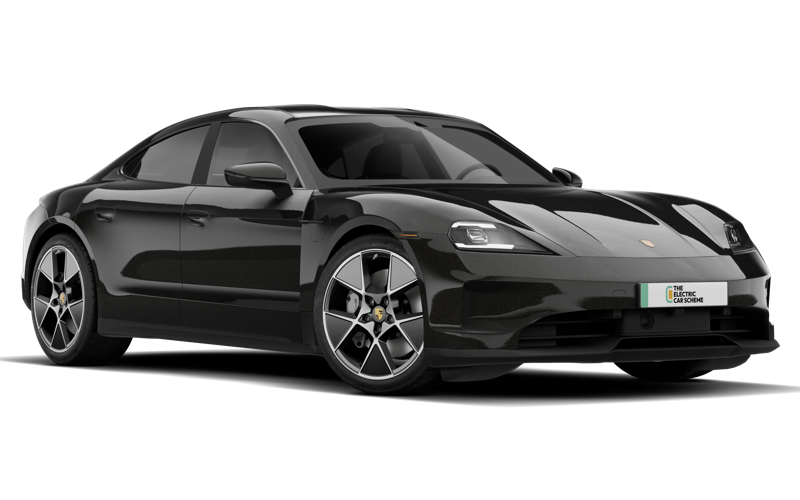
The rear-wheel-drive Porsche Taycan is the entry point to the range, with 0 to 62mph in 4.8 seconds, charging at up to 320kW with the Performance Battery Plus and a WLTP range of up to 421 miles. It keeps the low-slung four-door coupe shape and sharp handling of its faster siblings. On the quote tool, it costs a typical £1,393 a month net.
Porsche Taycan 4S Cross Turismo
The Porsche Taycan Cross Turismo has a top speed of 149 mph and can accelerate from 0 to 62mph in 3.8 seconds. If you want a high-performance car with room for luggage, the 4S Cross Turismo costs a typical £1,473 a month net on the quote tool.
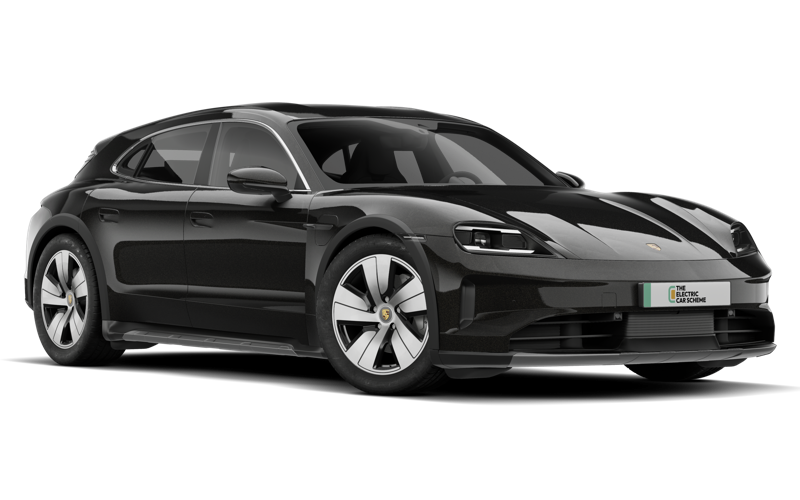
The Cross Turismo has increased luggage compartment volume and more headroom compared to the standard Taycan, offering a comfortable experience with plenty of space wherever you sit. Boot space is 446 litres, or 1,212 litres with the rear seats folded, according to EV Database.
The Cross Turismo also has a gravel mode, which was specifically designed for this model and optimises off-road driving on gravel or mud.
Audi RS e-tron GT Performance
The Audi RS e-tron GT Performance delivers 925PS with launch control and 0 to 62mph in 2.5 seconds, with quattro all-wheel drive keeping that power usable. EV Database lists a 155mph top speed and 350 litres of boot space plus a 77-litre front boot. It's the most powerful car on the quote tool. A higher-rate taxpayer typically pays £1,988 a month net.
BMW i4 M50
The BMW i4 M60, which replaced the M50, represents a significant milestone in BMW's transition to electric performance vehicles, combining the brand's renowned sporting heritage with advanced electric technology. This powerful electric vehicle delivers 601PS (442Kw) through its dual-motor powertrain while maintaining the brand's signature driving dynamics.
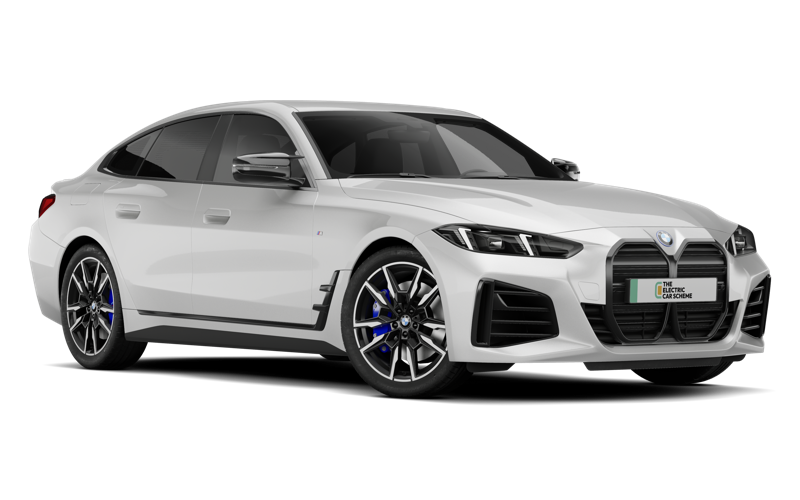
The advanced electric drivetrain integrates perfectly with BMW's proven chassis technology, featuring adaptive M suspension and near-perfect 50:50 weight distribution for enhanced handling. The i4 M60's sleek design incorporates aerodynamic elements that optimise efficiency without compromising the classic BMW sports saloon aesthetic, while the premium interior features the latest iDrive technology and driver-focused cockpit design.
Despite its performance credentials, the vehicle remains efficient and practical, offering rapid charging capability and comfortable long-distance touring ability, truly embodying BMW's approach to high-performance electric mobility. The BMW i4 M60 costs a typical £830 a month net on the quote tool.
Lotus Emeya
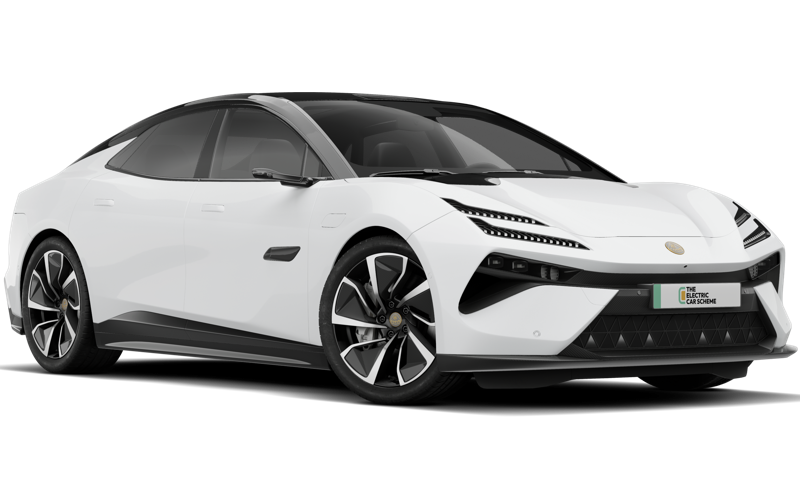
The Lotus Emeya 600 is a four-door electric hyper-GT producing 603 horsepower, with 0 to 62mph in 4.2 seconds and a WLTP range of up to 379 miles. Its 102kWh battery charges at up to 403kW, and the boot holds 509 litres. A higher-rate taxpayer typically pays £1,080 a month net.
Hyundai IONIQ 5 N
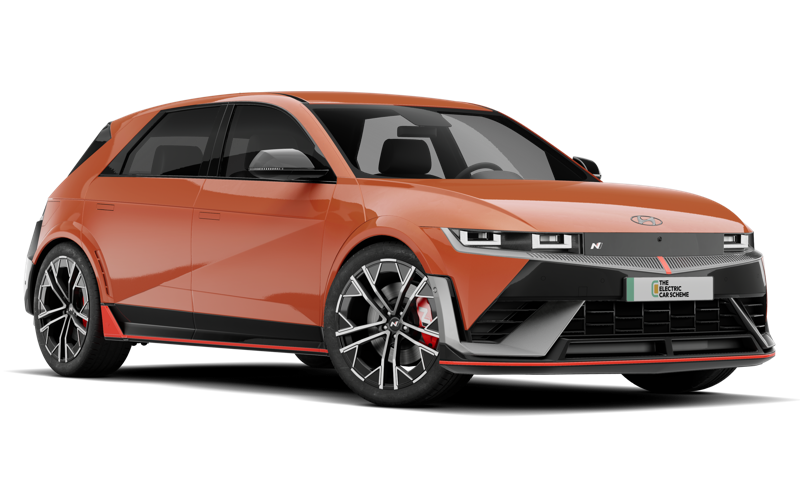
The Hyundai IONIQ 5 N produces up to 641 horsepower with N Grin Boost and reaches 62mph in 3.4 seconds. Its 800-volt architecture charges the 84kWh battery at up to 240kW, taking it from 10 to 80% in about 18 minutes, and the WLTP range is 278 miles. Driver-focused extras include N e-Shift, which simulates an eight-speed dual-clutch gearbox, N Active Sound+ and a drift mode. The boot holds 480 litres, so it works as a daily car as well as a weekend toy.
Maserati Grecale Folgore
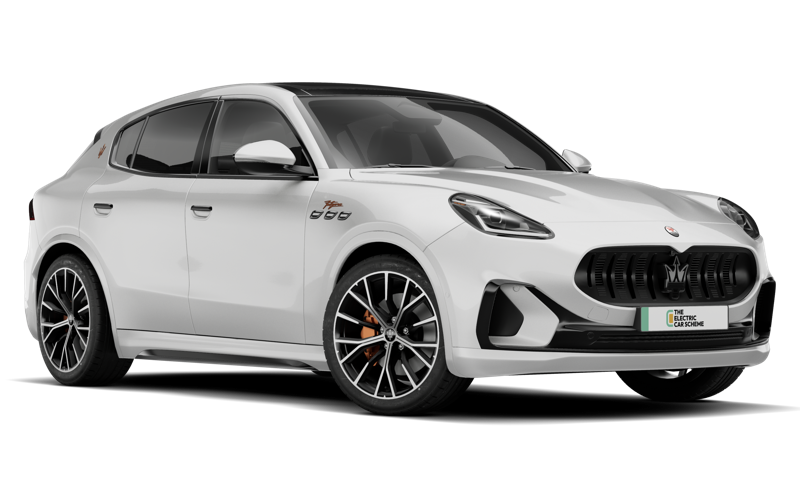
The Maserati Grecale Folgore is an electric SUV with 550 horsepower (410kW), 0 to 62mph in 4.1 seconds and a WLTP range of up to 361 miles, based on EV Database figures. Its 105kWh battery sits under a 535-litre boot. It's the only Maserati on the quote tool, with a typical cost of £1,351 a month net.
Kia EV9 GT-Line S
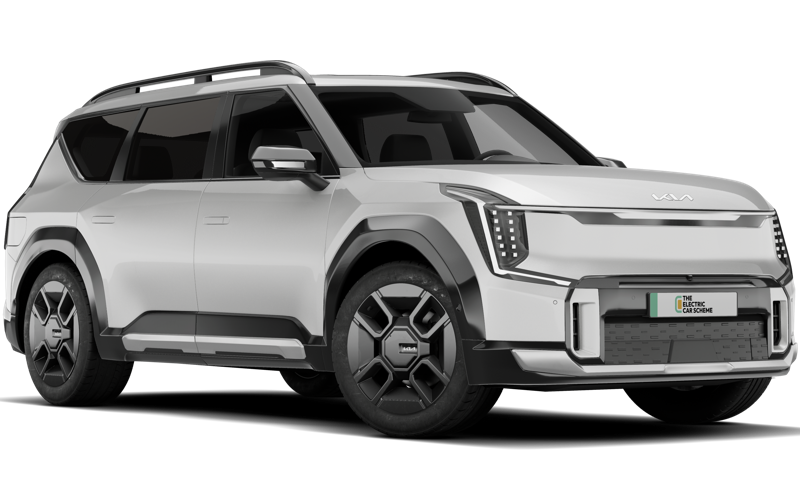
The Kia EV9 GT-Line S pairs 378 horsepower (282kW) with 0 to 62mph in 5.3 seconds and seven-seat practicality, giving families a quick option without a hot hatch's compromises. Its 99.8kWh battery delivers a WLTP range of up to 313 miles, per What Car?, and it charges at up to 233kW, with 10 to 80% in about 24 minutes. The quote tool prices it at a typical £842 a month net.
Alpine A290 GT+ and GTS+
The Alpine A290 is a Renault 5-based hot hatch with sharper handling and an Alpine-tuned chassis. The GT+ produces 177 horsepower (130kW) with 0 to 62mph in 7.4 seconds, while the GTS+ produces 220 horsepower (160kW) with 0 to 62mph in 6.4 seconds.
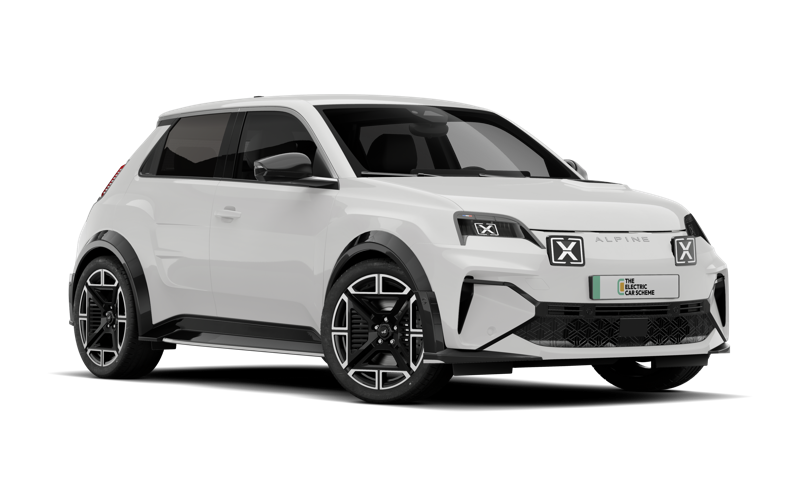
Both use a 52kWh battery, with WLTP-style range figures of 235 miles (GT+) and 225 miles (GTS+). Alpine's hot hatch won Best Fun EV at the 2025 Autocar Awards, as What Car? reports, and list prices start from £33,985 for the GT+ and £37,985 for the GTS+, according to Auto Express. They're the cheapest cars in this article which are on the quote tool, at a typical £380 (GT+) and £425 (GTS+) a month net.
Which Performance Trims Aren't on the Quote Tool?
These cars appear in earlier guides, but the quote tool lists a different trim or doesn't list them, so no salary sacrifice cost is shown.
Ford Mustang Mach-E GT: 358kW (487bhp), 0 to 62mph in 4.4 seconds, a 124mph top speed and a WLTP range of 310 miles, from £73,420. You can choose the Mach-E Select instead.
Cupra Born VZ: 240kW (322hp), 0 to 62mph in 5.6 seconds, a 124mph top speed and a 385-litre boot, at £45,995 on the road. The Cupra Born V2 is available to salary sacrifice instead.
Porsche Taycan Turbo: £134,100 recommended price. The quote tool lists the Taycan and the 4S Cross Turismo.
BMW iX M60: replaced in the UK by the iX M70 xDrive, and neither version is on the quote tool.
Tesla Model S Plaid: Tesla ended Model S production in May 2026.
What Is The Fastest Electric Car?
These are the quickest electric cars on the record, with the figures taken from manufacturer claims.
The Rimac Nevera R claims the quickest 0 to 60mph time of any production electric car at 1.66 seconds, with 0 to 100mph in 2.96 seconds, using a quad-motor powertrain producing 2,107 horsepower. Tesla's Model S Plaid claimed 1.99 seconds to 60mph, but Tesla ended Model S production in May 2026. For realistic options, the cars in the salary sacrifice section above start at 3.1 seconds to 62mph.
Is It Better To Salary Sacrifice Rather Than Buy an Electric Sports Car?
For many drivers, the answer comes down to tax, upfront cost and who handles the running costs, as the points below show.
Typical savings: employees typically save 20 to 50% on a salary sacrifice electric car compared with a personal lease, because payments come from pre-tax salary and zero-emission BiK is only 4% in 2026/27.
No large upfront payment: a single monthly cost replaces a deposit, which matters on cars costing £70,000 or more.
Included costs: insurance, servicing, maintenance, breakdown cover and road tax are part of the package, with tyres and home charging available as options.
Flexible terms: salary sacrifice agreements typically run for two to four years, so you can move to the latest model without taking on depreciation risk.
Employer support: many employers run a scheme at no net cost to the business, so check whether yours offers one through The Electric Car Scheme.
The BiK rate for zero-emission cars rises in stages, while the petrol and diesel maximum is already 37%. The table below sets out the schedule by tax year.
| Tax year | Zero-emission car BiK | Petrol and diesel maximum BiK |
|---|---|---|
| 2025/26 | 3% | 37% |
| 2026/27 (current) | 4% | 37% |
| 2027/28 | 5% | 37% |
| 2028/29 | 7% | 38% |
| 2029/30 | 9% | 39% |
Which New Electric Sports Cars Are Coming Next?
Several electric sports cars are in development, though most manufacturers have yet to confirm UK prices.
Porsche 718 Boxster & Cayman EV (2026)
The iconic mid-engine sports cars are going fully electric, with Porsche ending production of the combustion versions. Built on a bespoke electric sports car platform, these models will: - Maintain the classic mid-engine feel with batteries positioned behind the seats
Offer a GTS variant producing over 400 horsepower
Deliver approximately 250 miles of range from an 80kWh battery
Feature active aerodynamics and a wider, lower stance
Start near £78,000, with GTS versions exceeding £100,000
Porsche ended combustion 718 production in October 2025, and its CEO has confirmed that the electric 718 will go into production in 2027. Power, range and pricing haven't been announced, so earlier figures circulating online should be treated as speculation.
Alpine A110 Electric Successor
Alpine is developing a new electric sports car on a bespoke lightweight platform:
Designed to be lighter than combustion rivals despite electric drivetrain
Potential 2+2 version (A310) under development
Expected to maintain Alpine's focus on handling and driver engagement
Starting price around £75,000
Alpine hasn't confirmed a launch date for the A110 successor. At the October 2026 Paris Motor Show, it showed the A310 Vision, a design study with no series plans, while the next A110 remains in development on the Alpine Performance Platform with two rear motors. Electric production is expected in 2027, but no UK price has been announced.
Polestar 6
This striking electric roadster follows the O2 concept design:
Hard-top convertible configuration
Dual-motor AWD producing 884 horsepower
Flagship luxury positioning at approximately £200,000
Represents Polestar's push into the ultra-high-performance segment
Polestar has delayed the 6 roadster again but says it hasn't cancelled it. No new launch date or price has been confirmed.
Hyundai IONIQ 6 N
The Hyundai IONIQ 6 N has been on sale in the UK since orders opened in January 2026, with up to 641 horsepower and 0 to 62mph in 3.2 seconds. It uses the same 84kWh battery size as the IONIQ 5 N, so it suits drivers who prefer a saloon shape.
Tesla Roadster
Tesla revealed its next-generation Roadster on 15 October 2026 and claims 0 to 60mph in one second, though TechCrunch reports that figure as a demonstration rather than a verified production specification. Tesla hasn't announced a price, and Elon Musk has said deliveries begin in 2028.
Mercedes-AMG GT 4-Door Coupe EV [new]
Mercedes-AMG has launched its electric GT 4-Door Coupe range, with the GT 63 listed at 2.4 seconds to 62mph and a WLTP range of up to 432 miles. The entry-level GT 53 went on sale in Germany in August 2026 from €115,430, and UK deliveries are expected later in 2026.
Why Are Electric Sports Cars So Fast?
Electric sports cars have changed high-performance driving, challenging traditional notions of what makes a vehicle powerful. Today's electric performance vehicles match their petrol counterparts and often surpass them in key metrics like acceleration and responsiveness.
How Does Advanced Technology Make Electric Sports Cars Powerful?
The design of electric sports cars uses cutting-edge technology to achieve remarkable performance. Unlike traditional engines with complex transmissions, electric motors deliver instant torque: the key to lightning-fast acceleration. This responsive power delivery means electric sports cars can accelerate from 0-60 mph with remarkable speed, often outperforming premium petrol vehicles.
Modern electric sports cars integrate multiple advanced features that enhance their capabilities:
Dual or quad motor configurations for optimised power distribution,
Aerodynamic designs that minimise drag while maintaining stylish aesthetics,
Advanced battery technology that balances range with lightweight construction,
Sophisticated power management systems that maximise efficiency.
Five characteristics explain most of the advantage:
Instant torque from zero rpm
Direct power delivery without a complex gearbox
Precise torque vectoring to individual wheels
A low centre of gravity from floor-mounted batteries
Simpler powertrains with fewer mechanical losses
Together, these traits let even family-oriented models, such as the Kia EV9, deliver quick acceleration, and they're why electric car range and performance can coexist in the same car.
Leading luxury brands have invested heavily in developing powerful electric vehicles that combine eco-friendly operation with premium performance. For example, manufacturers like Porsche and Tesla offer high-performance models that showcase how electric powertrains can deliver both impressive speed and efficient operation.
Frequently Asked Questions
What Is the Best Electric Sports Car in 2026?
The best electric sports car depends on budget and how you'll use it. The Porsche Taycan and Audi RS e-tron GT lead on performance, while the Hyundai IONIQ 5 N and Alpine A290 are the most accessible. On the quote tool, a higher-rate taxpayer on £62,000 typically pays from £380 to £1,988 a month net across the performance cars covered here.
Which Electric Sports Cars Can You Salary Sacrifice?
The quote tool includes the Porsche Taycan and Taycan 4S Cross Turismo, Audi RS e-tron GT Performance, Lotus Emeya, BMW i4 M60, Hyundai IONIQ 5 N, Tesla Model 3 Performance, Polestar 2 Performance, Kia EV9 GT-Line S, Alpine A290 and Maserati Grecale Folgore. Availability changes, so make sure to check The Electric Car Scheme's quote tool before choosing a model.
How Much Does It Cost to Salary Sacrifice an Electric Sports Car?
A higher-rate taxpayer on £62,000 typically pays from £380 a month net for an Alpine A290 GT+ to £1,988 for an Audi RS e-tron GT Performance. These estimates assume 10,000 miles a year, a 36-month term and a flat payment profile. Your own cost depends on your salary, the car and your employer's scheme, so use the savings calculator.
What Is the Fastest Electric Car in the World?
The Rimac Nevera R claims the fastest 0 to 60mph time of any production electric car at 1.66 seconds. The Yangwang U9 Xtreme recorded the highest top speed at 308mph in September 2025. Both figures come from manufacturer or test-track claims, not everyday road use.
What Is the BiK Rate for Electric Sports Cars?
The BiK rate for zero-emission cars is 4% in 2026/27, rising to 5% in 2027/28, 7% in 2028/29 and 9% in 2029/30. The rate is the same for any zero-emission car, but the tax is charged on the car's P11D value, so a more expensive car carries a larger taxable benefit. The petrol and diesel maximum is 37%.
The best electric sports cars in 2026 combine real speed with practical features, from the Taycan and RS e-tron GT at the top end to the IONIQ 5 N and Alpine A290 lower down. Electric car salary sacrifice puts many of them within reach, with typical net costs from £380 to £1,988 a month for a higher-rate taxpayer and zero-emission BiK at 4% in 2026/27. Launches such as the electric Porsche 718 and Alpine A110 successor are still to come, so check the quote tool for current availability before you commit to a model.
Ready to see what your chosen car would cost? Calculate your savings with The Electric Car Scheme and compare your options in minutes.
Are you an employer?
BOOK A DEMOAre you an employee?
SEE AVAILABLE CARSYou mights also like…

Information and prices provided are accurate at the time of release and may be subject to change. Our pricing is based on data collected from The Electric Car Scheme quote tool. All final pricing is inclusive of VAT. All prices above are based on the following lease terms; Using a flat payment profile, 10,000 miles pa, 36 months, and are inclusive of Maintenance and Breakdown Cover. The Electric Car Scheme’s terms and conditions apply. All deals are subject to credit approval and availability. All deals are subject to excess mileage and damage charges. Prices are calculated based on the following tax saving assumptions: England & Wales, 40% tax rate. The Electric Car Scheme Limited provides services for the administration of your salary sacrifice employee benefits. The Electric Car Scheme Holdings Limited is a member of the BVRLA (10608), is authorised and regulated by the FCA under FRN 968270, is an Appointed Representative of Marshall Management Services Ltd under FRN 667174, and is a credit broker and not a lender or insurance provider.
Copyright and Image Usage: All images used on this website are either licensed for commercial use or used with express permission from the copyright holders, in compliance with UK and EU copyright law. We are committed to respecting intellectual property rights and maintaining full compliance with applicable regulations. If you have any questions or concerns regarding image usage or copyright matters, please contact us at marketing@electriccarscheme.com, and we will address them promptly.
Images on this site are sourced from third party websites as listed below each image and are the property of their respective owners. If you believe any content infringes your copyright, please contact us at marketing@electriccarscheme.com.