VW ID.3 Neo Review 2026: First Look At The Redesigned ID.3
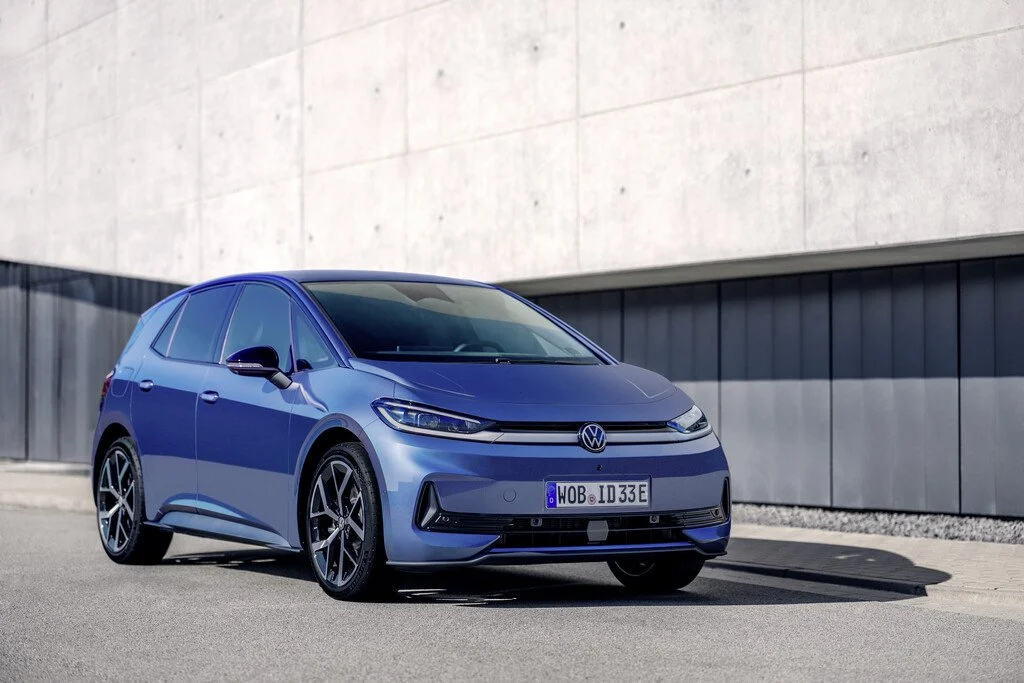
All photos in this article have been taken from Volkswagen Newsroom
The Volkswagen ID.3 Neo is VW's redesigned electric family hatchback, replacing the original ID.3 with a longer range, an overhauled interior, and the return of physical controls. UK order books open in summer 2026, with prices estimated from £32,000 and a maximum WLTP range of 391 miles. At 4% benefit-in-kind for 2026/27, it lands as one of the most tax-efficient family hatchbacks available on electric car salary sacrifice.
For employees weighing up an electric family hatchback, the ID.3 Neo now goes head-to-head with the MG4 and Renault Mégane E-Tech on price, range, and equipment. It also arrives at a good moment on tax: benefit-in-kind for zero-emission vehicles sits at 4% for 2026/27, a fraction of the up to 37% rate that applies to higher-emission petrol and diesel models.
What's New With The Volkswagen ID.3 Neo?
The ID.3 Neo isn't a routine facelift. Instead, it’s a direct response to years of feedback on the original car, and the changes only make sense once you know what came before!
The Original VW ID.3 (2020-2026)
The VW ID.3 was Volkswagen's first purpose-built, mass-market electric car, built on the brand's dedicated MEB platform. It set the template for VW's entire electric range.
Praised for: confident driving dynamics and a spacious, practical cabin
Criticised for: cheap-feeling interior plastics, glitchy infotainment software, and fiddly touch-sensitive climate sliders
Current status: widely available today across the UK new and used car markets, with used examples offering some of the cheapest routes into VW electric ownership
The Rebrand to ID.3 Neo (2026 Onwards)
Volkswagen renamed the car ID.3 Neo, rather than simply calling it a facelift, to signal that this is a substantial technological jump rather than a styling refresh. Following its global premiere in April 2026, UK ordering opens in summer 2026, with first customer deliveries following shortly after.
The Neo directly addresses the original car's biggest weaknesses:
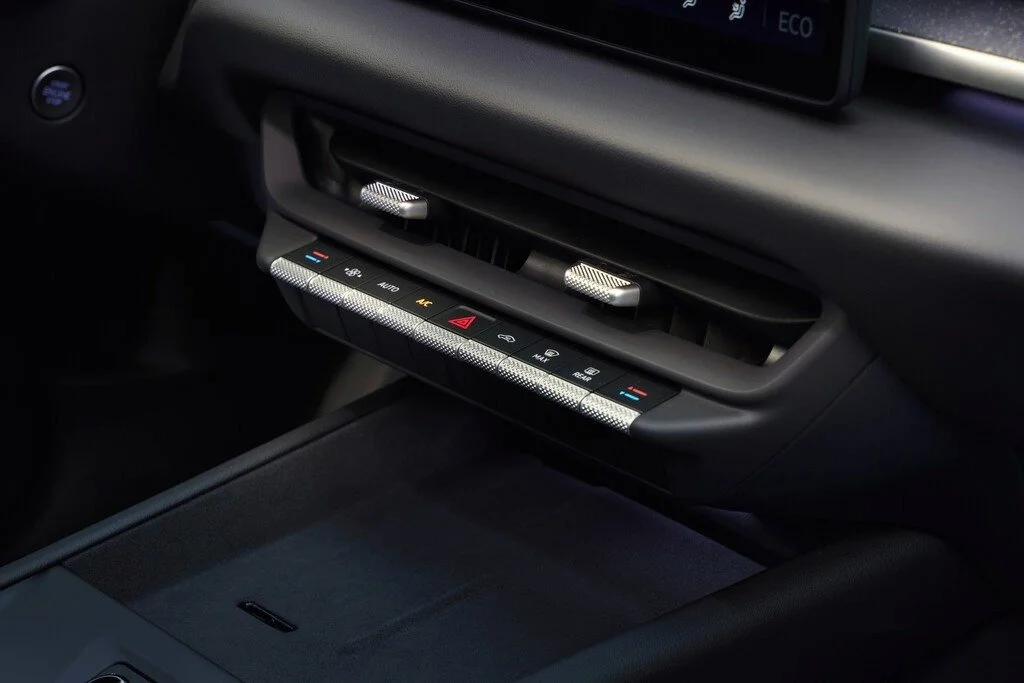
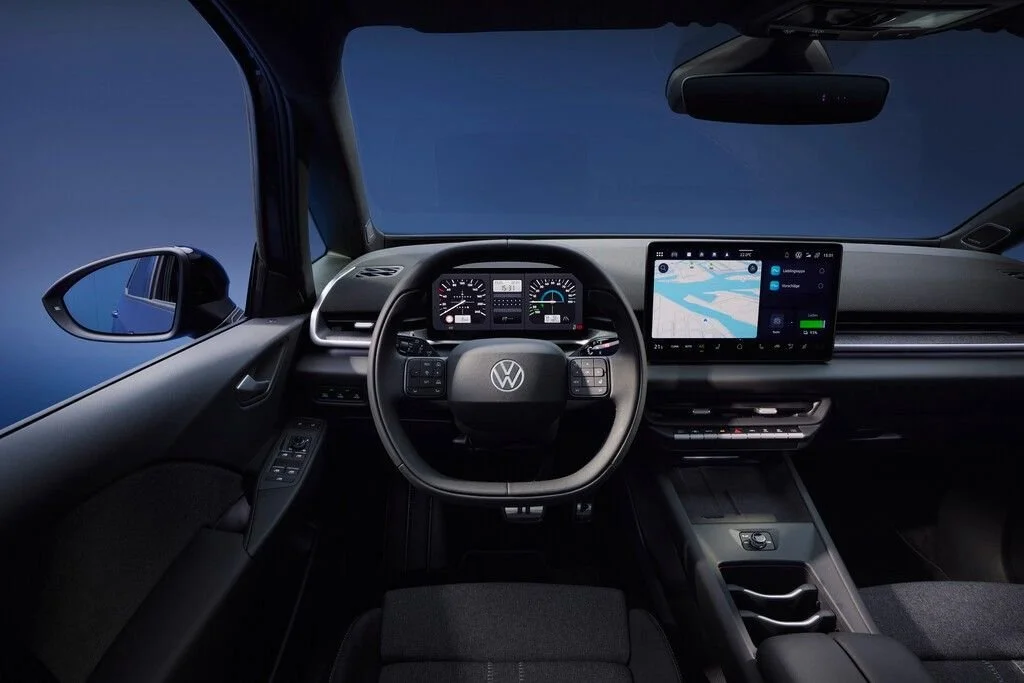
Physical steering wheel and climate controls return, replacing the criticised touch-sensitive sliders
Premium dashboard materials replace the cheap-feeling plastics of the outgoing model
Maximum range increases to up to 391 miles WLTP, VW's longest range yet on an ID.3
Several other practical upgrades round out the update:
One-pedal driving, which brings the car to a complete stop without touching the brake
Vehicle-to-load (V2L) charging, letting the car power external devices
An updated Travel Assist system with traffic light detection
A new 79kWh battery option, faster-charging than anything previously offered on the ID.3
The boot space remains unchanged at 385 litres, smaller than the Renault Mégane E-Tech or the MG4.
VW ID.3 Neo Price, Range, and Specifications
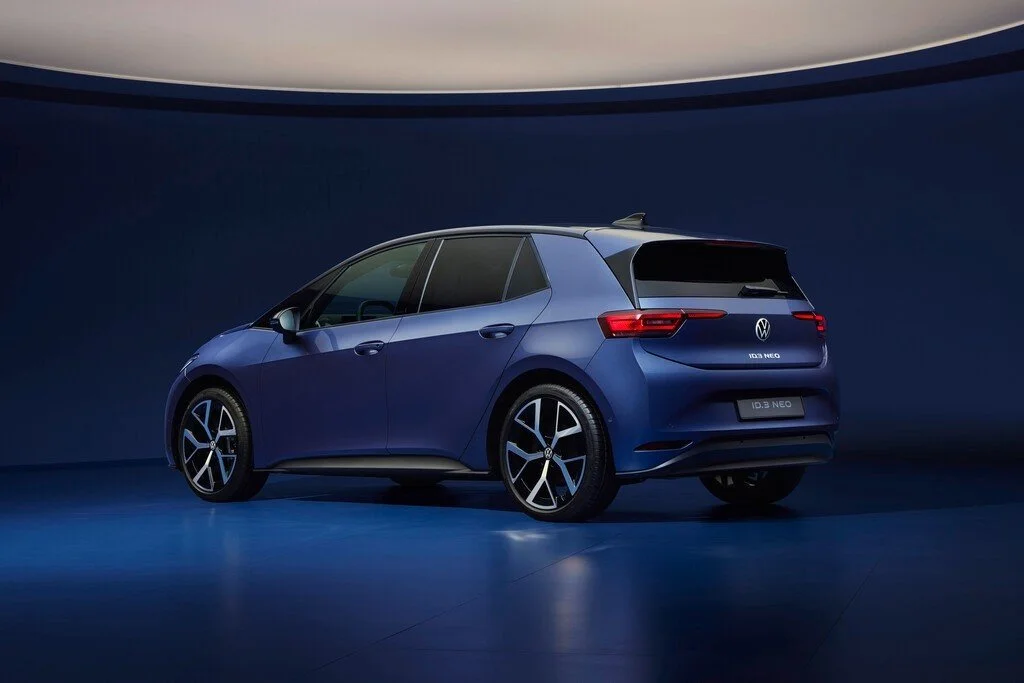
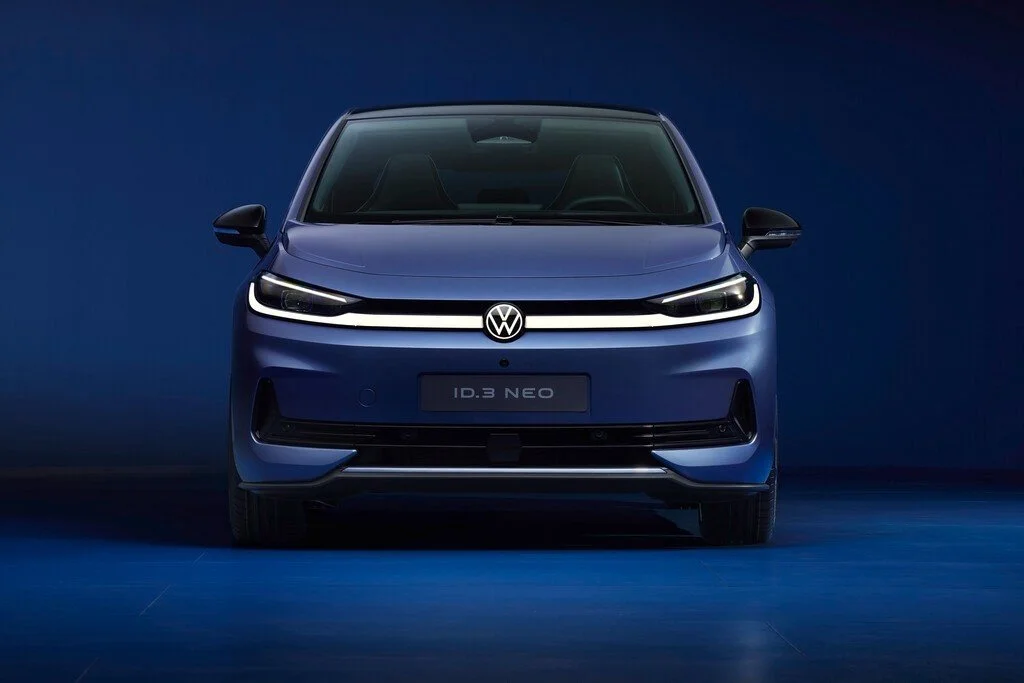
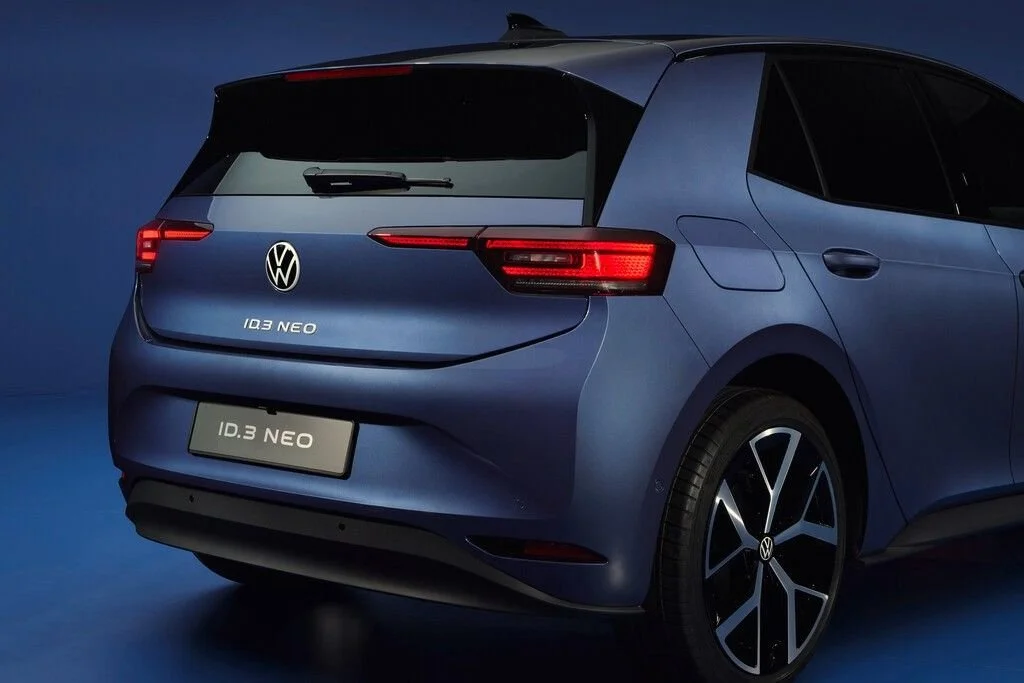
Volkswagen hasn't officially confirmed UK pricing, and any figure quoted before order books open should be treated as an estimate. Industry estimates currently put the starting price at around £32,000, rising to around £34,000 for the mid-range 58kWh battery.
| Battery | Power | WLTP Range | Max DC Charge Rate | 10-80% Charge Time |
|---|---|---|---|---|
| 50kWh | 168bhp | 259 miles | 105kW | Approx. 29 minutes |
| 58kWh | 188bhp | 306 miles | 105kW | Approx. 29 minutes |
| 79kWh | 228bhp | 391 miles | 183kW | Approx. 29 minutes |
50kWh: best suited to shorter daily commutes where maximum range isn't a priority
58kWh: likely the volume seller in the UK, balancing range and price
79kWh: the pick for regular long-distance driving or minimising charging stops
Trim levels follow the same Life and Style structure VW uses across its electric range, with a Trend specification offered in some European markets but not currently confirmed for the UK.
VW ID.3 Neo vs the MG4 and Renault Mégane E-Tech
| Battery | Power | WLTP Range | Max DC Charge Rate | 10-80% Charge Time |
|---|---|---|---|---|
| 50kWh | 168bhp | 259 miles | 105kW | Approx. 29 minutes |
| 58kWh | 188bhp | 306 miles | 105kW | Approx. 29 minutes |
| 79kWh | 228bhp | 391 miles | 183kW | Approx. 29 minutes |
On price: the MG4 currently undercuts both rivals, making it the pick for cost-conscious buyers
On range: the ID.3 Neo pulls ahead, with its top-spec 79kWh battery outdistancing both alternatives
On practicality: the Mégane E-Tech has the biggest boot of the three and a widely praised Google-based infotainment system
For company car drivers and salary sacrifice employees, range and running costs tend to matter more than boot space, since most vehicles on the scheme cover a mix of commuting and family driving rather than maximum load-carrying. On that basis, the ID.3 Neo's range advantage is a genuine differentiator, though it's worth test-driving all three before deciding.
What Does the VW ID.3 Neo Cost on Salary Sacrifice?
Electric car salary sacrifice works by exchanging part of an employee's gross salary for a fully maintained lease car, taken before income tax and National Insurance are calculated. The table below sets out the mechanics.
| Step | What Happens |
|---|---|
| 1. Choose your car | Select the ID.3 Neo and spec once it's available through The Electric Car Scheme's range |
| 2. Sacrifice part of your salary | Your employer deducts the lease cost from your gross pay, before tax and National Insurance |
| 3. Pay less tax and NI | Because the deduction happens before tax, your Income Tax and NI bill falls each month |
| 4. Benefit-in-kind applies | You pay tax on the car as a benefit, at 4% of its value for 2026/27 |
| 5. Everything's included | Insurance, servicing, maintenance and breakdown cover [Insert internal link to: /salary-sacrifice-cars] come as part of one monthly cost |
Because the ID.3 Neo is a zero-emission vehicle, it qualifies for the lowest available benefit-in-kind rate: 4% for 2026/27, compared with a maximum of 37% BiK for higher-emission petrol and diesel cars in the same tax year. Employees typically save 20-50% compared with a personal lease, with the exact figure depending on tax band, salary, and the specific vehicle chosen.
A few factors will influence what the ID.3 Neo specifically costs once it's available on the scheme:
The trim and battery size chosen, since the P11D value drives the benefit-in-kind calculation
The employee's salary and tax band
The length of the lease term and annual mileage allowance
Any optional extras added to the specification
Once VW confirms UK pricing and The Electric Car Scheme adds the ID.3 Neo to its range, employees will be able to see an exact monthly cost using the online calculator.
Is The VW ID.3 Neo Worth It For Salary Sacrifice Drivers?
The right answer depends on what matters most to you day-to-day, but a few clear patterns emerge once you weigh the ID.3 Neo against its closest rivals.
Strong fit for: drivers with longer commutes or frequent motorway journeys, where the range advantage over the MG4 and Mégane E-Tech matters most
Interior fixed: the reintroduced physical controls resolve the most common criticism of the outgoing ID.3
Trade-off: boot space and price still trail the MG4, and VW has historically sat a little above it on cost
Worth cross-shopping: the MG4 or Mégane E-Tech if maximum boot space or the lowest monthly cost matters more than range

Gaurav Ahluwalia, Director of Marketing at The Electric Car Scheme, said: "The ID.3 was always meant to be Volkswagen's Golf for the electric era. The updated Neo gets closer, and on salary sacrifice at 4% benefit-in-kind for 2026/27 it sits right in the affordable-mainstream sweet spot."
Frequently Asked Questions: VW ID.3 Neo
Is the VW ID.3 Neo Worth It?
The ID.3 Neo is worth considering for drivers who want a longer-range electric family hatchback with an improved interior and reintroduced physical controls. It compares well against the MG4 and Renault Mégane E-Tech on range and technology, though it's smaller in the boot than both.
How Much Is the ID.3 on Salary Sacrifice?
The exact cost isn't confirmed yet, since Volkswagen hasn't announced UK pricing. Once it's confirmed and the car is added to The Electric Car Scheme's range, employees will be able to use the online calculator to see a monthly figure based on their salary and tax band. At 4% benefit-in-kind for 2026/27, it's likely to be one of the more tax-efficient family hatchbacks available on the scheme.
VW ID.3 vs MG4? Which Should I Get?
The MG4 currently undercuts the ID.3 Neo on price and offers a larger boot, but the ID.3 Neo has the longer range at up to 391 miles on its top-spec battery. Both are strong options for salary sacrifice, and the right choice depends on whether range or upfront cost matters more to you.
What's the Range of the VW ID.3 Neo?
The ID.3 Neo offers up to 391 miles of WLTP range on its top-spec 79kWh battery. The entry-level 50kWh battery manages 259 miles, while the mid-range 58kWh battery offers 306 miles.

The Volkswagen ID.3 Neo brings a meaningful update to one of the UK's most recognisable electric family hatchbacks, fixing the original's biggest weaknesses with a longer range, redesigned interior, and the return of physical controls. It enters a competitive segment alongside the MG4 and Renault Mégane E-Tech, and while it doesn't win on price or boot space, its range advantage makes it a strong option for drivers who cover longer distances.
For employees considering an EV, the timing works in the ID.3 Neo's favour. Benefit-in-kind for zero-emission vehicles remains at 4% for the 2026/27 tax year, keeping salary sacrifice one of the most cost-effective ways to drive a new electric car. Get a personalised quote to see how the numbers work out once the ID.3 Neo is available through The Electric Car Scheme.
Are you an employer?
BOOK A DEMOAre you an employee?
SEE AVAILABLE CARSECS GUIDES AND ADVICE
Ready to Go Electric? Your Guides and Tools to a Smooth Switch
-
 How the Scheme Works
Find out how salary sacrifice can work for you or your business.
-
 The Charge Scheme
Save 20-50% on all charging costs through salary sacrifice - at home, the office, or in public..
-
 Complete Employer Protection
All employers and drivers are protected from day 1.
-
 Used Electric Cars
Discover the most affordable way to drive electric. Cars delivered in 14 days.
You might also like…

Last updated: 06/07/2026
Our pricing is based on data collected from The Electric Car Scheme quote tool. All final pricing is inclusive of VAT. All prices above are based on the following lease terms; 10,000 miles pa, 36 months, and are inclusive of Maintenance and Breakdown Cover. The Electric Car Scheme’s terms and conditions apply. All deals are subject to credit approval and availability. All deals are subject to excess mileage and damage charges. Prices are calculated based on the following tax saving assumptions; England & Wales, 40% tax rate. The above prices were calculated using a flat payment profile. The Electric Car Scheme Limited provides services for the administration of your salary sacrifice employee benefits. The Electric Car Scheme Holdings Limited is a member of the BVRLA (10608), is authorised and regulated by the FCA under FRN 968270, is an Appointed Representative of Marshall Management Services Ltd under FRN 667174, and is a credit broker and not a lender or insurance provider.
Copyright and Image Usage: All images used on this website are either licensed for commercial use or used with express permission from the copyright holders, in compliance with UK and EU copyright law. We are committed to respecting intellectual property rights and maintaining full compliance with applicable regulations. If you have any questions or concerns regarding image usage or copyright matters, please contact us at marketing@electriccarscheme.com and we will address them promptly.